


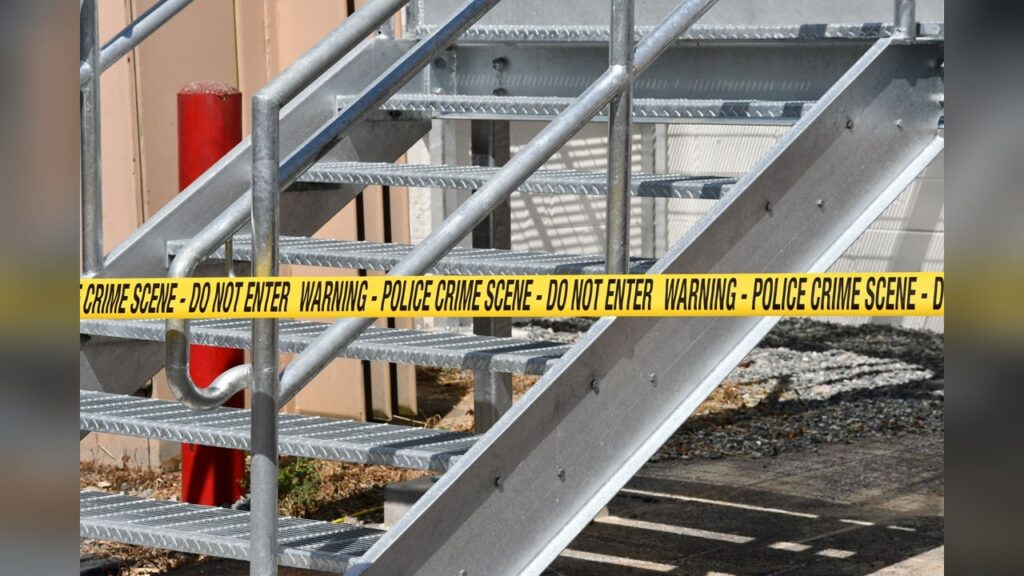
Let us begin, as one must, with the facts, because the facts are the only thing this debate has never had to change. On Thursday afternoon, a 16-year-old Bend resident fired a long gun through the locked doors of Silver Rail Elementary School and entered the building. He killed three children, aged five, eight, and 11, and a teacher. Two more victims, a seven-year-old and a 54-year-old, were in critical condition as of Friday morning. The first 911 call came at 12:59 p.m. Officers arrived at 1:02 p.m. Three minutes. That is the response time we are all supposed to be impressed by, and I confess I am not impressed, because the literature on this is quite clear: the median school shooting is over before police engagement is even possible. The incident was ended not by the three-minute response but by an armed community member who pursued the shooter inside and shot him dead.
You will notice, if you read the coverage with the care I keep begging people to apply, that the “armed bystander” is already being assembled into the familiar argument. Expect the talking point within days, possibly hours: see, a good guy with a gun stopped it. I would gently complicate that. The good guy with a gun arrived after a five-year-old was already dead. He is not a refutation of the problem; he is a late-stage intervention in a problem that had already run its course. Celebrating him as the answer is like celebrating a tourniquet as health policy. The ATF completed an urgent trace on the weapon Thursday evening, and authorities have not yet said how a 16-year-old, who cannot legally purchase a rifle in Oregon, obtained a long gun. That question, the access question, is the entire question, and we have asked it after Columbine, Sandy Hook, Uvalde, and now Bend, with the same result each time, which is to say no result.
There is a structural point here that I am faintly exhausted at having to explain again. A society that stores more civilian firearms than it has civilians, and that routes them into the hands of teenagers through channels no one has closed, will produce this outcome at a rate no police department can out-run. Bend’s officers did everything right. Dispatch did everything right. The lockdown was ordered one minute after the tone alert. And three children are still dead, because the decisive variable was never response time. It was access. Every dataset we have says so, and every legislative session declines to act on it, which is not a scandal so much as a policy preference expressed through inaction.
Leah Schwartz, who lives near the school, told NBC she heard at least six shots spaced out enough that she wondered whether it was construction. Sit with that for a moment. Gunfire in an American school district has become acoustically indistinguishable from home improvement. That is not a metaphor I chose for effect; it is a documented normalization, and it is the water we swim in.
The victims’ names have not been released. Their families have been notified. There will be a vigil, and then a debate about the vigil being politicized, and then nothing, and then, statistically, another one. I have written this column before in different years about different towns, and the only variable that ever changes is the age of the youngest victim. This time it was five.
Three minutes was too late. The trace will tell us where the gun came from, and we already know where the answer will go, which is nowhere. The system is not broken. It is doing exactly what we built it to do.