


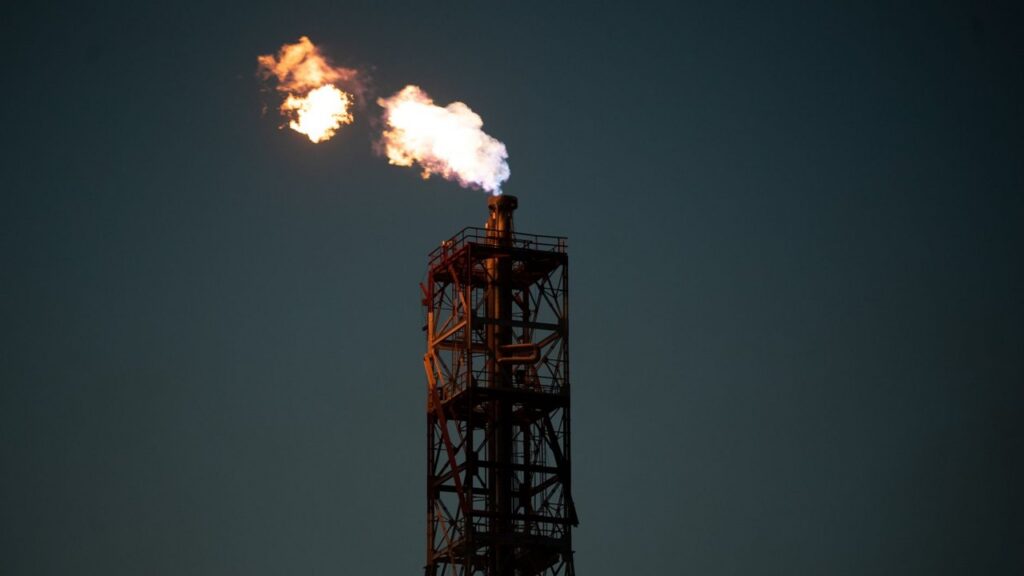
One hesitates to use the word “predictable,” because in the social sciences we are trained to distrust it, but the collapse of President Trump’s “energy ceasefire” has followed a sequence so well-documented in the literature on asymmetric ceasefires that one could assign it as coursework. Ukraine paused strikes on Russian refineries for three days at Washington’s request. Russia continued striking Ukraine’s power grid. Ukraine resumed the refinery attacks. The Ryazan refinery, roughly 300 kilometers southeast of Moscow, is now on fire, a fact confirmed not merely by satellite imagery enthusiasts but by the Russian Defense Ministry and Governor Pavel Malkov himself, who described the assault in the generous language of institutions caught unprepared.
Zelenskyy’s formulation to the Financial Times was admirably economical for a man usually given to longer clauses than even mine: “The block is out. We’re done.” One understands the exhaustion. A unilateral ceasefire, offered by a third party without securing reciprocal commitments from the adversary, is not diplomacy; it is a press release with a body count. The literature on ceasefire durability is quite clear on this point: agreements without verification mechanisms and mutual incentives decay within days. This one lasted three.
What complicates the complication, as it were, is the American role, which has shifted from ambiguous broker to something closer to active participant on the Russian side of the ledger. The White House struck a diesel deal with Russia, an arrangement whose timing, weeks before the midterm elections, requires no conspiracy theorizing to interpret; it is simply price politics, transparently legible to anyone who has read a single season of electoral history. Then came the reported gaps in intelligence sharing and restrictions on Starlink’s military variant, Starshield, which Kyiv reasonably characterizes as “dangerous.” When a patron begins withholding the instruments of a client’s defense while simultaneously purchasing the adversary’s fuel, the client is entitled to draw conclusions. Zelenskyy drew his. The drones followed within hours.
The Senate Republican fracas over Starlink, now reportedly a genuine flash point within the caucus, is the tell that this is not merely a bilateral spat but a structural rupture in the coalition itself. When the president’s own party begins litigating the wisdom of conditioning satellite access on a client state’s battlefield restraint, the “energy ceasefire” framing has already failed at home as thoroughly as it failed abroad.
One is not a conspiracy theorist. One is simply someone who has read the literature. And the literature says: ceasefires require reciprocity, patrons who behave like patrons, and third parties who do not simultaneously shop in the adversary’s inventory. Trump’s initiative contained none of the three. The Ryazan fire is not an aberration; it is the system performing exactly as its inputs specified, which is the least comforting thing a social scientist can say.