


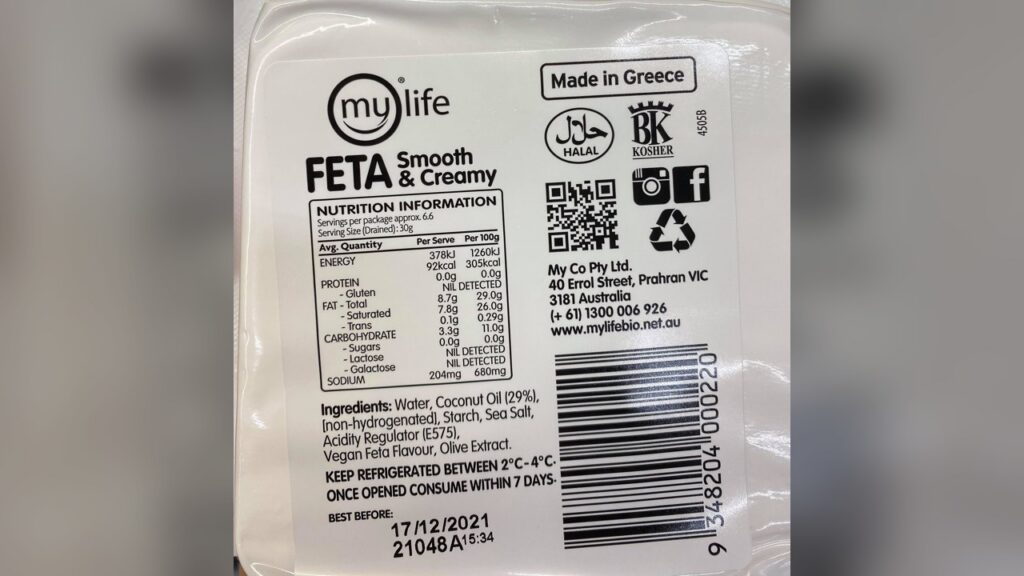
There is a particular kind of American outrage that requires its subject to be simultaneously trivial and existential, and the Tillamook cheese boycott is a textbook specimen. Sometime around September 17, conservative social media accounts discovered that packages of Tillamook cheddar carry a small “Certified Halal” mark. The discovery was followed by the usual choreography: viral posts, filmed destruction of dairy products in grocery aisles, and a statement attributed to ACT for America accusing corporations of “groveling to Islam.” One critic, in a tirade that Al Jazeera reported on, branded the product “Al Qaeda cheese.” The phrase has a certain ring to it. It also has nothing to do with how cheese is made.
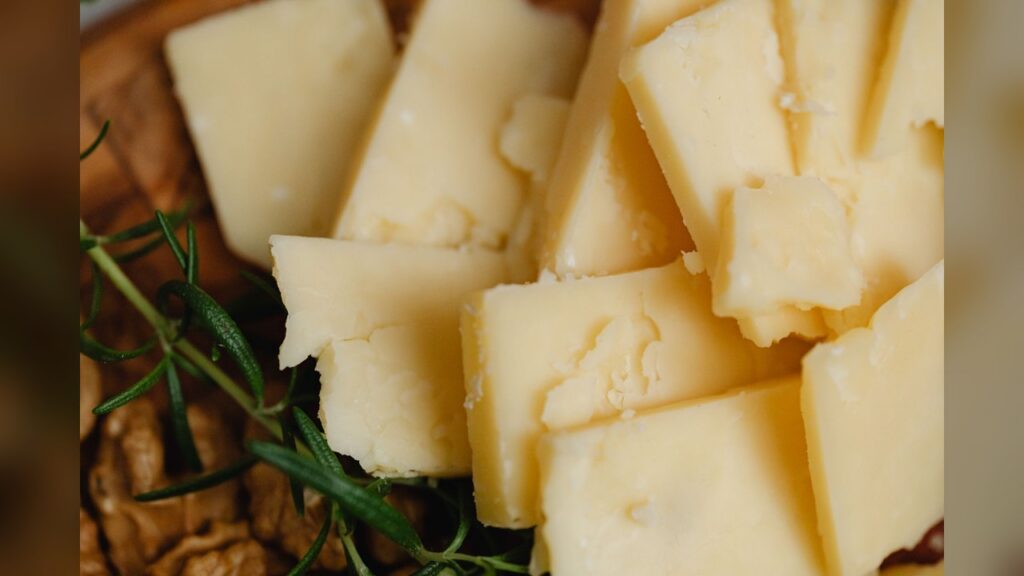 https://kaboompics.com/ / Pexels
Here is the part that requires patience to explain, apparently. Tillamook, an Oregon dairy cooperative owned by the Tillamook County Creamery Association, switched most of its cheeses to fermentation-produced rennet in 2016. Rennet is the enzyme that coagulates milk into curds. Traditional animal rennet is extracted from the stomach lining of calves. Fermentation-produced rennet is made by microbes. It is vegetarian, it is cheaper to produce at scale, and it happens to meet the requirements of both kosher and halal certification bodies because no animal slaughter is involved. The company did not add anything to its cheese. It did not change its recipe to accommodate Islamic dietary law. It replaced one enzyme with another for reasons that are standard in the food industry, and the new enzyme qualified for certifications that the old one did not.
The halal label is a consequence, not a cause. But the causal architecture of this story is irrelevant to the people who are angry about it, because the anger was never about rennet. It was about seeing Arabic-adjacent script on a package of medium cheddar and experiencing that as a violation of something sacred. This is the same reflex that drove anti-halal boycotts in Australia, where campaigns triggered by the mere appearance of certification marks forced at least one producer, Fleurieu Milk and Yoghurt, to temporarily drop its halal certification in 2014 and abandon a supply contract with Emirates worth roughly A$50,000 a year. The company later reinstated the certification and regained the contract, which is a detail worth sitting with. The boycott accomplished nothing except a brief interruption in yogurt sales to an airline.
 Foodie Factor / Pexels
What we are watching is not a consumer movement. It is a literacy failure dressed in the language of consumer sovereignty. The people calling for a boycott of Tillamook are, in effect, demanding that a company remove a label certifying that its existing production methods already meet a dietary standard, not because the standard has been imposed on them but because the standard is associated with a religion they dislike. The cheese is identical. The process is identical. The only thing that has changed is that someone noticed a logo.
Tillamook has been here before, from the opposite direction. In 2019, the Center for Food Safety organized a boycott alleging that the company’s pastoral marketing masked its reliance on Threemile Canyon Farms, a large industrial dairy in eastern Oregon. That campaign was about transparency in supply chains. This one is about the inability to distinguish a certification mark from a religious imposition. They are not the same phenomenon, and treating them as equivalent would be an analytical error I am not prepared to make.
 fajri nugroho / Pexels
The deeper structure here is one I have written about before and will presumably have to write about again: the certification economy is invisible to most American consumers until it isn’t, and the moment it becomes visible, it gets read as conspiracy. Kosher certification has been standard on thousands of American products for decades without generating panic, because Jewish dietary law has been domesticated in the American imagination as a quaint cultural accommodation. Halal certification triggers a different response because Islam has not been granted the same accommodation. The label is the same kind of label. The reaction is not.
One small irony, among several: Tillamook’s Maker’s Reserve 10-Year Extra Sharp Cheddar still uses animal rennet and is not halal-certified. The boycott’s most discerning participants could, in principle, simply buy that one. But discernment was never the point.