


Elon Musk wants a million people on Mars by 2050. Jeff Bezos is building the rockets to get us there. NASA is drawing up lunar base plans. And the legal framework governing what happens when we actually arrive is a stack of Cold War treaties written before anyone imagined a human could survive more than a few hours off this planet.
That is not a minor gap. It is the same gap we see every time technology outruns governance: the powerful move first, the rules come later, and by the time accountability arrives, the harm is structural and permanent.
The five United Nations space treaties negotiated between 1967 and 1979, the Outer Space Treaty, the Rescue and Return Agreement, the Liability Convention, the Registration Convention, and the Moon Agreement, set basic ground rules. No nuclear weapons in orbit. No claiming sovereignty over celestial bodies. Nations bear liability for damage their space objects cause. But none of these documents address colonization. They were drafted when colonization was science fiction. There is no legal precedent for a permanent human settlement on another world. There is no framework for who governs it, how disputes are resolved, how workers are protected, how resources are distributed, or how a corporation like SpaceX answers to anyone if something goes catastrophically wrong 140 million miles from the nearest courthouse.
The Harvard Undergraduate Law Review laid this out in devastating detail earlier this year. The core argument: international law on Earth is already broken in three measurable ways, enforcement, scope, and accountability. Maritime law cannot stop Russia from annexing Ukrainian seaports. Human rights law cannot stop atrocities in active conflicts. The Paris Climate Accords are, in practice, a collection of non-binding suggestions that most advanced nations ignore. If we cannot enforce rules on our own oceans, in our own atmosphere, among our own neighbors, what exactly gives anyone confidence that we can enforce them on Mars?
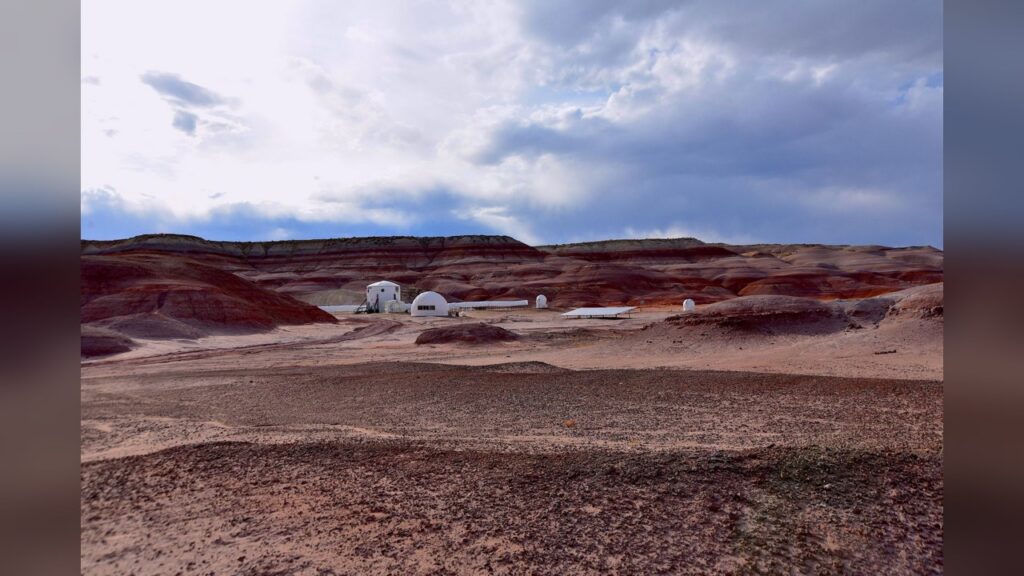
 Jacek Halicki (CC BY-SA 4.0) via Wikimedia Commons
Here is where the organizer’s instinct kicks in. Because this is not abstract. The same actors who dodge accountability on Earth are the ones planning to build the infrastructure of space. Musk has openly floated the idea of direct democracy on Mars, governance by his own design, answerable to no existing legal authority. Bezos envisions orbital habitats managed by the companies that build them. These are not democratic proposals. They are corporate charters dressed up as social contracts.
The Outer Space Treaty says no nation can claim sovereignty over celestial territory. It says nothing about a private company extracting lunar water ice, processing it into rocket fuel, and selling it back to other settlers at whatever price the market, which the company also controls, will bear. It says nothing about labor rights for the people who actually do the extracting. It says nothing about what happens when a colony’s life support system fails and the entity responsible is a Delaware-incorporated subsidiary with no assets anyone can seize.
We have seen this movie. Company town. Extractive economy. Workers dependent on the employer for air, water, shelter, and the ride home. The only difference is the scenery.
What must happen is straightforward and urgent. The international community, led by the UN Committee on the Peaceful Uses of Outer Space, needs to draft a binding colonization framework before settlements exist, not after. That framework must include enforceable labor protections, mandatory resource-sharing protocols, independent judicial mechanisms with real jurisdiction over private actors, and a clear prohibition on corporate self-governance. The Artemis Accords, the U.S.-led lunar cooperation agreement signed by 40-plus nations, are a start but they are voluntary and vague. Voluntary and vague is how accountability dies.
The window is closing. Every year that passes without binding rules is another year in which the physical infrastructure of space gets built by actors who have no incentive to submit to oversight once the concrete, or whatever passes for concrete on Mars, is dry. We either write the rules now or we let the richest men who ever lived write them for us. There is no third option.