



Let us walk through the architecture of this thing slowly, because the details matter and the impulse will be to flatten them into a slogan.
On July 13, an Immigration and Customs Enforcement agent shot and killed Johan Sebastián Durán Guerrero, a 25-year-old Colombian national, in a car near his home in Biddeford, Maine. Durán Guerrero had a pending asylum case and a valid work permit. He was not the target of the operation. He was not subject to a final order of removal. He was driving his roommate’s car. His roommate, according to Rep. Chellie Pingree, was the person ICE had come for, and the roommate also lacked a final removal order. So the agency conducted a surveillance operation at a residential address, deployed an agent with a documented history of violent behavior and mental health issues, and ended up killing a bystander who was lawfully present and employed in the United States. Every link in that chain had to fail for the outcome to occur. Every link did.
Pingree, speaking at a hearing in Biddeford on Monday alongside several other Democratic House members, called the discovery a “shocking revelation in clear contradiction to what ICE” and the Department of Homeland Security had said. She is being polite. What we are looking at is not a contradiction. It is a pattern of institutional reflex.
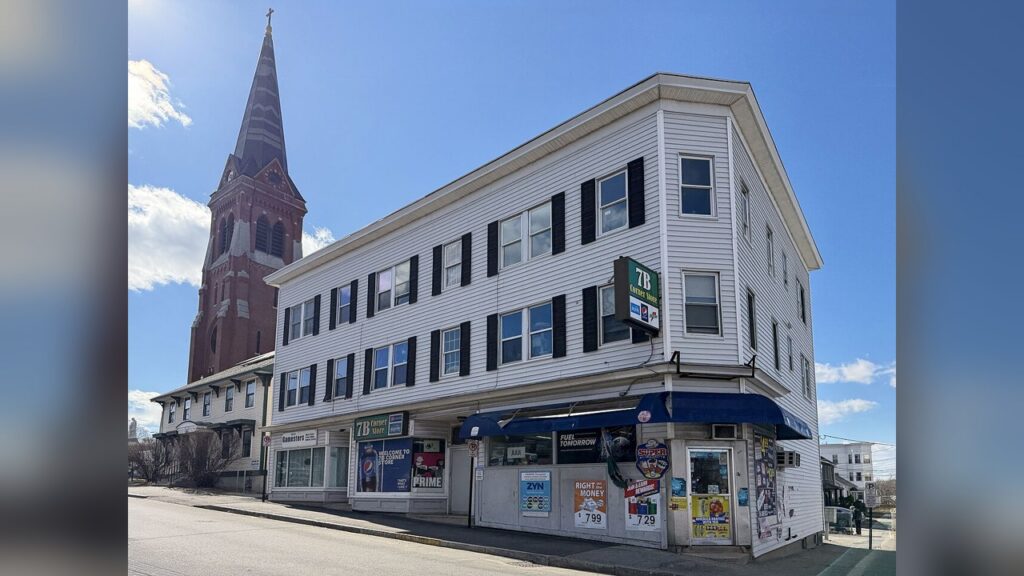 Quintin Soloviev (CC BY 4.0) via Wikimedia Commons
DHS, in a statement late Monday, said it “stands by its prior assessment.” ICE was conducting “targeted surveillance on the last known address of an illegal alien with a final order of removal,” a spokesperson said, adding: “We are not going to disclose law enforcement sensitive intelligence and methods. Nowhere did we state that Johan Sebastián Durán Guerrero or his roommate were the target of the operation.” Read that sentence again. The agency is simultaneously claiming the operation was justified by a final removal order and refusing to confirm whose removal order it was, while conceding that neither the dead man nor his roommate was the target. The syntax is doing a great deal of work here, and none of it honest.
The literature on lethal force encounters during vehicle stops is not ambiguous. The risk of escalation is well documented. The risk of misidentification is well documented. The risk of an agent with prior behavioral red flags being deployed to a residential surveillance operation is, or ought to be, a question that DHS’s own internal review mechanisms would have answered before the fact rather than after a funeral. ICE briefly appeared to recognize this: the shooting led to a policy change suspending most vehicle stops. President Donald Trump swiftly opposed the change. So the institutional learning cycle was interrupted at the top before it could complete a single rotation.
This is the part that requires the most careful framing, because it is easy to moralize and harder to be precise. What killed Durán Guerrero was not a single rogue agent or a single bad decision. It was a system in which an agency with weak internal vetting, broad discretionary authority, and minimal external accountability conducted an armed operation against a person who was not deportable, in a car owned by another person who was also not deportable, using an officer whose fitness for duty should have been flagged by any competent review process. The Maine Attorney General’s office is investigating. That investigation is necessary. It is also, structurally, a post-mortem on a failure that was engineered upstream.
“Johan Sebastián Durán Guerrero should be alive today,” Pingree said. She is correct, and the reason she is correct is not complicated. A man with a work permit and an active asylum claim was shot dead in his own neighborhood by a federal agent who should not have been in the field, executing an operation that should not have been authorized, targeting someone who should not have been targeted. The system did not malfunction. It produced exactly the outcome its design permits.