


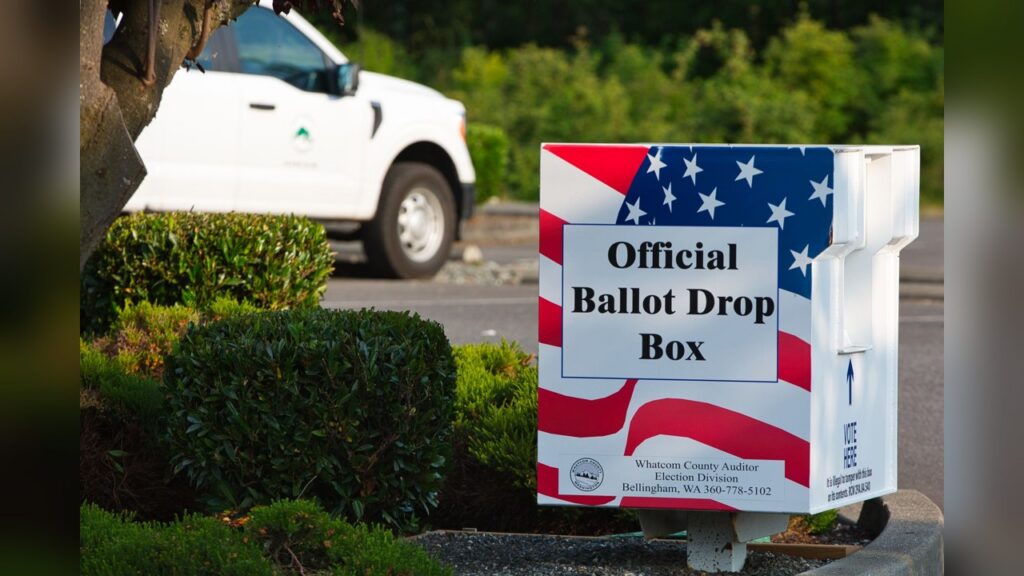
Read the amended complaint filed Wednesday and tell me this is coincidence. On the very first day California’s ballot drop boxes opened, ICE agents detained a person in a parking lot at Allan Hancock College in Santa Maria, in the same parking area voters had to walk through to reach an active drop box. Not near the college. Not in the neighborhood. In the exact corridor between a voter and their ballot.
Voting rights groups expanding the lawsuit to keep armed federal agents away from polling places now have Hennepin County, Minnesota, as a co-plaintiff, and the county brought receipts. Department of Homeland Security investigators entered election spaces three times in five months: once at a city elections office, twice at an early-voting site at the Hennepin County Government Center. Agents made at least two arrests in the building’s lobby, steps from where people were casting ballots.
Here is the part that should stop every one of us cold. Election workers who witnessed those arrests became distressed. They reported feeling unsafe at their jobs. Some had to be reassigned. The county has since spent more than 100 hours training staff on what to do if federal agents show up: de-escalation, evacuation plans, procedures for removing unauthorized people from polling places. Eight separate contingency plans now address the possibility of federal agents at election sites, consuming 38 percent of the county’s risk-mitigation planning for November.
Let that sink in. A county elections office, one of the most boring and essential organs of self-government we have, is now spending over a third of its safety planning on its own federal government showing up armed at the polls. That is not a security environment. That is an occupation environment.
The other side will say agents are just enforcing immigration law, and where it happens is incidental. The first day of drop boxes. The lobby outside early voting. Three visits in five months to election spaces specifically. When a pattern repeats this precisely, “incidental” stops being an explanation and becomes a talking point. The complaint describes what researchers and organizers already know from lived experience: the mere prospect of immigration agents near voting sites changes whether people show up at all. That’s the harm. That’s the mechanism. You don’t need to arrest a single voter to suppress hundreds of them. You just need voters’ neighbors to disappear in the parking lot.
And spare me the “who could have predicted this” routine from the officials who built this apparatus. DHS and ICE leadership chose these operations, chose these locations, and chose this moment, weeks out from a midterm election. Hennepin County didn’t join a lawsuit for fun. Counties do not lightly sue the federal government. They do it when the machinery of intimidation has become so routine that evacuation drills for poll workers are the new normal.
So what must be done? The court should grant the relief the plaintiffs are seeking and keep armed federal agents away from polling places, full stop. Election officials everywhere should be building the kind of contingency plans Hennepin County just wrote, because this will not be the last county to need them. And the rest of us should be clear about what we’re looking at: a coordinated effort to make voting feel dangerous for entire communities, funded by our own tax dollars.
The vote is the one tool that cannot be taken without our consent being manufactured first. They’re manufacturing it in parking lots and government center lobbies. Show up anyway, and drag everyone you know with you. Solidarity is the one contingency plan they haven’t planned for.