


The Democratic coalition has always contained the seeds of its own dissolution. This is not a controversial observation among political scientists. Maurice Duverger gave us the formal proof in 1951: two-party systems generate coalitions that are broad in composition but shallow in commitment, and the American variant, with its primary system layered atop first-past-the-post general elections, produces a particularly volatile compound. What r/neoliberal’s latest meme cycle has accidentally surfaced is not a scandal but a structural inevitability.
The “Vote Blue No Matter Who” slogan, which has circulated in centrist Democratic circles since at least 2016, functions as a coalition-discipline mechanism. Its logic is arithmetic: in a two-party system, the candidate closer to your preferences, however imperfect, produces better expected outcomes than the alternative. This is not ideology. It is game theory. The median voter theorem does not care about your feelings.
 Agence Rol. Agence photographique (commanditaire) (Public domain) via Wikimedia Commons
And yet. The same DSA-aligned voices who spent 2024 treating “Vote Blue No Matter Who” as a contemptible demand for unconditional surrender are now, having won a handful of primaries, suddenly discovering the virtues of party loyalty. The r/neoliberal thread catalogues the irony with some precision. DSA supporters who backed the uncommitted movement against the Biden-Harris ticket, who openly celebrated when Trump won, now expect moderates to fall in line behind their nominees without complaint. One commenter notes the rank hypocrisy. They are being generous. It is not hypocrisy. It is the predictable behavior of a faction that has never internalized the basic constraint of coalition politics: you cannot demand solidarity you have never practiced.
Consider the DSA’s foreign policy positions, which the thread discusses at length. The organization has opposed military aid to Ukraine and blamed NATO expansion for the Russian invasion, a position that mirrors Kremlin talking points with a fidelity that should trouble anyone who has read the relevant literature. The DSA’s national leadership, according to multiple commenters citing recent interviews, advocated a one-state solution for Israel-Palestine while apparently not knowing what the Camp David Accords or the Oslo Accords were. I cannot independently verify that last claim from these sources, but the pattern it describes, an activist movement with maximalist positions and minimal historical literacy, is consistent with what scholars of social movements have documented across decades.
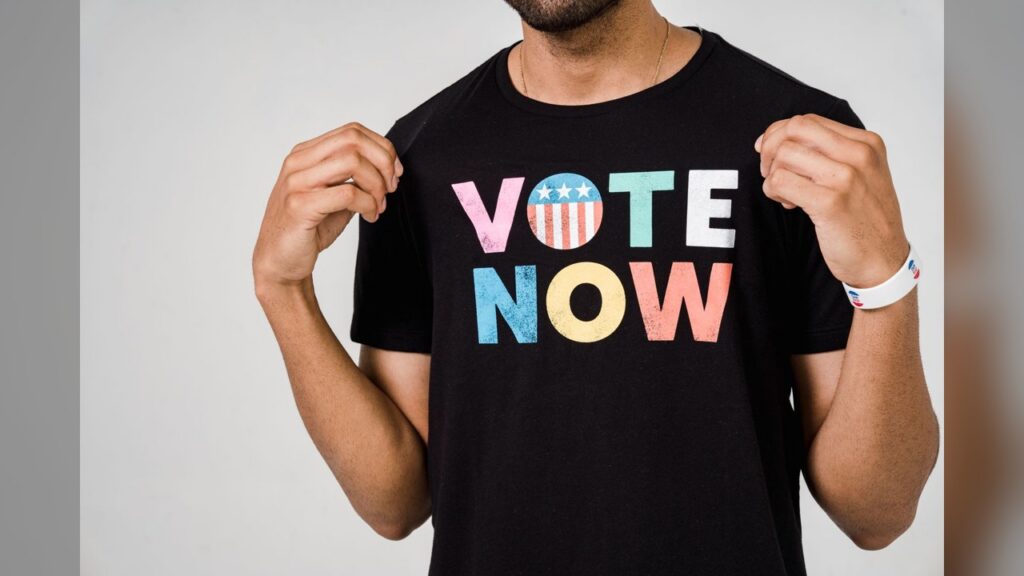 Sora Shimazaki / Pexels
The deeper problem is not the DSA. It is the structure. American primaries allow small, motivated factions to capture nominations in low-turnout contests, then demand that the broader coalition ratify their choice in the general. This is not a feature of the DSA specifically. The Tea Party executed the same maneuver against the Republican establishment in 2010. The difference is that the Tea Party, whatever its defects, understood that the general election required coalition maintenance. The DSA’s wing of the Democratic Party treats the general election as an afterthought, a referendum on whether the coalition was sufficiently deferential to them during the primary.
The r/neoliberal poster who urged the community to “get your asses out there in November and Vote Blue no matter who” was right on the merits and naive about the reception. The thread was brigaded. The comments filled with flairless accounts. The coalition frayed along exactly the fault lines that Duverger’s law predicts. None of this is surprising. All of it is exhausting.
 Brett Jordan / Pexels
The question is not whether the Democratic coalition can hold. It can, and probably will, because the alternative is worse and most voters can do the math. The question is how much energy the party will waste accommodating a faction that has never reciprocated. The literature on coalition governance is clear: asymmetric loyalty demands produce resentment, and resentment produces abstention. The DSA is not the problem. The problem is a party structure that rewards the faction most willing to defect.