


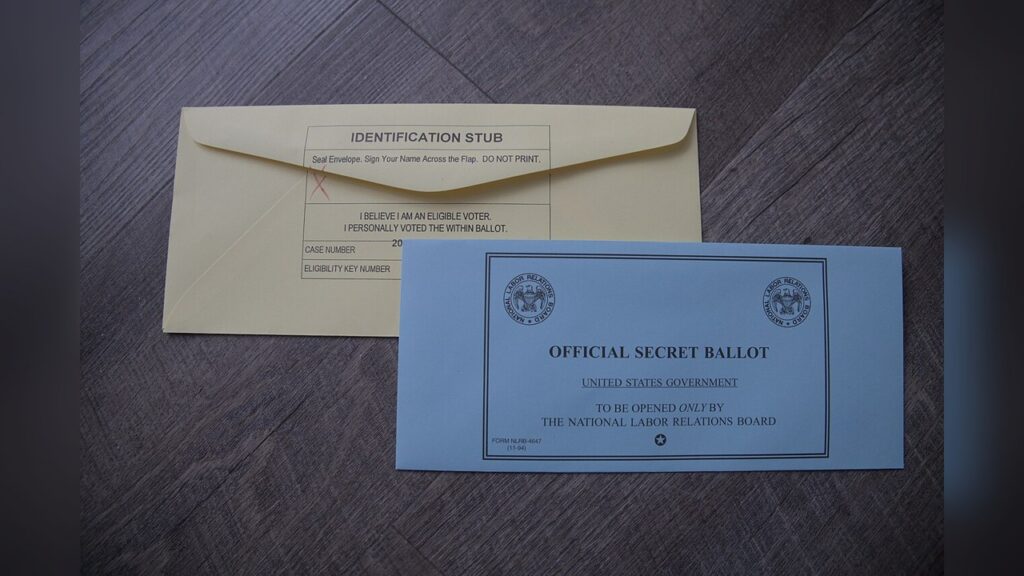
There is a particular species of bureaucratic audacity that deserves its own taxonomy. The U.S. Postal Service published a 95-page final rule on Friday, August 21, designed to choke off mail-in voting in any state that declines to hand its voter rolls to the Department of Homeland Security. Two federal courts, in California and Massachusetts, have enjoined the rule from taking effect. The Postal Service published it anyway.
Let me be precise about what is happening here, because the temptation to reach for words like “unprecedented” is strong and the word is wrong. This is not unprecedented. It is the logical extension of a March executive order in which President Trump directed the USPS to refuse delivery of ballots to voters not appearing on a federal citizen list compiled by DHS. The executive order was the mechanism. The rule is the implementation. The injunctions are the friction. And the Friday publication, timed for the news cycle’s shallowest hour, is the tell.
 Element5 Digital / Pexels
The rule requires states to supply USPS with names and barcodes tied to mail-in ballots, to adopt new envelope standards, and to feed voter data into something the agency calls the Federal Ballot Mail Portal. States that refuse would find their ballots simply undelivered. The federal government has already sued 30 states and the District of Columbia for declining to surrender their voter lists. This is not a narrow administrative dispute. It is a coordinated campaign to restructure the conditions under which Americans cast ballots, routed through the one federal agency that physically touches nearly every mailed vote.
Nearly one in three Americans voted by mail in 2024. The Postal Service received over 200,000 public comments on the proposed rule, a volume that in any functioning regulatory regime would signal something beyond mild concern. Postmaster General David Steiner defended the plan in June as a matter of matching what states send to what actually gets sent, which is a sentence that sounds reasonable until you remember that the authority to define “what actually gets sent” now resides with an agency whose core competence is delivering letters, not certifying electorates.
The rule’s own text is the most revealing document in this affair. The USPS writes, with the patience of someone who has already been told no twice, that if the government “obtains timely relief from the injunctions, implementation immediately thereafter will provide election officials as much time as possible” to comply before ballots go out in September. Read that clause carefully. The agency is not waiting for the courts to resolve the constitutional question. It is pre-positioning. It has built the apparatus, staffed the Portal, written the 95 pages, and is holding at the line, waiting for the judicial gate to open. The injunction is treated not as a stop sign but as a yellow light.
 Joshua Brown / Pexels
Judge Indira Talwani of the U.S. District Court in Boston blocked the rules last week. A federal court in California has issued a parallel injunction. Both rest on the same elementary principle: you do not restructure a national election’s ballot-delivery infrastructure months before the vote while the legal authority to do so remains genuinely contested. This is not a controversial proposition. It is, in the literature on election administration, close to axiomatic.
And yet here is the president, who signed the March order after years of asserting that his 2020 defeat resulted from mail-in fraud, a claim that has survived no evidentiary scrutiny in any forum equipped to apply one. Here is the same president who has himself voted by mail at least three times, including in Florida’s Republican primary this year. The exemption, one gathers, is personal.
What we are watching is not a scandal in the tabloid sense. It is the institutionalization of a premise: that the federal government may condition the delivery of ballots on the states’ willingness to share their voter data with a domestic security agency. The courts have said not yet. The Postal Service has said we are ready. The distance between those two positions is where the next election will be decided.