


We have been here before. Not this exact here, not the SpaceX IPO and the trillion-dollar threshold and the particular spectacle of Elon Musk. But the structural here. The Gilded Age produced its own trillionaire-equivalents in relative terms, and the political economy that followed them produced, in due course, the Progressive Era, the trust-busters, and eventually the New Deal. This is not a controversial sequence. It is in every undergraduate economic history textbook I have ever assigned, and I have assigned quite a few.
The Los Angeles Times opinion page, in a piece defending Musk’s trillionaire status, calls concerns about inequality “an aesthetic complaint masquerading as a policy position.” A “vibes argument.” The author offers the analogy of a neighbor winning the lottery: you feel poorer, but your material circumstances are unchanged. If someone cures cancer and gets rich, everyone wins.
This is a model of economic reasoning so clean, so hermetically sealed from external reality, that one almost admires its craftsmanship. It treats the economy as a frictionless plane where wealth creation never intersects with rent-seeking, where market power never distorts price discovery, and where the political influence purchased by extreme wealth has no recursive effect on the rules that generate that wealth in the first place. The literature on regulatory capture, on the political spending of the ultra-wealthy, on the empirical relationship between inequality and democratic erosion, is voluminous and growing. It is not a “vibes” literature. It is a peer-reviewed literature.
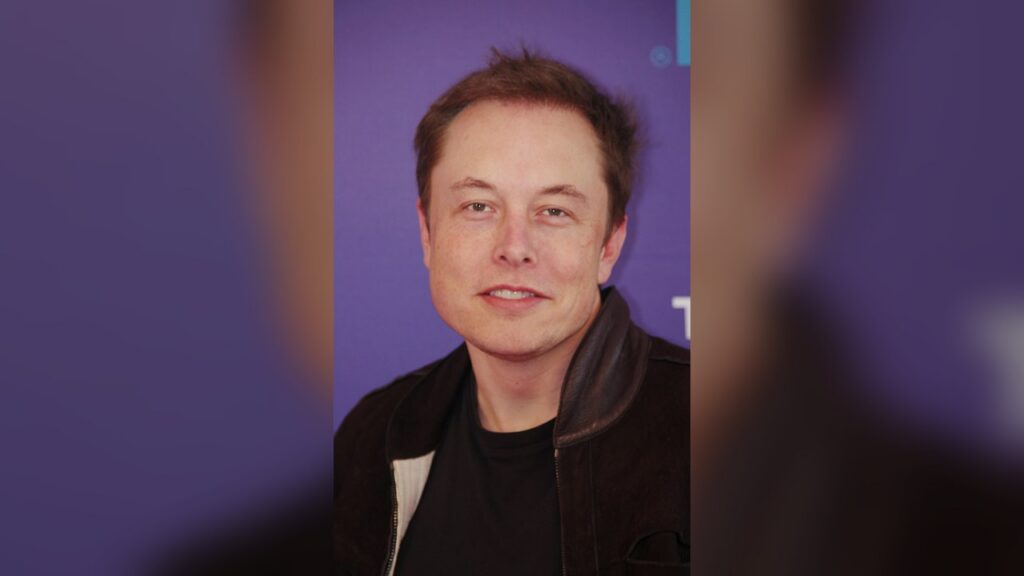 David Shankbone (CC BY 3.0) via Wikimedia Commons
The Newsweek column by Dan Perry, the former Associated Press editor, makes the argument that the LA Times column refuses to engage with. Perry is not a socialist. He is explicit about that. He calls capitalism “by far the greatest engine of prosperity, innovation and economic progress humanity has devised.” His concern is not that capitalism has failed but that it is succeeding in a way that destabilizes the political conditions necessary for its own continuation. A Gallup poll found nearly four in ten Americans holding a positive view of socialism. Zohran Mamdani’s rise in New York and the momentum behind the Democratic Socialists of America did not materialize from nothing. They materialized from housing costs that have decoupled from wages, from student debt that functions as a generational wealth tax, from a health care system whose per-capita costs bear no relationship to outcomes.
Perry’s most important point is also his most historically grounded one. Today’s largest fortunes, he notes, are “attached to control over the infrastructure of life itself: social-media platforms, search engines, artificial intelligence, satellites, communications networks and enormous stores of data.” This is categorically different from the wealth of a Carnegie or a Rockefeller. A steel magnate controlled steel. A tech oligarch controls the epistemic environment in which democratic deliberation occurs. The political science literature on platform power and democratic backsliding is not speculative. It is documented.
The LA Times piece notes, correctly, that Musk’s trillion dollars is not cash in a vault. It is shares, primarily in SpaceX, which went public last week. The figure could decline. This is true and also irrelevant. The question was never whether Musk is literally hoarding dollar bills. The question is whether a system that permits wealth to compound to the GDP of scores of nations, as Perry observes, while simultaneously producing the highest inequality levels in the developed world, is a system that can sustain itself politically. The historical answer is no. It never has been.
 Office of U.S. Secretary of Energy (Public domain) via Wikimedia Commons
Perry proposes higher marginal rates on income measured in hundreds of millions, capital gains taxed more like labor income, serious treatment of unrealized gains, and inheritance taxation that prevents entrepreneurial fortunes from becoming dynasties. These are not radical proposals. They are the tax architecture of the postwar American economy, the one that produced the broadest middle class in history, before the structural reforms of the 1980s began dismantling it in the name of the very efficiency that has now delivered us a single individual worth more than the annual output of entire countries.
The LA Times asks: if someone cures cancer and gets rich, where is the injustice? The answer, which should not require a doctorate to articulate, is that the cancer-curer getting rich and the cancer-curer accumulating a trillion dollars while controlling the communications infrastructure of a democratic society are not the same scenario. One is a market rewarding innovation. The other is a market rewarding innovation so disproportionately that the reward itself becomes a form of political power that no market mechanism can discipline.
We have had this debate before. We resolved it before. The resolution involved progressive taxation, antitrust enforcement, and a political consensus that extreme concentrations of private power were incompatible with democratic self-governance. That consensus held for roughly four decades. It produced the most prosperous period in American history. We abandoned it, and here we are, explaining again what was already understood.
 Original: NASA Johnson Space Center Derivative work: Nythar (Public domain) via Wikimedia Commons