



There is a particular genre of policy rollback that announces itself as a triumph of simplicity while quietly dismantling the scaffolding beneath something rather important. The Treasury Department’s Financial Crimes Enforcement Network has just issued a final rule permanently eliminating beneficial ownership reporting requirements for U.S. companies and U.S. persons under the Corporate Transparency Act, effective August 14, 2026, and the press release reads like a small-business liberation proclamation. It is, in fact, the systematic demolition of the only federal database designed to tell us who actually owns American companies.
Secretary Scott Bessent called it “a victory for common sense and American small businesses,” which is the kind of framing that performs well in a headline and rather poorly under examination. The Corporate Transparency Act, enacted in 2021 after roughly two decades of bipartisan legislative effort, required entities to disclose their beneficial owners to FinCEN. The purpose was not bureaucratic sadism. The purpose was to close a gap that financial-crime researchers, FATF examiners, and every serious Treasury official since the Clinton administration had identified as a structural vulnerability: the United States was, by international consensus, one of the easiest places in the world to incorporate an anonymous shell company. Delaware, Wyoming, Nevada. You could form a limited liability company in an afternoon with less identification than a library card requires, and no federal authority would ever know who stood behind it.
The CTA was not a flawless instrument. The compliance literature is full of legitimate critiques: ambiguous thresholds, overlapping state filing regimes, unclear guidance on ownership percentages, and a rollout that can charitably be described as disorderly. Small businesses spent real money and real hours navigating a system that was, at times, poorly administered. These are fair complaints. They are also the complaints one addresses with better rulemaking, not with the wholesale deletion of the underlying data infrastructure.
 Pixabay / Pexels
And yet that is precisely what has happened. The final rule does not merely exempt U.S. companies from future reporting. FinCEN will also delete previously submitted beneficial ownership information for any individual it “reasonably believes” is a U.S. person, including data linked to U.S. passports and driver’s licenses. The database is not being paused. It is not being reformed. It is being emptied. The information that millions of businesses already filed, at real cost and under legal compulsion, will be purged from the system as though it never existed.
The Treasury press release notes that foreign entities qualifying as reporting companies will still be required to report beneficial ownership information for foreign individuals. This is the fig leaf, and it is a small one. The overwhelming majority of shell companies used for domestic money laundering, tax evasion, and sanctions evasion are formed under U.S. state law by U.S. persons. The foreign-reporting carveout preserves a perimeter while dismantling the interior. It is rather like fortifying the front door and removing every wall inside the house.
What we are watching is not deregulation in the conventional sense. It is the reversion to a status quo that the entire transnational anti-money-laundering framework spent twenty years trying to correct. The Financial Action Task Force, the IMF, the World Bank, and successive Treasury secretaries from both parties understood anonymous incorporation as a systemic risk. The CTA was the belated American answer to that risk. The interim rule in March 2025 began the retreat. This final rule makes it permanent.
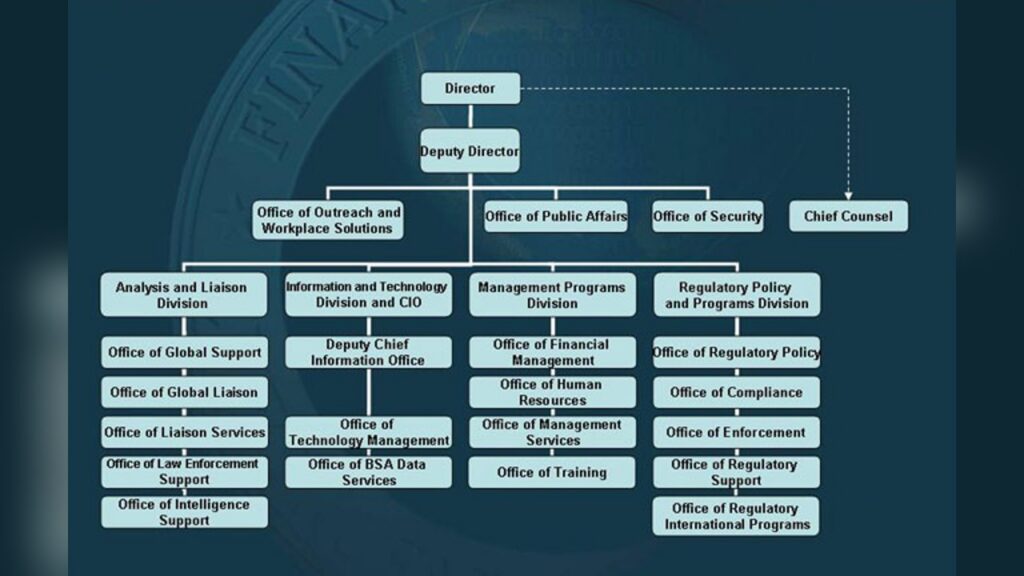 (Public domain) via Wikimedia Commons
Bessent insists the action comes “without compromising our national security.” One would like to see the threat assessment behind that assurance. The academic literature on beneficial ownership transparency is not ambiguous: jurisdictions that maintain ownership registers experience measurable reductions in illicit financial flows. Jurisdictions that do not, experience the opposite. The United States has now formally chosen the latter category, and has done so with the confidence of a government that has confused the absence of data with the absence of a problem.
The problem, of course, remains. We simply no longer have the records to trace it.