


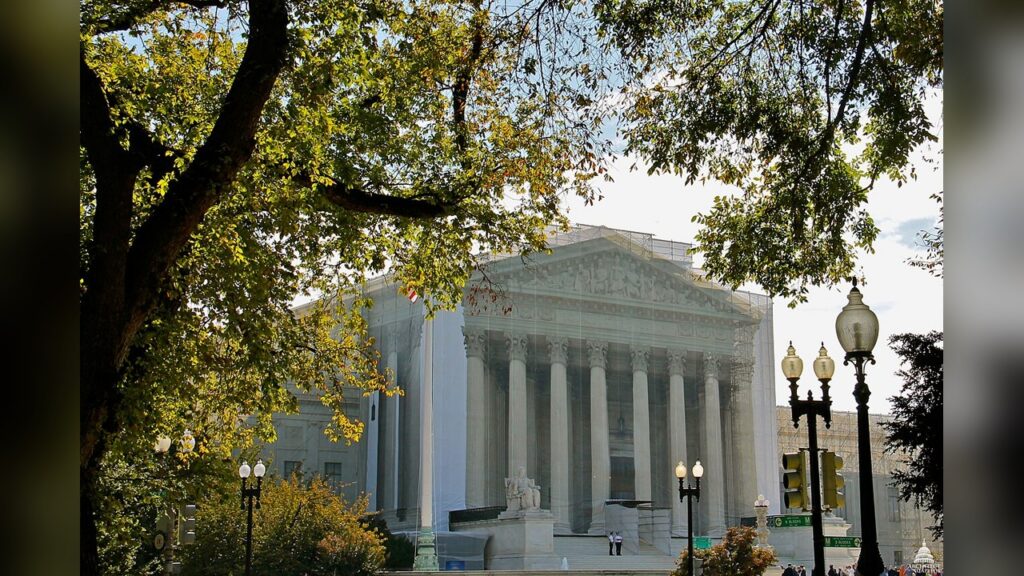
The Supreme Court’s conservative majority has what one court watcher politely called an “insatiable appetite” for religion cases. Let’s name what that appetite is actually for: dismantling the separation of church and state, brick by brick, until the wall Jefferson described exists only in dissenting opinions.
This term alone, the justices are hearing a staggering religion docket. First Liberty, the Alliance Defending Freedom, and the Brennan Center for Religious Liberty have flooded the docket with cases carefully engineered to exploit a sympathetic majority. These aren’t grassroots movements knocking on the Court’s door. They are well-funded legal operations with a playbook, and the Roberts Court is reading from it.
 Sarah K Joyce (CC BY-SA 4.0) via Wikimedia Commons
Consider what’s already on the calendar. On March 31, the Court hears Catholic Charities Bureau v. Wisconsin Labor & Industry Review Commission, where a Catholic diocese’s charitable arm demands a tax exemption that Wisconsin’s Supreme Court denied because the organization serves all people regardless of faith, employs non-Catholics, and doesn’t proselytize. Catholic Charities and the Solicitor General now argue that any inquiry into whether the organization’s work is “intrinsically religious” violates the Constitution. The implication is breathtaking: any entity with a religious affiliation could claim exemption from any secular obligation, and courts would be forbidden from asking why.
Then comes Mahmoud v. Taylor on April 22, where parents demand the right to opt their children out of any public school lesson featuring LGBTQ-inclusive storybooks. The Montgomery County school board correctly noted that exposure to curriculum materials is not the same as being forced to change your beliefs. But the parents’ framing, that “innocence will be lost and beliefs undermined” by the mere existence of books with LGBTQ characters, tells you everything about the endgame. This is not about parental rights. It is about giving religious objections veto power over public education.
And on April 30, Oklahoma Statewide Charter School Board v. Drummond asks whether a state can fund a Catholic virtual charter school with taxpayer dollars. The Oklahoma Supreme Court said plainly that spending state money on a religious school constitutes support for the Catholic church in violation of the state constitution. St. Isidore’s response? That being required to operate as a secular institution “imposes a penalty on the free exercise of religion.” By that logic, every secular regulation is religious persecution.
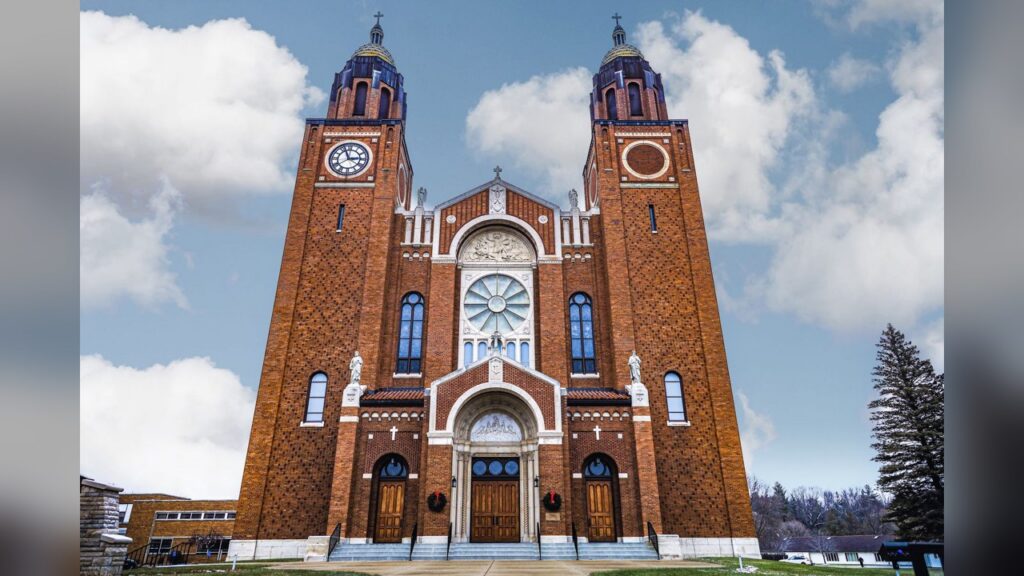 Alexander Hamilton / Pexels
Meanwhile, First Liberty is celebrating four additional cases on the fall docket, including a challenge to Colorado’s counseling regulations and a New Jersey investigation into a faith-based pregnancy center. And Kim Davis, the Kentucky clerk who refused to issue marriage licenses to gay couples, has a petition pending that asks the Court to overturn its ruling recognizing a constitutional right to same-sex marriage. The signal could not be clearer.
What scholars have documented is a deliberate shift, accelerating since the 1990s, away from protecting the Establishment Clause and toward elevating Free Exercise claims above all else. The conservative majority has shown, in case after case, little concern for government entanglement with religion. The result is a legal framework where “religious freedom” means the freedom of majority-faith institutions to extract public funds, shape public curricula, and override civil rights protections, while the rest of us are told our objections are secular overreach.
 Kindel Media / Pexels
This is structural. It is organized. And it is working. The organizations bringing these cases are not naive. They know this Court will meet them more than halfway. Every ruling that privileges Free Exercise over the Establishment Clause narrows the space where secular public life can function.
The response cannot be hand-wringing. It must be accountability at every level: state legislatures passing protective statutes, local school boards holding the line on inclusive curricula, and voters understanding that the Court’s composition is not an accident but a decades-long project. The wall between church and state is being demolished with judicial sanction. The question is whether enough people notice before the rubble settles into law.