


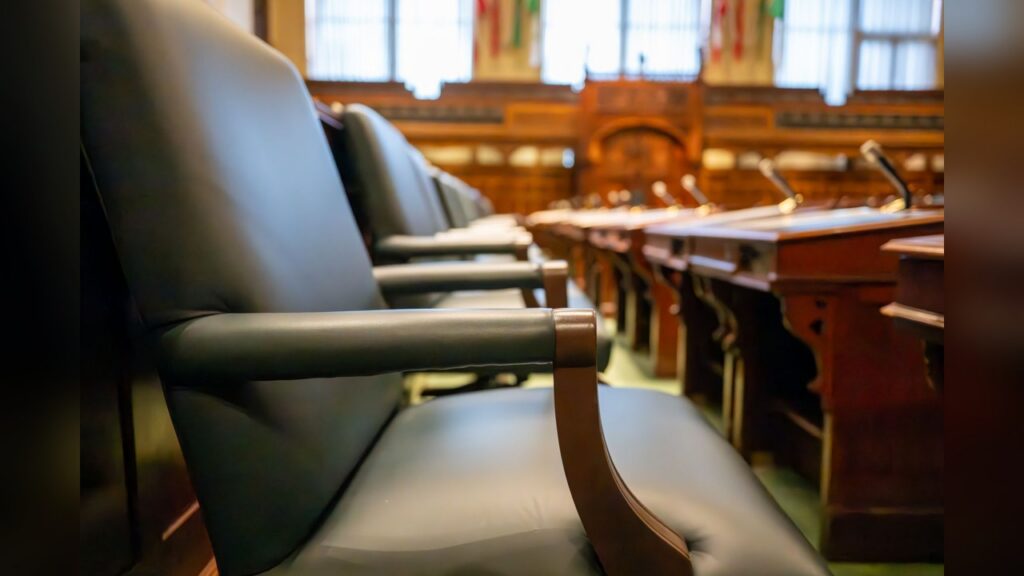
There is a well-established principle in administrative law, familiar to any first-year student who has actually done the reading, that a reviewing court may look behind the stated rationale of a government action to assess its true motivating purpose. The doctrine is sometimes called the “pretext inquiry,” and it rests on a structural intuition older than the Republic itself: when the sovereign offers one reason for a decision and then, under the pressure of litigation, retrofits another, the second reason deserves a particular species of skepticism. We are now watching this principle tested in real time in a federal courtroom in Washington, and the results are instructive, if grim.
On Friday, President Donald Trump announced via Truth Social that he was banning CNN, MS NOW, and Politico from the White House, effective immediately, because of their “constant ‘reporting’ FAKE NEWS.” He added, with the casual menace that is his signature: “Other Fake News Media Outlets to follow.” In the Oval Office that same day, he referred to it as “the ban on the free press” and said, “I don’t want them in my office. I don’t want them here.” The motivation, he explained, was “cumulative stories over the last few years” that were “negative.” He said nothing about national security. He said nothing about classified information. He said nothing about the East Wing bunker or ammunition stockpiles or the Iran war.
Then the lawsuit came. And then, miraculously, the rationale evolved.
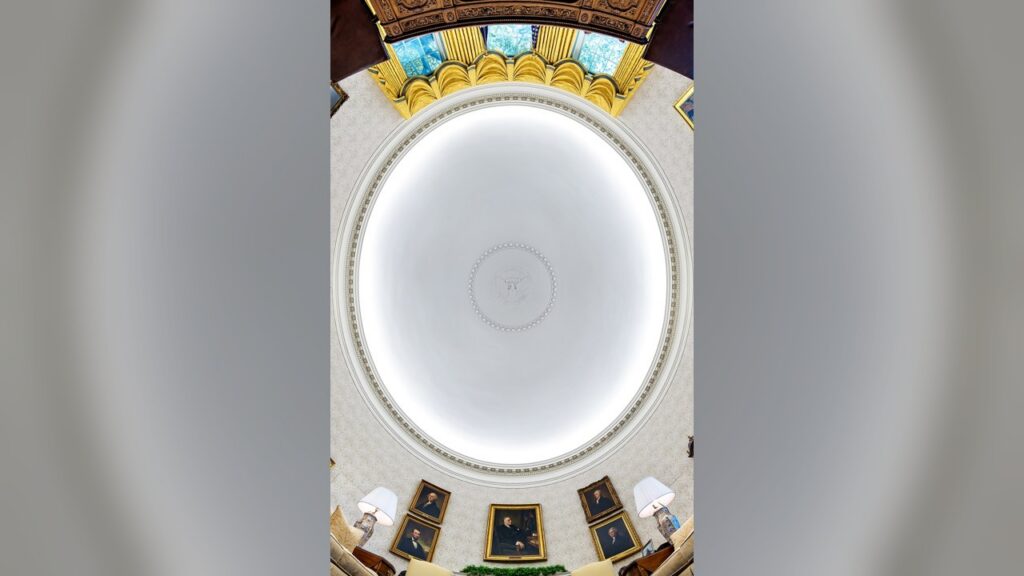 Biden White House Archived (Public domain) via Wikimedia Commons
By Tuesday evening, the Justice Department had filed a court document bristling with national security language. DOJ attorney Michael Velchik told Judge Timothy Kelly that the three outlets had “failed to maintain basic minimum standards of professionalism and decorum” and had published “sensitive or classified information.” The White House produced letters, dated September 22, four days after the ban, accusing the outlets of “trafficking in verifiable falsehoods about national security and other issues.” The cited offenses included reporting on White House ballroom construction, munitions supplies used in the Iran war, sanctions on Russia, and, rather remarkably, a Politico article about bad “vibes” at the Republican midterm convention in Dallas.
One struggles to locate the national security dimension of convention vibes.
The structural problem here is not subtle. The President announced a ban on Friday for one reason. His Justice Department defended it on Tuesday for an entirely different reason. The letters providing the outlets with notice of their alleged misconduct arrived after their credentials were already confiscated. Judge Kelly, a Trump appointee who ruled against the administration in the analogous Acosta case in 2018, noted this temporal absurdity plainly: “I don’t know how a letter that they got after their pass was revoked could provide them with the kind of standards they would have to conform their conduct to.” This is not a close question. Due process, as the Fifth Amendment requires and as the D.C. Circuit has repeatedly affirmed, demands notice before deprivation, not a post-hoc paperwork exercise designed to survive judicial review.
 Fanny (Appleton) Longfellow (1817-1861) (Public domain) via Wikimedia Commons
The outlets’ attorney, Ted Boutrous, put it with admirable economy: “He is our lead witness here.” Trump’s own words, delivered freely and repeatedly, establish that the ban is viewpoint discrimination, retaliation for coverage the President found insufficiently flattering. The Supreme Court has held for decades that the government may not condition access to a generally available benefit on the recipient’s political expression. White House press credentials are not a presidential party favor. They are a component of the newsgathering function the First Amendment was specifically designed to protect.
Trump, for his part, called Judge Kelly “totally disloyal” on Truth Social and said he would appeal any adverse ruling, because “Fake News people and publications that only write negatively” should not have access to the presidency. The word “disloyal” is doing a great deal of work in that sentence. Loyalty, in the constitutional framework, runs to the document, not the man. That this needs to be restated in 2026 is itself a symptom of something larger than one ban, one lawsuit, one judge.
The TV networks have refused to provide pool coverage in solidarity, leaving White House events without functioning microphones. More than four dozen media organizations filed an amicus brief calling the ban “transparently viewpoint discriminatory.” The institutional response is appropriate and necessary. But one notes, with the weariness that accompanies the study of institutional decay across historical cases, that the system’s defenses are being activated against an assault that should never have reached the courtroom. The ban is unconstitutional on its face. The President said so himself, on the platform he owns, in the words he chose. Everything since has been litigation theater.
The court will rule. The court will likely be correct. And then the appeal will come, because the point was never to win on the merits. The point was to demonstrate that the merits no longer matter.