


There is a concept in American criminal procedure, dry and unglamorous, called the vindictive prosecution doctrine. It holds that the government may not bring criminal charges to punish a defendant for exercising a constitutional right. The doctrine traces to the Supreme Court’s 1969 decision in North Carolina v. Pearce and has been refined through a modest body of appellate law over the subsequent half-century. It is not a doctrine that federal judges invoke lightly. The standard for “actual vindictiveness” requires something close to a prosecutor confessing on the record to retaliatory intent, which, unsurprisingly, few prosecutors do.
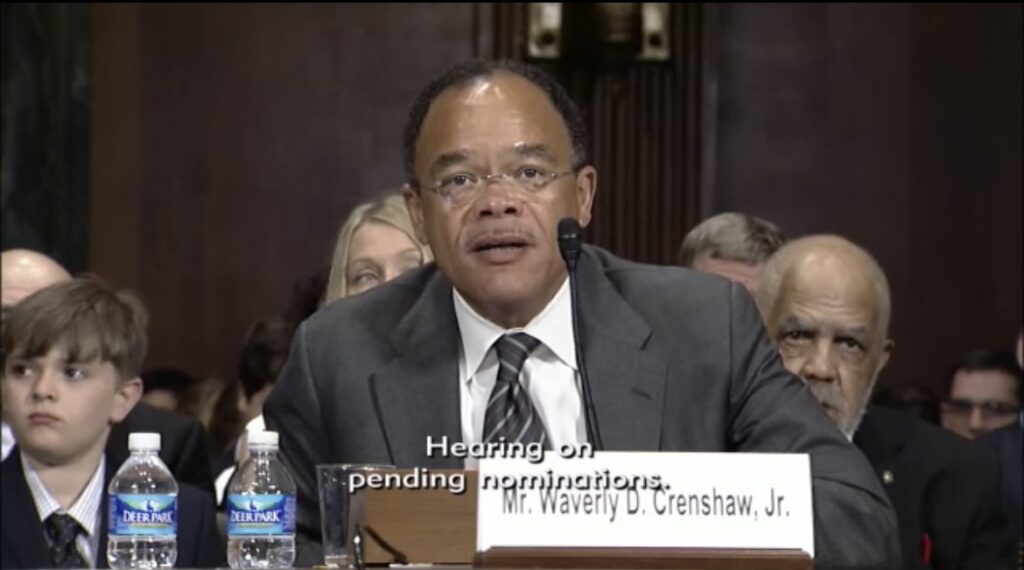
But there is a second threshold, “presumptive vindictiveness,” and it is here that U.S. District Judge Waverly Crenshaw’s ruling in Nashville becomes instructive. Judge Crenshaw did not find that the Justice Department admitted to retaliatory prosecution. He found something more structurally damning: that the timeline alone, combined with the public statements of senior officials, created a presumption the government could not rebut. Homeland Security had investigated the 2022 traffic stop, closed the matter, deported Abrego Garcia, and only reopened the case after the Supreme Court ordered his return. The person who made the decision to reopen was not called to testify. The government offered “secondhand testimony” instead. One does not need a doctorate in evidence law to find that conspicuous.
Then-Attorney General Pam Bondi stood before cameras and announced, “This is what American justice looks like.” Deputy Attorney General Todd Blanche made statements the court found contributed to the presumption of vindictiveness. Abrego Garcia’s defense team alleges the prosecution was initiated “on instructions from the White House.” The Justice Department, for its part, declined to put Blanche on the stand under oath. In an institutional environment where the line between prosecutorial discretion and political instruction has been deliberately blurred, the refusal to produce the actual decision-makers is not a legal oversight. It is a tell.
 (Public domain) via Wikimedia Commons
Now the department has asked the Sixth Circuit to reverse Crenshaw’s order, arguing in its filing that the dismissal “marks a dramatic expansion of the power of courts to dismiss serious criminal charges based on subjective assessments of a prosecutor’s motivations.” This is a carefully constructed sentence, and it is doing a great deal of work. It reframes a factual finding about timing, public statements, and the government’s failure to rebut a legal presumption as a mere “subjective assessment” by a single judge. The argument is not that the prosecution was non-vindictive. The argument is that courts should not be permitted to look too closely.
What we are observing is not, in the technical sense, a scandal. A scandal implies a departure from norms. This is something more systemic: the progressive instrumentalization of the federal prosecutorial apparatus as an extension of executive will, conducted in plain view, defended on appeal with the language of institutional restraint. The administration deported a man in violation of a 2019 immigration court order granting him protection. When courts compelled his return, it charged him. When a judge dismissed those charges as vindictive, it appealed. And it has simultaneously announced its intention to deport him again, this time to Liberia, a country with which Abrego Garcia has no connection whatsoever, until a federal judge blocked that effort.
The legal scholar Susan Klein has written about the “elasticity” of prosecutorial discretion, the way the concept expands to cover decisions that are, in practice, unreviewable. The Abrego Garcia case is a stress test of that elasticity. The question the Sixth Circuit must now answer is whether a federal court may examine the circumstances surrounding a prosecution when those circumstances include a closed case reopened after a Supreme Court ruling, public declarations by the attorney general, and the government’s refusal to produce the officials who made the relevant decisions. If the answer is no, then the vindictive prosecution doctrine, however modestly conceived, has been reduced to a parchment barrier.
The Justice Department’s brief insists it had “multiple legitimate bases to prosecute.” Perhaps it did. But legitimacy is not established by assertion. It is established by evidence, by testimony, by the willingness to subject one’s reasoning to cross-examination. The government had every opportunity to produce Todd Blanche, to explain the timeline, to demonstrate that career prosecutors arrived at this indictment through ordinary process. It chose not to. That choice is the most eloquent argument in Abrego Garcia’s favor, and no appellate brief can retract it.
- CBS News — Justice Department asks court to reinstate criminal charges against Kilmar Abrego Garcia
- PBS NewsHour (AP) — Federal judge dismisses human smuggling charges against Kilmar Abrego Garcia