


There is a certain kind of Democratic consultant who has spent the last decade explaining, with the patience of someone addressing a particularly slow student, that the path to victory in states like Florida runs through the center. You find a moderate. You raise corporate money. You avoid anything that might frighten a hypothetical suburban swing voter who, as far as anyone can tell, does not actually exist. You lose. You write a memo about it. You get hired to run the next campaign.
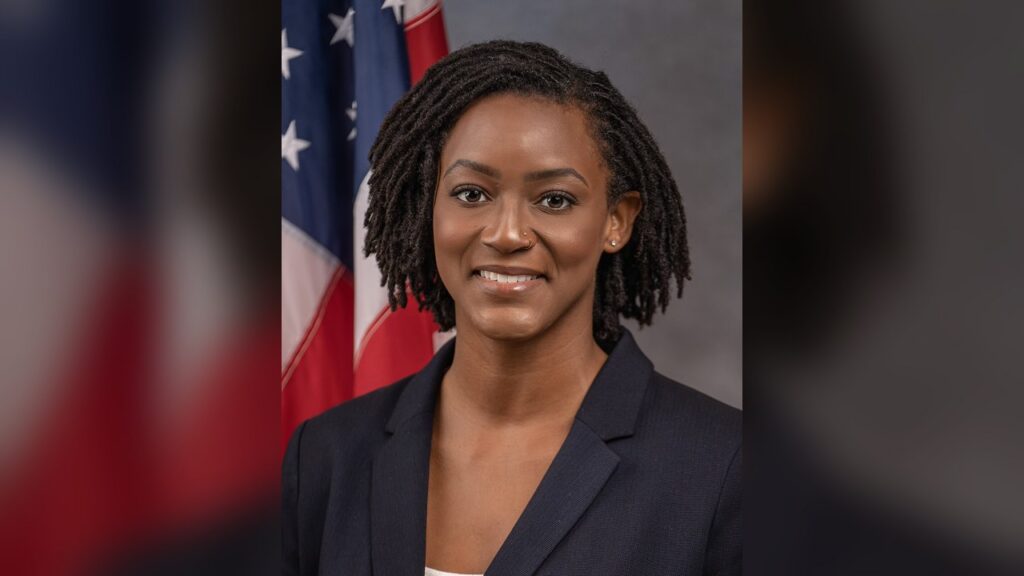
On Tuesday, Florida Democrats rejected this entire theory of governance by nominating Angie Nixon for the United States Senate. Nixon, a state representative and union organizer from Jacksonville, beat retired Lt. Col. Alex Vindman by 12 points. Vindman was the electability candidate. He had the funding. He had the biography. He had the cable news imprimatur. He lost to a woman who joined the Democratic Socialists of America in June and describes herself, with a precision that would satisfy any political theorist, as “the biggest pain in Ron DeSantis’ ass.”
Now Bernie Sanders has endorsed her, and the response from the people who brought you the Vindman strategy is, predictably, that this is reckless. Florida has 1.5 million more registered Republicans than Democrats. Ashley Moody, the incumbent appointed by DeSantis, has $14 million in the bank. Nixon had less than $1 million before the primary. The structural deficit is real. The data is not in dispute.
But the data has never been the actual argument. The actual argument is that candidates who run on material politics, on wages and housing and healthcare, cannot win in states with large Latino populations whose families fled left-wing regimes. This is the Cuban-exile theory of Florida electoral behavior, and it has been treated as axiomatic in Democratic circles for thirty years. It is also, to put it in terms the consultants might understand, a hypothesis that has been tested repeatedly and has failed to produce a single statewide Democratic victory in Florida since 2012. The moderate path they insist upon has not worked. It has not worked at all. It has not worked so comprehensively that one begins to suspect the goal was never to win but to demonstrate a particular kind of respectability while losing.
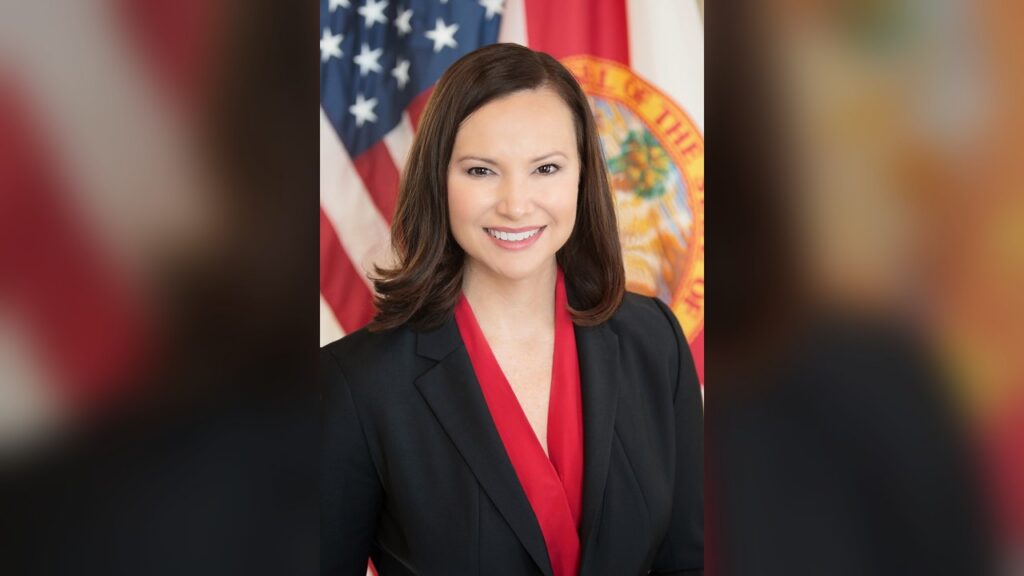 Florida Attorney General office (Public domain) via Wikimedia Commons
Nixon raised $1 million in 48 hours after her primary win. Sanders, in his endorsement statement, called her campaign “the future of the Democratic Party.” She has backing from Reps. Maxwell Frost, Ilhan Omar, Rashida Tlaib, and Ayanna Pressley. If she wins in November, she would be the first DSA member in the Senate. These are facts. What they describe is not an insurgency but a realignment, one that the party’s institutional leadership has resisted at every stage because it threatens a funding model and a consulting class that have grown comfortable with their own irrelevance.
Moody, for her part, has accused Nixon and progressives of “trying to light this country on fire from the inside.” This from a senator who held almost no campaign events during her own primary and avoided reporters with a consistency that suggests she understands her positions cannot survive scrutiny. She has $14 million and no apparent theory of governance beyond the word “socialism” deployed as a talisman.
The literature on electoral realignment is extensive, and I will not burden you with citations. What it suggests, broadly, is that parties do not reform themselves from within. They are reformed by movements that expose the gap between what the institution claims to believe and what it is willing to fight for. Nixon’s campaign is that exposure. Whether she wins in November is, at this point, almost secondary to the fact that the argument she represents has already prevailed in the only arena where it needed to: among the voters the party claimed to understand and has spent a decade failing.