


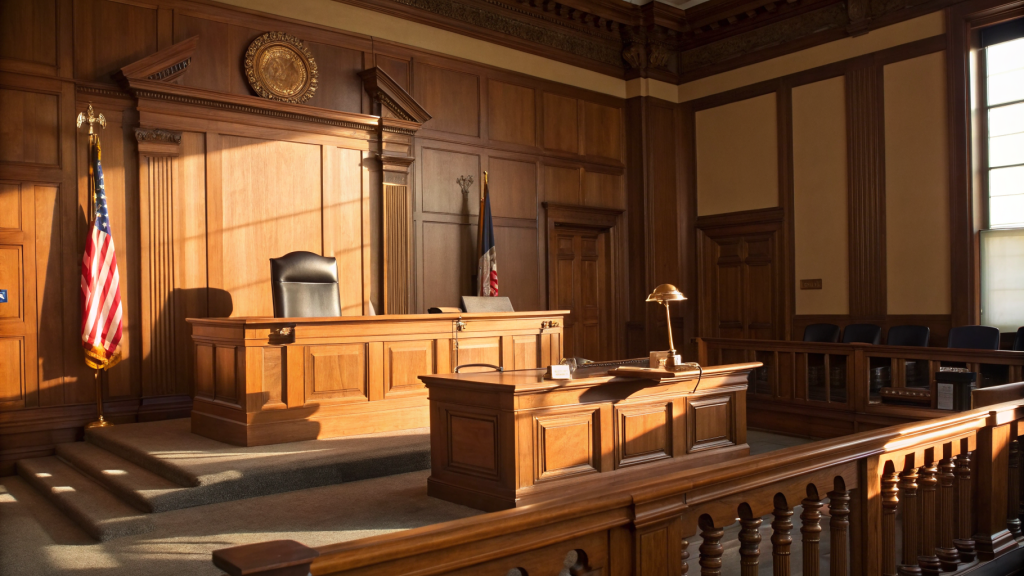
A Syrian court in Damascus has sentenced Bashar al-Assad to death. His brother Maher too. Their cousin Atef Najib as well, though Najib had the distinction of hearing the verdict from inside a cage, in a striped prison jersey, while the two Assads heard it from a Moscow townhouse or wherever Vladimir Putin parks his discarded clients. The charges: crimes against humanity, war crimes, the usual catalog that follows a 14-year conflict killing roughly half a million people.
One must, of course, complicate this. The transitional justice literature, which I suspect the architects of this proceeding have not read with sufficient care, has wrestled for decades with the tension between retributive and restorative frameworks. South Africa chose truth commissions. Rwanda tried gacaca courts. Cambodia ground through a UN-backed tribunal that took longer than the Khmer Rouge’s actual reign. Syria’s new authorities have opted for something more direct: a death sentence for a man who is not in the room, pronounced by a judge who cannot enforce it, in a country whose judicial infrastructure was itself a casualty of the war being adjudicated.
The symbolism is not nothing. Judge Fakhr al-Din al-Aryan opened the first hearing on Sunday by declaring the beginning of “transitional justice in Syria,” and Syria’s current president, Ahmed al-Sharaa, posted on X that justice would remain “a major goal that the state and its institutions strive to achieve.” These are the correct words. They are also the easy ones. The harder question is whether a death sentence issued against a fugitive sheltered by a nuclear-armed patron state constitutes justice or its simulacrum, and the literature on this is, to put it charitably, divided.
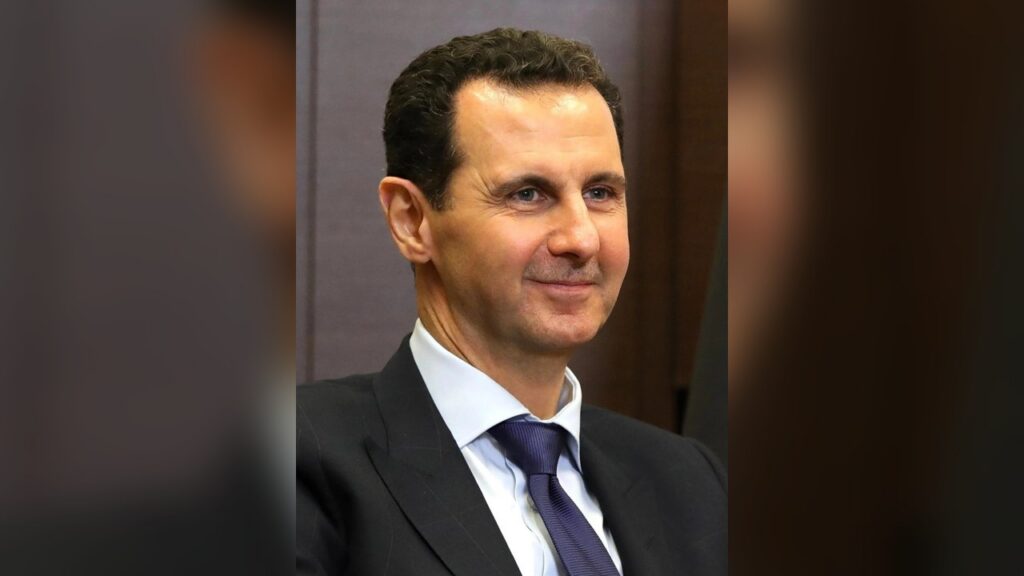 kremlin.ru (CC BY 4.0) via Wikimedia Commons
What is genuinely significant here is Najib. A former brigadier general who ran the Political Security Branch in Daraa province, where the 2011 uprising first erupted, Najib was arrested in January 2025 and stood in that courtroom cage in person. He is, by the available evidence, the highest-ranking Assad-era official to face trial in the flesh. The court also plans in-person proceedings for Wassim al-Assad, another relative, and former grand mufti Ahmed Badreddin Hassoun. This is where the architecture of accountability either holds or collapses. A trial with a defendant in the dock, subject to cross-examination, with evidence tested under procedural rules, is a fundamentally different exercise from pronouncing sentence on an empty chair.
And one must complicate the complication. The impulse to dismiss in absentia proceedings as empty theater is itself a luxury of observers who have never lived under the system being adjudicated. The families of the disappeared, the survivors of Sednaya prison, the residents of Daraa who watched Najib’s security branches haul away their neighbors, are not consulting the transitional justice literature. They are watching a court in Damascus name what was done to them and assign consequences. That this court lacks the power to reach Moscow does not make the naming frivolous. Nuremberg, to invoke the obvious precedent, was conducted in a ruined city under military occupation, and its defendants were already in custody. Syria’s version is being conducted in a partially ruined city under a government that is itself weeks old and whose legitimacy is not universally conceded. The structural conditions are, if anything, less favorable.
What undermines the proceeding is not its symbolism but its dependence on the cooperation of a Russian state that has every incentive to deny it. Putin sheltered Assad in December 2024 as Islamist-led forces closed on Damascus, and Putin will not return him because doing so would signal to every future client that Moscow’s protection has an expiration date. The death sentence is therefore a verdict against a man who is, for all practical purposes, beyond the jurisdiction that issued it. The trial of Najib and the others in custody is where the actual work of justice will be measured. Everything else is a necessary but insufficient gesture, and I say that with the full awareness that necessary gestures have carried countries through worse.
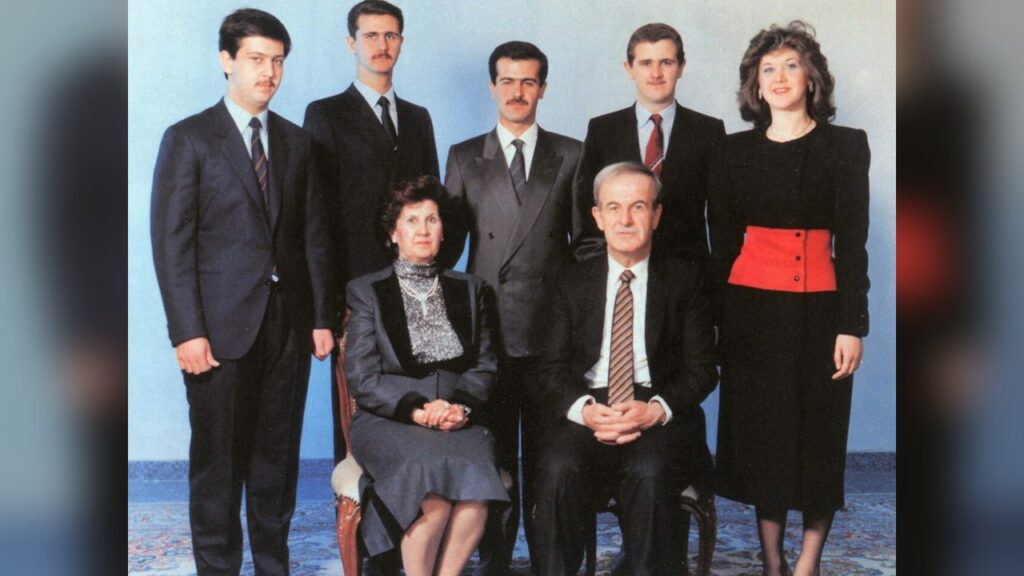 Unknown authorUnknown author (Public domain) via Wikimedia Commons
The half-million dead deserve more than gestures. They will likely not get more, and the academic literature on transitional justice has a name for that gap too. It is called the world as it exists.