


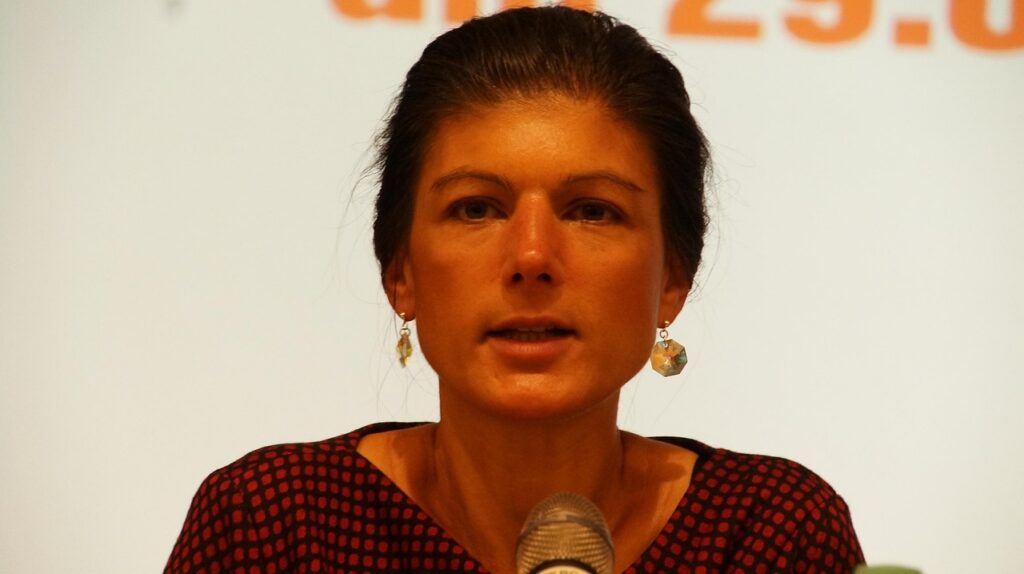
Sahra Wagenknecht has a plan for Saxony-Anhalt. It is not a plan to govern. It is not a plan to build anything. It is a plan to abstain, deliberately, in the third round of voting for minister-president, and in doing so hand the state government to the Alternative for Germany.
She said so herself, to Bild newspaper, in plain language. If the other parties refuse her model of a “nonpartisan” premier governing in “shifting majorities” with the AfD, BSW will withhold its votes. In Germany’s parliamentary system, that abstention in a third ballot means the AfD candidate can win with a simple plurality. No coalition. No mandate. No majority. Just a calculated act of political sabotage dressed up as principle.
Wagenknecht calls the firewall against the AfD “undemocratic.” She says excluding a party with 40 percent of the vote is wrong. Let us be precise about what she is doing with that argument. She is not defending democracy. She is using the language of democratic inclusion to normalize a far-right party that polls at 42 percent in Saxony-Anhalt, a party whose national co-leader Alice Weidel had her spokesperson swat away Wagenknecht’s proposed debates with condescension, telling her to come back when she clears 5 percent.
That is the party Wagenknecht wants to legitimize. And she is doing it from the left.
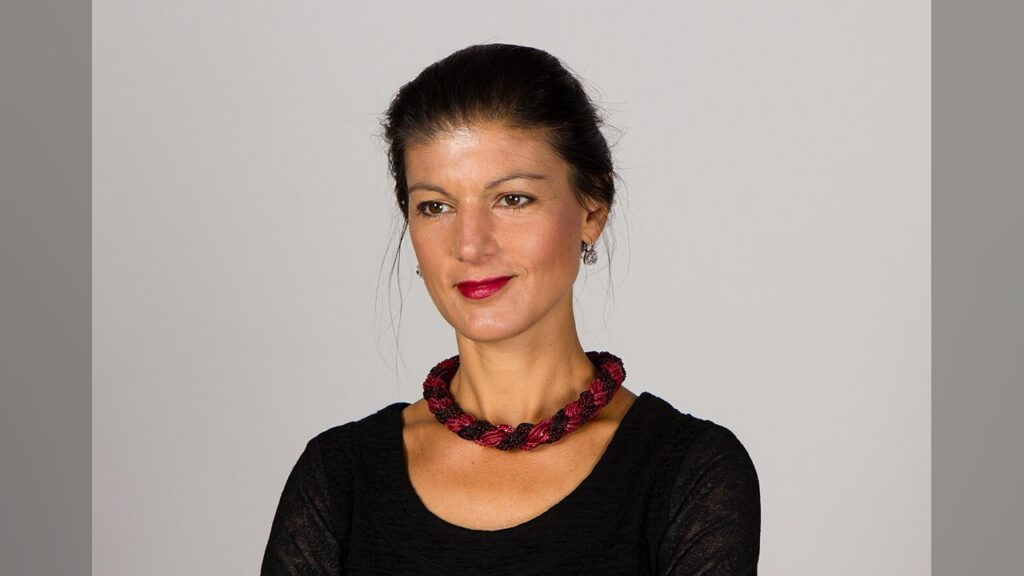 Sven Teschke (CC BY-SA 3.0 de) via Wikimedia Commons
BSW was founded in 2024 as a project of “left conservatism,” blending an expansive welfare state with anti-immigration positions and a Moscow-friendly foreign policy that mirrors the AfD’s line down to the letter. Both parties want Nord Stream reopened. Both want Russian oil and gas flowing again. The overlap is not accidental. It is the architecture of the deal.
Fabio De Masi, BSW’s co-chair, framed the cooperation offer to POLITICO as harm reduction. If the established parties keep blocking the AfD, he argued, the far right will eventually win absolute majorities and govern unchecked. So the answer is to let them govern now, but with a “nonpartisan” premier and “shifting alliances,” as though the AfD would accept permanent junior status in a government it could take outright.
The AfD’s own lead candidate in Saxony-Anhalt, Ulrich Siegmund, rejected the proposal on television. He does not want to be installed by abstention. He wants a stable majority. He wants the first AfD-led government to look legitimate. Wagenknecht is offering him a back door, and he is holding out for the front.
Here is what the data shows. An INSA poll puts the AfD at 42 percent in Saxony-Anhalt, BSW at 5 percent, and the CDU, Linke, and SPD combined at 41 percent. An infratest dimap poll tells a different story, with the Greens clearing parliament and BSW falling short, leaving the anti-AfD parties at 49 percent. The difference between those two scenarios is whether BSW exists as a parliamentary force at all. If it does, it becomes the lever. If it does not, the firewall holds.
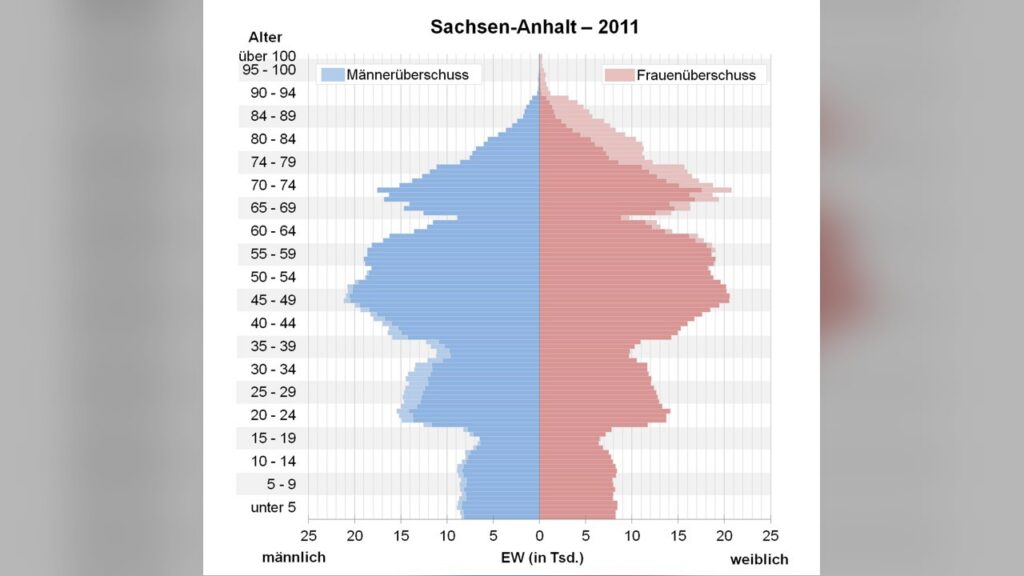 Max Lankau (CC BY-SA 4.0) via Wikimedia Commons
BSW won 4.98 percent in last year’s federal election. Four point nine eight. Below the threshold. The party is polling near 5 percent in both eastern states holding elections in September. Benjamin Höhne, a political scientist at the University of Chemnitz, told POLITICO what is obvious to anyone watching: BSW is fighting for its survival, and it considers any means justified to generate attention, including moving closer to the AfD. AfD voters, he noted, have found their political home and are not leaving.
So the strategy fails on its own terms. BSW will not peel away AfD supporters. What it will do, if it clears the threshold, is provide the abstention that puts an AfD premier in office. The harm is not reduced. It is delivered, with Wagenknecht’s fingerprints on it.
The firewall exists because the AfD is monitored by Germany’s domestic intelligence agency as a suspected right-wing extremist organization in multiple states. It exists because the Bundestag classified the party’s federal association as a confirmed right-wing extremist entity in 2025. It exists because democratic parties recognized that normalizing the far right is not a strategy for containing it but a pathway to surrendering ground that cannot be reclaimed.
Wagenknecht knows this. She was a member of East Germany’s ruling communist party. She understands how authoritarian movements consolidate power. She is choosing to help one along.
 Sandro Halank, Wikimedia Commons (CC BY-SA 4.0) via Wikimedia Commons
The response from every party committed to democratic governance must be unequivocal. No cooperation with BSW in any state parliament where it acts as an AfD enabler. No coalition, no confidence-and-supply arrangement, no tacit tolerance. A party that offers to abstain so the far right can take power has placed itself outside the democratic alliance, by its own choice, in its own words.
Voters in Saxony-Anhalt and Mecklenburg-Western Pomerania deserve to know exactly what a BSW vote produces. Not a third way. An AfD government, made possible by a party that could not clear 5 percent nationally and is now willing to trade its parliamentary votes for relevance it has not earned.
The firewall has not failed. Wagenknecht is trying to dismantle it. That is the distinction, and it matters.