


Judge Chutkan Reinforces Order Blocking Trump’s 250-Foot Arch Near Arlington
There is a pattern here, and it is not subtle. The Trump administration announces a project. Courts find it likely unlawful. The administration proceeds anyway, daring the judiciary to enforce its own orders in real time. We saw it with the White House ballroom, where a District Court ruled the construction unlawful, the Circuit Court affirmed, and the Supreme Court nonetheless permitted it to continue by a single vote, with Chief Justice Roberts calling the project “likely unlawful” in dissent. Now we are watching the same choreography unfold at Memorial Circle.
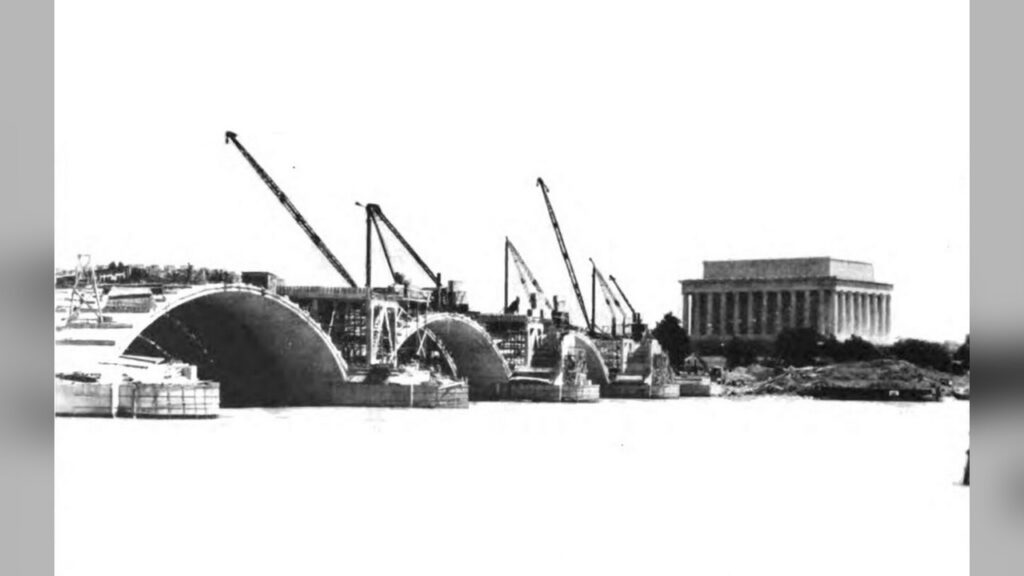
On Sept. 3, Interior Secretary Doug Burgum took to X, the platform formerly known as Twitter, to announce that excavation for what he called the “Great Triumphal Arch and Military Observation Deck” would begin “over the next two-week period.” The site sits on Columbia Island, between the Lincoln Memorial and Arlington National Cemetery. The next day, U.S. District Judge Tanya Chutkan reinforced her existing consent order, requiring the administration to give the court 48 hours’ notice before engaging in any activity on Memorial Circle, with a narrow exception for archaeological information gathering required under the National Historic Preservation Act. She reiterated that any construction or demolition-in-preparation before the National Park Service issues final authorization, or without 14 days’ notice, would violate both Friday’s order and her April consent decree.
 United States Department of the Interior (Public domain) via Wikimedia Commons
The government’s response is a masterwork of semantic ingenuity. The planned work, it insists, is “not construction, or demolition in preparation for construction, of an arch.” It is, rather, four “test pits” to assess whether cultural artifacts lie beneath the surface, starting no earlier than Sept. 21, with the land restored by Oct. 31. One appreciates the distinction, in the way one appreciates a burglar explaining that he was merely testing the structural integrity of the window frame.
The structural context matters. The arch has not received final approval from the National Capital Planning Commission, which is still considering whether to grant an exception to the 130-foot building height limit that has governed most of Washington since 1910. The administration claims congressional authorization from a 1925 law that created a now-defunct commission to build the Arlington Memorial Bridge, a reading that the plaintiffs, three veterans and an architectural historian, find unpersuasive. The proposed 250-foot structure, evoking the Arc de Triomphe, would rise in a corridor carefully designed to preserve the historic sight line between the Lincoln Memorial and Arlington House. That sight line is not an aesthetic accident. It is the product of a century of planning law and historic preservation practice, the kind of institutional architecture that this administration treats as a suggestion box.
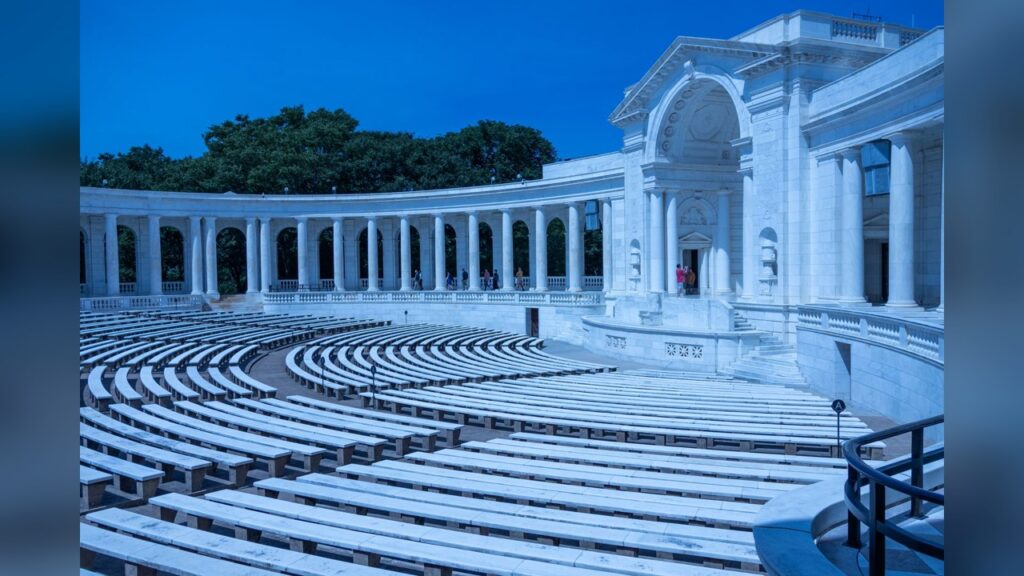 Troy Tumbin / Pexels
What we are observing is not a single dispute about a single monument. It is a stress test of the federal administrative state, conducted in plain view. Each project, the ballroom, the reflecting pool renovation, the East Potomac Park golf course redevelopment, and now this arch, probes a different institutional guardrail. The National Capital Planning Commission, the National Historic Preservation Act, the height limit, the courts. Each time, the calculus is the same: proceed, litigate, and bet that the enforcement lag outlasts the concrete curing.
The plaintiffs’ filing pointed to the ballroom as a “cautionary tale.” It is, though perhaps not in the way they intended. The cautionary tale is not that courts are slow. It is that an administration willing to treat judicial orders as advisory can accomplish a great deal of irreversible construction before the system catches up. Judge Chutkan’s 48-hour notice requirement is a procedural speed bump. The question is whether speed bumps suffice when the vehicle has no intention of stopping.