


Meta walks into federal court in Oakland this week facing the largest consumer protection lawsuit in American history, and the company wants you to believe it is the victim.
Four states, California, Colorado, Kentucky, and New Jersey, are demanding up to $1.4 trillion in penalties from the corporation that built Facebook and Instagram. That number is not random. It is roughly what Meta is worth on the stock market, about $1.5 trillion. The states are saying what every parent in this country already knows in their gut: Meta designed its platforms to hook children, lied about the risks, and harvested data from kids under 13 without parental consent in violation of federal law. The corporation turned a generation of young people into raw material for ad revenue, and now it is time to pay.
The details are nauseating in the way only internal documents can be. Meta’s own research linked Instagram to increased loneliness, worse body image, and negative mood in teenagers. The like button, infinite scroll, recommendation algorithms tuned for compulsive use, image filters that promote eating disorders and body dysmorphia. All of it engineered to keep kids scrolling, because every additional second a child spends on the platform is another second Meta can sell to advertisers. In a June pretrial ruling, Judge Yvonne Gonzalez Rogers cited Meta’s own documents showing that its time-restriction tools were a “public relations stunt.” The company knew more screen time hurt teens. It built guardrails it knew were theater.
New Jersey Attorney General Jennifer Davenport put it plainly: “They’re putting the profits over the health of a generation of young people.” Kentucky AG Russell Coleman drew the line from tobacco to opioids to this. The attorneys general did it before. They can do it again.
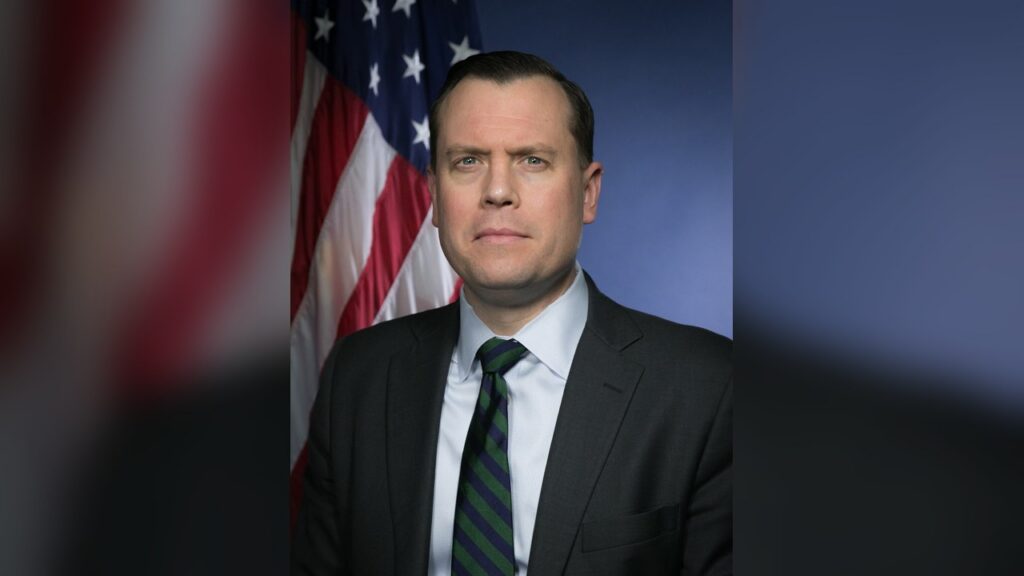 United States Department of Justice (Public domain) via Wikimedia Commons
Meta’s response is a masterclass in corporate gaslighting. A spokesperson called the claims “limited and unsubstantiated” and the financial demands “vastly disproportionate.” They described features like multiple Instagram accounts as “benign.” They blamed “industry-wide challenges like age verification.” This is the same corporation that told the public its platforms were designed to support teen well-being while its internal research showed the opposite. The spokesperson said Meta stands by its “record of creating strong protections for teens.” That record includes losing two state court cases this year. In March, a Los Angeles jury found Meta and Google liable for the depression and anxiety of a young woman who started compulsively using social media at age nine. In New Mexico, a judge fined Meta $942 million and declared the company a “public nuisance,” comparing it to a factory polluting the air an entire population breathes.
Section 230 and the First Amendment have shielded social media companies for years. But this case targets product design, not user content. The states are not arguing that Meta published harmful posts. They are arguing that Meta built a harmful machine. That distinction matters, and it is why the tobacco and opioid comparisons land. Philip Morris did not force anyone to smoke. Purdue Pharma did not force anyone to take OxyContin. They designed products they knew were addictive, lied about the risks, and profited from the wreckage. Meta did the same thing to children.
The states are demanding structural changes, not just money. End like counts for minors. Kill infinite scroll. Remove appearance-altering filters. Require parental verification. Stop the autoplay. Ban ephemeral posts that hide evidence of harm. These are not radical demands. They are the bare minimum of what a society that claims to value children should require from a corporation profiting off their attention.
Kelly Stonelake, a former Meta executive turned whistleblower, told the BBC she doubts a verdict alone will change decision-making at the top, citing the “cognitive dissonance” required to keep making harmful choices despite clear evidence. She is right that a check is not enough. But a $1.4 trillion penalty plus a court order dismantling the engagement machine would be a start. The trial is expected to last six weeks. Judge Gonzalez Rogers, who presided over the Musk v. Altman trial and has a reputation for being incisive, will hear it.
Every parent who has watched their child disappear into a phone, every teacher who has seen classrooms hollowed out by sleep deprivation and anxiety, every kid who has measured their worth in likes, has a stake in this verdict. The states are doing what the federal government has refused to do for over a decade: hold a trillion-dollar corporation accountable for the harm it designed, profited from, and lied about. The rest of us need to make sure they do not do it alone.