


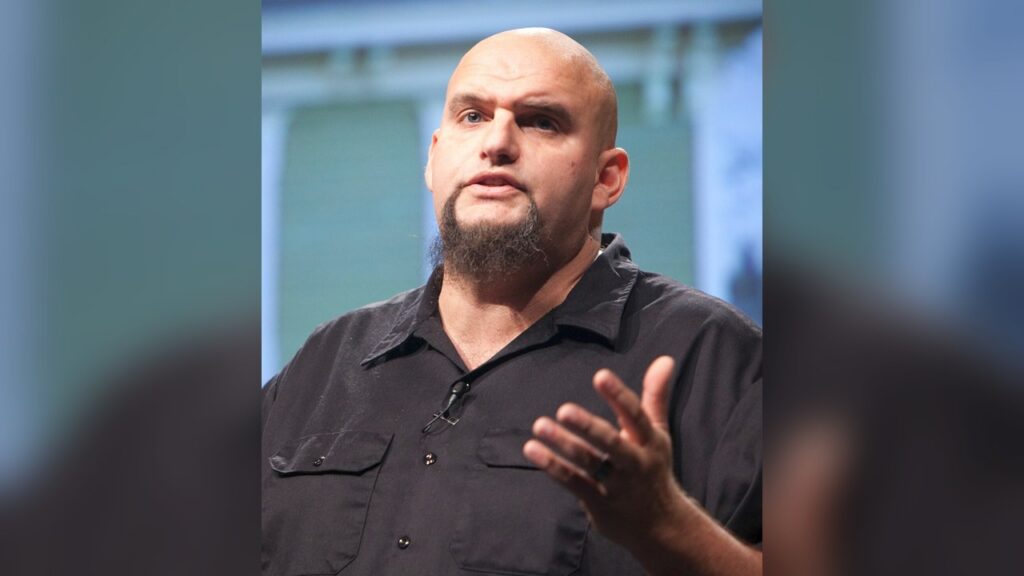
There is a familiar rhythm to these intramural Democratic ruptures, and one wishes, not for the first time, that the party might develop some immunological memory. Sen. John Fetterman’s refusal to endorse Abdul El-Sayed, the newly minted Democratic nominee for U.S. Senate in Michigan, follows a pattern so structurally predictable that one could write the equation on a napkin: a factional primary produces a candidate optimized for the base, the base declares a mandate, and the general electorate, which was not in the room, regards the whole production with quiet bewilderment.
El-Sayed defeated Rep. Haley Stevens by fewer than 14,000 votes, a margin of under one point, in a primary that absorbed more than $80 million, the most expensive Democratic Senate nomination contest in history. Let us sit with that figure for a moment. Eighty million dollars, and the winner emerged with a victory so narrow that it would not, in any statistically literate analysis, constitute a “movement.” Fetterman said as much to Jewish Insider, and he is correct on the arithmetic, whatever one thinks of his bedside manner.
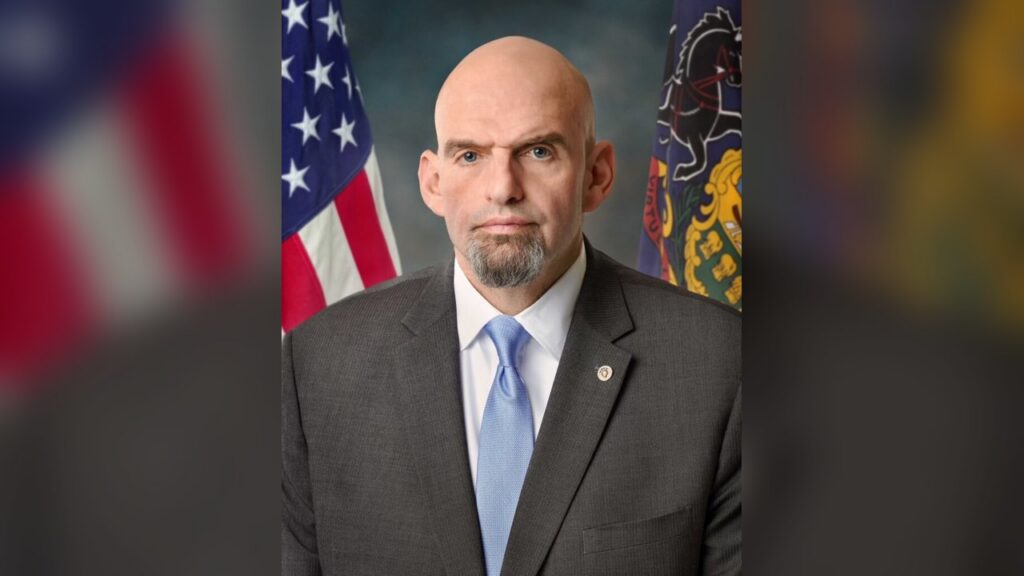 United States Senate (Public domain) via Wikimedia Commons
Because the manner is, charitably, not diplomatic. Fetterman called El-Sayed’s campaign an exercise in “little man syndrome energy,” dared him to continue appearing with the streamer Hasan Piker, and described Sanders’ broader endorsement strategy as an effort to “put volatile and terrible candidates into otherwise more safe kinds of opportunities for Democrats.” El-Sayed had previously called Fetterman “an asshole” who “seems miserable,” so the discourse has not, as they say, elevated.
But beneath the schoolyard texture lies a substantive argument that the party’s left wing has been reluctant to engage with honestly. Piker, who has appeared repeatedly alongside El-Sayed, including at a Detroit pool party the night before the primary, has said America “deserved 9/11” and praised Mao Zedong as “one of the great leaders of this world.” These are not contested attributions. They are on tape. El-Sayed has said he does not share all of Piker’s positions but has resisted calls to distance himself, which is, in the lexicon of political science, what we call a “non-answer answer.” The Republican National Committee has already cut ads featuring Piker’s remarks. Mike Rogers, the Republican nominee, lost to Sen. Elissa Slotkin by a razor-thin margin in 2022. This was not a safe seat before El-Sayed won the primary. It is less safe now.
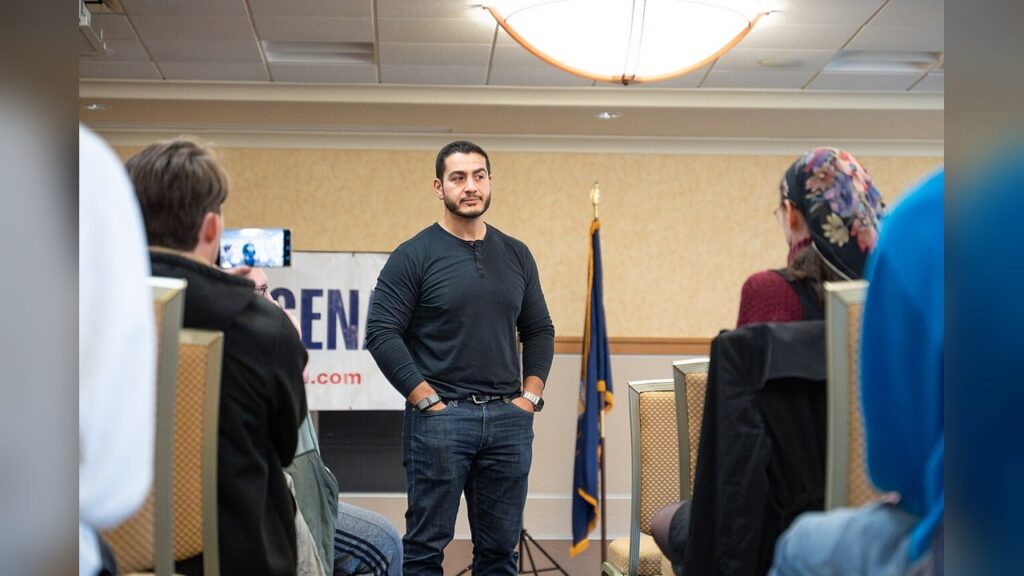 Conlan Houston (CC BY-SA 4.0) via Wikimedia Commons
Fetterman’s most cutting observation was also his most empirically grounded. He pointed to El-Sayed’s rhetoric about AIPAC and Jewish political money, his opposition to military aid for Israel, and his response to the attack on Temple Israel in the Detroit suburbs, where a man crashed his car into a synagogue building housing 150 children. “How could a Jewish voter in Michigan vote for a guy that refused to condemn a terrorist that crashed his car into a synagogue to kill 150 Jewish children?” Fetterman asked. One need not share Fetterman’s particular brand of bluntness to recognize that this is a question the campaign has not answered, and that “every other word out of his mouth is AIPAC, AIPAC, AIPAC” is a characterization that will appear in approximately 4,000 Republican ads between now and November.
What Sanders and his allies have consistently failed to internalize is that primaries are low-turnout, high-intensity affairs that select for ideological purity and against electability. The literature on this is not ambiguous. Fetterman’s reference to Graham Platner in Maine, the Sanders-backed candidate who collapsed amid sexual assault allegations, is not a cheap shot but a pattern indicator. Sanders endorsed both men. Both men now present liabilities. The senator from Vermont is not flipping seats. He is, with remarkable consistency, complicating the ones Democrats already hold.
 jordan besson / Pexels
Retiring Sen. Gary Peters, who backed Stevens, has said El-Sayed will prevail because of policy differences with Rogers on issues affecting Michigan families. This is the kind of thing retiring senators say when they would prefer not to be quoted saying what they actually think. Former House Judiciary Committee chief counsel Julian Epstein, a Democrat, has already announced he will vote for Rogers, citing a party that has “lost its moral center.” When your own counsel is crossing the aisle, the structural problem is no longer hypothetical.
Fetterman, for his part, said he has “got my popcorn” for the general election. One suspects he is not the only one.