


One might have thought that after losing the same argument twenty-two times in succession, the Department of Justice would begin to suspect a structural problem with its legal theory. One would be wrong. On Monday, U.S. District Judge Katherine Menendez dismissed the DOJ’s lawsuit demanding Minnesota’s unredacted voter rolls, handing the administration its twenty-third trial-court defeat out of thirty-one such suits filed against states since last year. The batting average, for those keeping score at the faculty lounge, is .258. In baseball that gets you sent to the minors. In federal litigation it apparently gets you a bigger budget.
The DOJ filed this particular action in September 2025, seeking the full voter registration list including Social Security numbers and dates of birth, all under the banner of investigating Minnesota’s compliance with the Help America Vote Act. HAVA, for those who haven’t skimmed its 162 pages recently, does require states to maintain their voter lists. What it does not do, as Judge Menendez took pains to explain, is grant the federal government a roving warrant to hoover up sensitive personal data whenever it feels like poking around.
 Mara Koenig/USFWS (Public domain) via Wikimedia Commons
“The government suggests it is permitted to use a civil action as a ‘fishing expedition,'” Menendez wrote. “But an ordinary litigant isn’t allowed to seek discovery first and allege a claim later, and the federal government has no special privilege to do so either.” The phrasing is elegant in its exhaustion. She noted, as had twenty-two colleagues before her, that the DOJ never offered a shred of evidence that Minnesota had failed any HAVA obligation. You cannot sue to investigate a violation you have not alleged. This is not a novel doctrine. It is, roughly, Civil Procedure 101.
The broader campaign, of course, is not really about HAVA compliance at all. It is part of a multi-agency effort to substantiate President Trump’s persistent claim that noncitizens are voting illegally in large numbers, a claim that has been repeatedly debunked by studies and state audits across the political spectrum. The Brennan Center’s research, the Heritage Foundation’s own database, audits in Georgia, Texas, and elsewhere: all converge on the same finding, which is that noncitizen voting is vanishingly rare. The administration’s response to this evidentiary vacuum has been to file thirty-one lawsuits demanding the raw data to find the evidence themselves, which is rather like a researcher whose hypothesis has failed replication demanding access to every lab notebook in the country on the theory that the result must be in there somewhere.
The Minnesota ruling arrived the same week as the administration’s twenty-second loss, in Nevada, and on the same Friday the full Sixth Circuit Court of Appeals also ruled against the DOJ’s voter-roll crusade. The appellate record, in other words, is tracking the trial record with the kind of consistency that usually suggests the legal theory is simply wrong, not that the judges are biased.
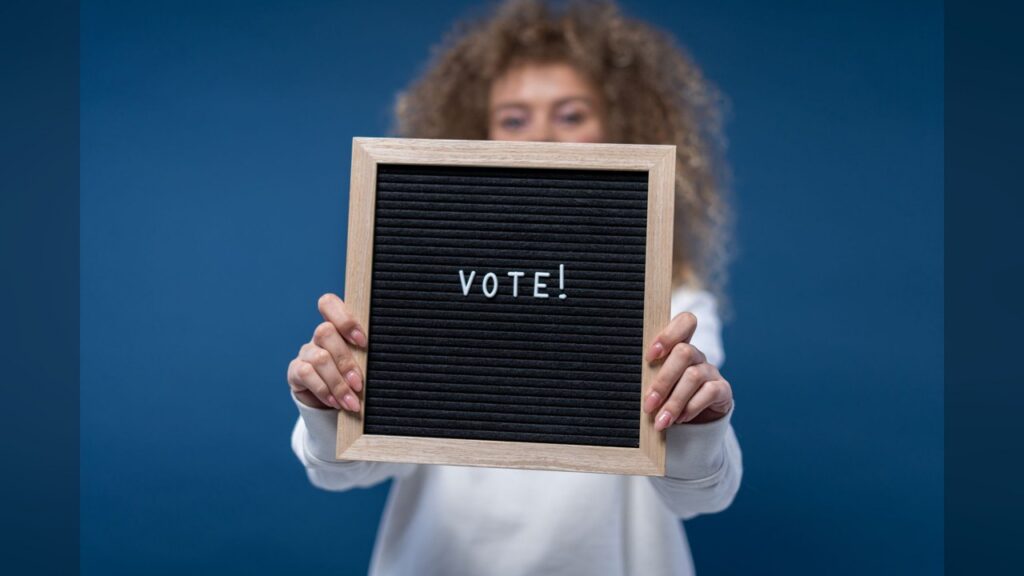 cottonbro studio / Pexels
What we are watching is not a scandal so much as the institutional immune system functioning as designed. Federal judges, appointed by presidents of both parties, are applying settled procedural doctrine to an executive branch that has confused the desire for evidence with the right to compel it. The Help America Vote Act is not a general-purpose surveillance statute. The Civil Rights Act of 1960 is not a fishing license. And the federal government, as Judge Menendez put it with the weary precision of someone who has read this brief before, has “no special privilege” to litigate backwards.
Twenty-three down. Eight to go. The doctrine will hold. It always does, eventually, whether the administration notices or not.