


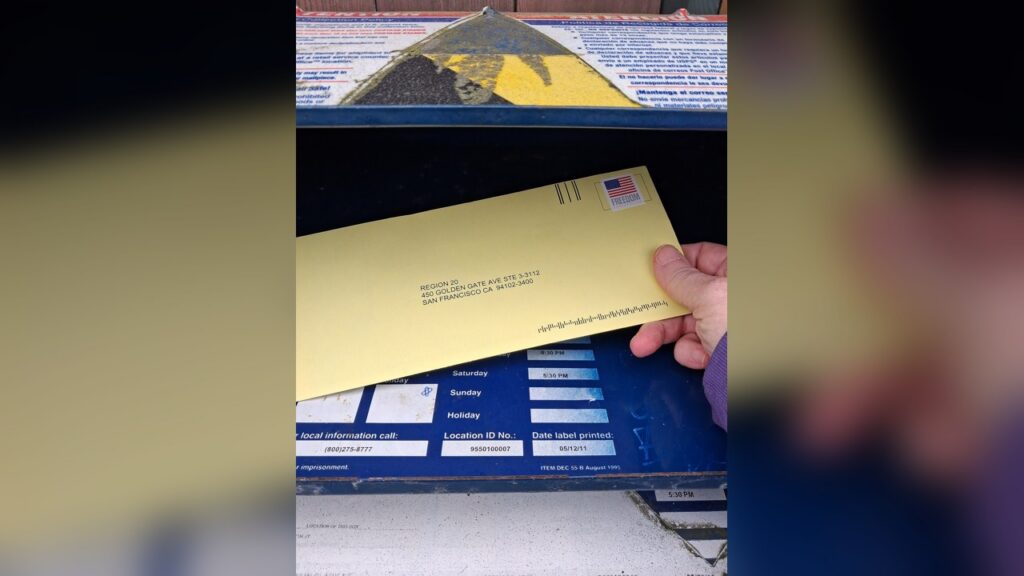
There is a particular species of executive action that does not so much propose policy as perform a fantasy of governance, and the Trump administration’s March executive order on mail-in voting is a textbook specimen. The order would have compelled the United States Postal Service to construct, from whole cloth, a nationwide database of verified eligible voters, against which states would be required to check their mail-ballot rolls before sending anything out. The USPS, for its part, has informed the court in recent filings that the technology to do this does not exist. One might consider that a relevant detail. The administration apparently did not.
On Friday, U.S. District Court Judge Indira Talwani converted her temporary restraining order into a preliminary injunction, extending the block on the Postal Service’s implementation of the president’s mandate. Her reasoning was not abstract. “Plaintiff States are required under state law to mail millions of ballots to voters on a prescribed timeframe,” she wrote. “They are unable to pivot this late in the election cycle, nearly guaranteeing significant disenfranchisement for eligible voters.” This is the language of a judge who understands that election administration is a logistics problem, not a messaging exercise. You cannot redesign the ballot pipeline in September for a November election without breaking it.
And indeed, hours before Talwani’s ruling, North Carolina became the first state to begin sending out mail-in ballots for the November 3 midterms. The machinery was already in motion. The order would have required that machinery to stop, retool around a verification system that no state has agreed to use and no federal agency has the capacity to build, and then restart. To date, not a single state, red or blue, has volunteered to adopt the new framework. When the intended users of your policy unanimously decline to participate, the policy has failed not as a matter of partisanship but as a matter of basic institutional design.
The structural problem here is one the literature on federalism has documented for decades. Election administration in the United States is decentralized by constitutional design, not by accident. States run elections. The federal government can set floors through legislation, as the Voting Rights Act did, but it cannot, by executive fiat, insert a federal agency into the state ballot process and demand a wholesale reengineering of verification systems eight weeks before an election. The ACLU, representing a coalition of voter service and civic groups, put it plainly: “The President cannot order the Postal Service to create a disruptive new bureaucracy that will throw the election into chaos and disenfranchise untold numbers of voters.” One does not need to be a constitutional scholar to grasp this, though it apparently helps.
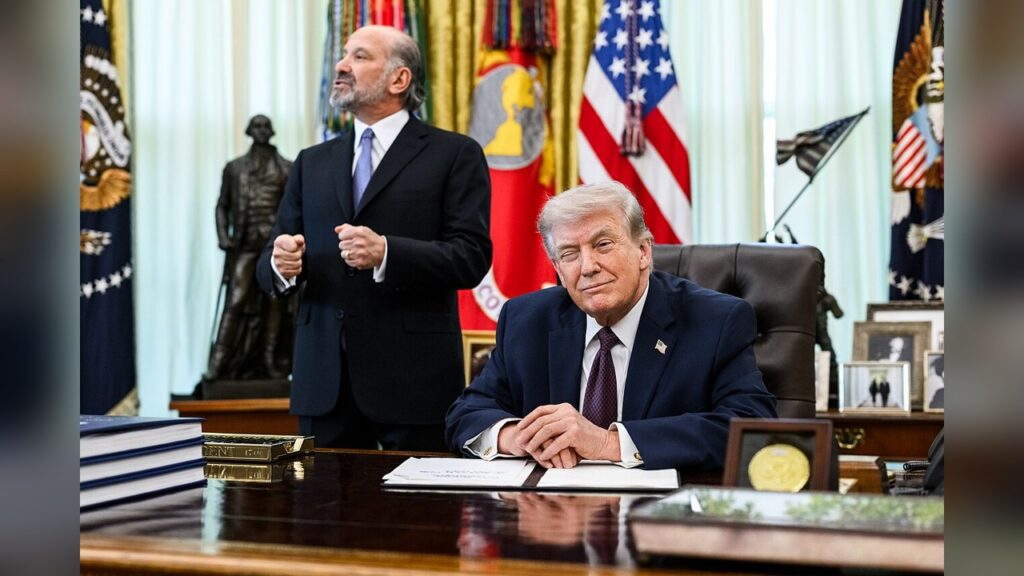 The White House (Public domain) via Wikimedia Commons
The Trump administration has already appealed Talwani’s temporary order to the Supreme Court and announced it will appeal this latest injunction to the First Circuit. The justices will likely have the final word. Whether six members of this particular Court will recognize the difference between an executive order and a statute, between a policy aspiration and an administrable mandate, remains the open question that haunts every election law case now reaching One First Street.
And then there is the detail that requires no scholarly apparatus to appreciate, only a functioning sense of irony: Donald Trump, who has spent years denigrating mail voting as inherently fraudulent, votes by mail himself. Routinely. The president’s own ballot travels through the very system he has sought to hobble for everyone else. This is not hypocrisy in the ordinary sense. It is something more structural, a posture in which the rules are always for other people, and the institutions exist to be wielded, not respected.
Judge Talwani’s injunction will hold for now. The ballots will go out. The system, creaky and decentralized as it is, will function as designed. That this now counts as a victory rather than a baseline tells you everything about where we are.