


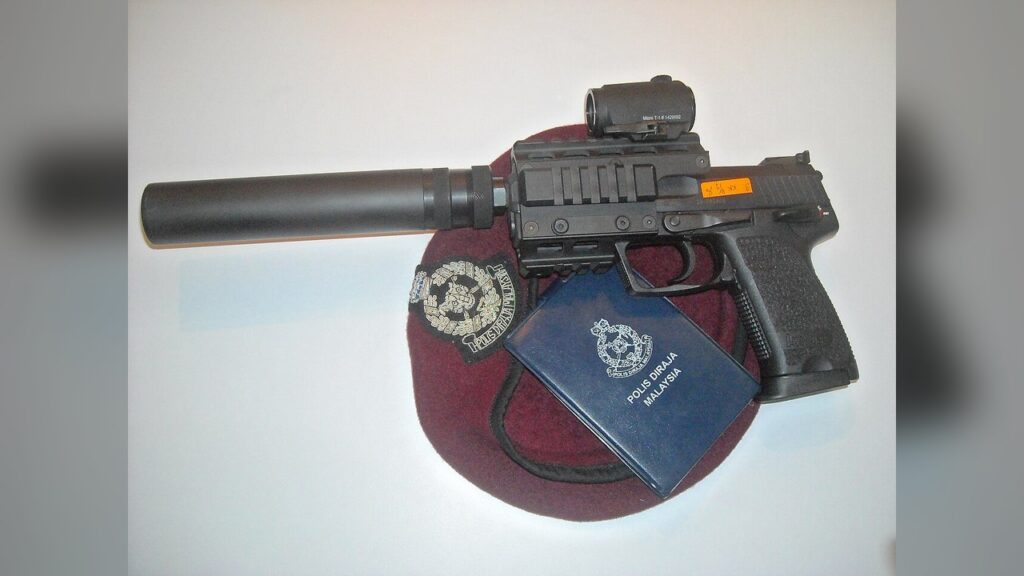
Here’s how power works when it wants something: a single federal judge in Texas strikes down a registration rule for exactly the parties in front of him, and suddenly the entire Justice Department decides the ruling applies to all 330 million of us. No Supreme Court ruling. No act of Congress. Just an administration that never wanted those rules in the first place, using one narrow decision as a permission slip to stop enforcing a law that has been on the books since the 1930s.
That’s what happened Friday. The DOJ announced it will no longer enforce federal registration requirements for silencers, short-barreled rifles, and certain other firearms. Judge James Hendrix’s August ruling was limited to the parties in that case. The Justice Department’s enforcement holiday is not. The gap between those two things is where this administration does its best work.
ATF Director Rob Cekada called it “following suit” and said “the direction from the President, Congress, and the courts is clear.” Let’s be precise about what’s clear here. The President’s direction is clear, sure. The courts? One district judge, whose ruling doesn’t bind anyone outside his courtroom. And Congress? Congress passed the National Firearms Act and left it in place for nine decades. Citing Congress as cover for refusing to enforce Congress’s own law is not clarity. It’s a shrug with a press release attached.
The National Firearms Act was written in the 1930s because the country had a machine-gun problem, and the registration and tax-stamp system it built has been one of the few gun rules that actually functioned. It wasn’t a ban. It was paperwork, a fee, a background check, and a wait. That’s the regime this administration just decided it can’t be bothered to run anymore, because a judge in Texas said one version of it failed constitutional muster for two plaintiffs.
Notice the pattern, because it’s the pattern that runs through everything this DOJ touches. When a court hands down a ruling they like, it becomes national policy overnight, applied far beyond what the ruling actually says. When courts hand down rulings they don’t like, those get appealed, delayed, defied, or litigated into the ground. Enforcement discretion has become a one-way door, and it only swings open in one direction.
The people who will absorb the consequences of this aren’t the plaintiffs in Amarillo. They’re the communities where a short-barreled rifle with no paper trail ends up in the wrong hands. They’re the survivors of gun violence who were told, over and over, that the existing system was already too weak, and who now watch what little system existed get dismantled by memo on a Friday afternoon. Harm doesn’t announce itself with a press release. It shows up later, in neighborhoods this administration will never visit, and by then the officials responsible will have moved on to the next deregulation.
And spare me the argument that this is just “respecting the judiciary.” Respecting the judiciary looks like appealing a ruling you disagree with, or asking the Supreme Court to settle a circuit split. It does not look like taking a decision binding two parties and stretching it across the entire country because it happens to match your policy wishlist. That’s not deference to the courts. That’s using a court as a costume.
So what now? Congress can pass legislation restoring these registration requirements and clarifying that the NFA applies nationwide, and it should. State attorneys general can and should press the DOJ on how a single district ruling justifies nationwide non-enforcement. And every organization that has spent decades building the modest scaffolding of gun regulation in this country needs to say plainly what just happened: a 90-year-old public safety law was functionally repealed by an agency press release, and the people who did it are counting on nobody noticing until the bodies start appearing in the news.
We noticed. And we’re not going to let “the direction is clear” be the last word on how a democracy decides which laws get enforced.