


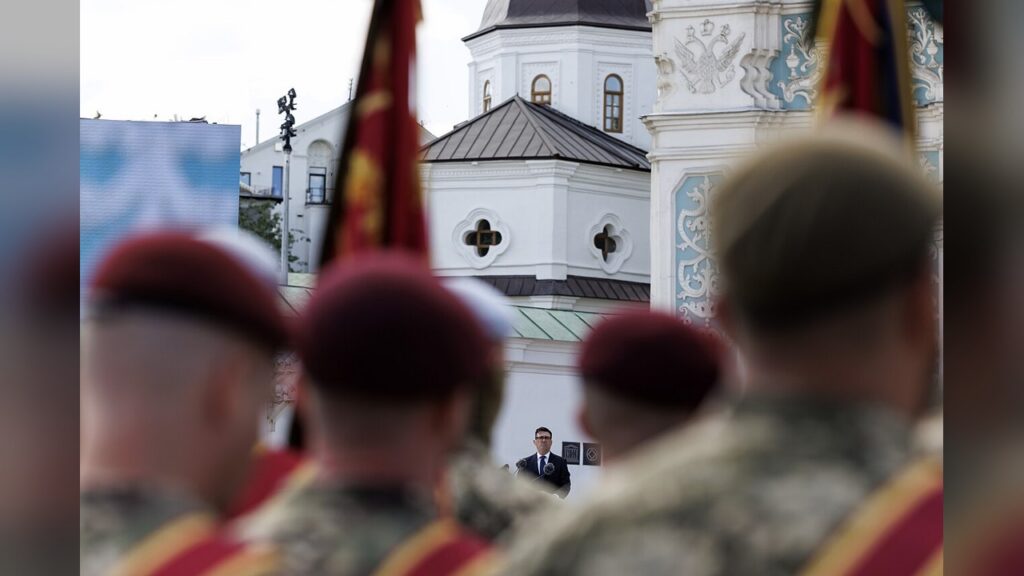
There is a certain structural irony in the timing that one feels almost embarrassed to point out, though one will do so regardless. On the very Monday that Prime Minister Andy Burnham stood before St. Sofia Cathedral in Kyiv, marking Ukraine’s thirty-fifth Independence Day with a speech invoking Britain’s stand against Nazi Germany, Vladimir Putin was signing a decree permitting the Russian state to confiscate domestic infrastructure that private owners have failed to protect from Ukrainian drones. One leader was in a cathedral square promising arms. The other was in the Kremlin, quietly nationalizing his own oil refineries. The war’s center of gravity, as the literature on strategic bombing has been trying to explain to policymakers since roughly 1942, has migrated from the front line to the logistics chain, and neither side’s institutional response has fully caught up with that migration.
 MDA-file (Public domain) via Wikimedia Commons
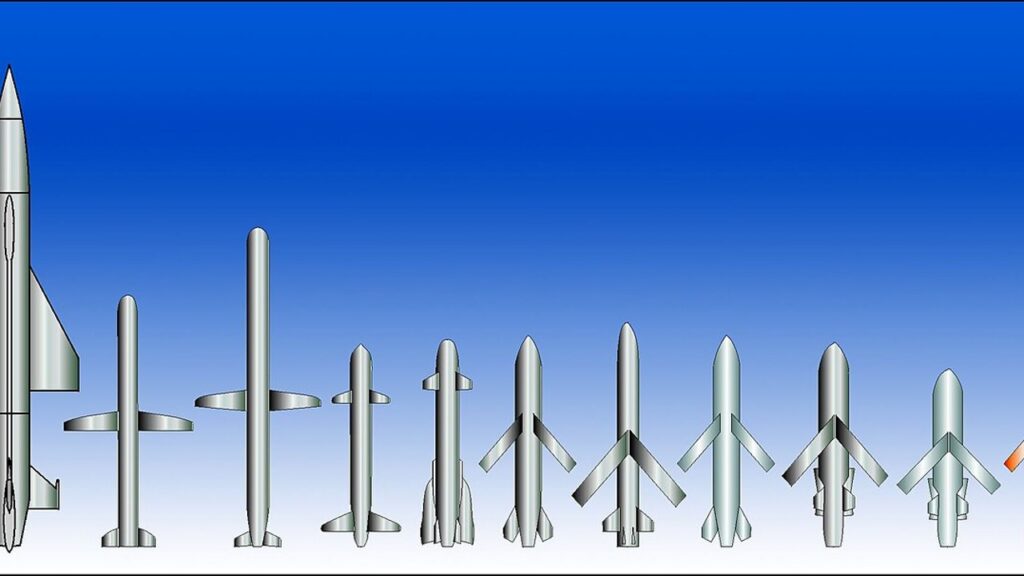
Burnham’s substantive announcement, buried beneath the rhetoric, is genuinely significant. Britain has authorized MBDA, the defense manufacturer, to declassify technical blueprints for British components used in the SCALP cruise missile, the French-produced variant of the Storm Shadow. Ukraine will now be able to assemble these long-range weapons domestically, which is not a symbolic gesture. It is a transfer of production capacity, not merely inventory, and it reflects an evolution in Western thinking that is approximately eighteen months overdue. The coalition of the willing, convened in Kyiv with Emmanuel Macron and Friedrich Merz alongside Zelensky, agreed to prioritize air defense interceptors and to tighten sanctions on Russia’s shadow fleet of sanctions-evading oil tankers. The EU separately released 6.1 billion euros in new defense procurement. These are the institutional mechanisms functioning as designed, albeit at a tempo that several RAND studies and the Ukrainian General Staff have characterized, with considerable understatement, as suboptimal.
The 25 billion pounds Britain has committed since the full-scale invasion