


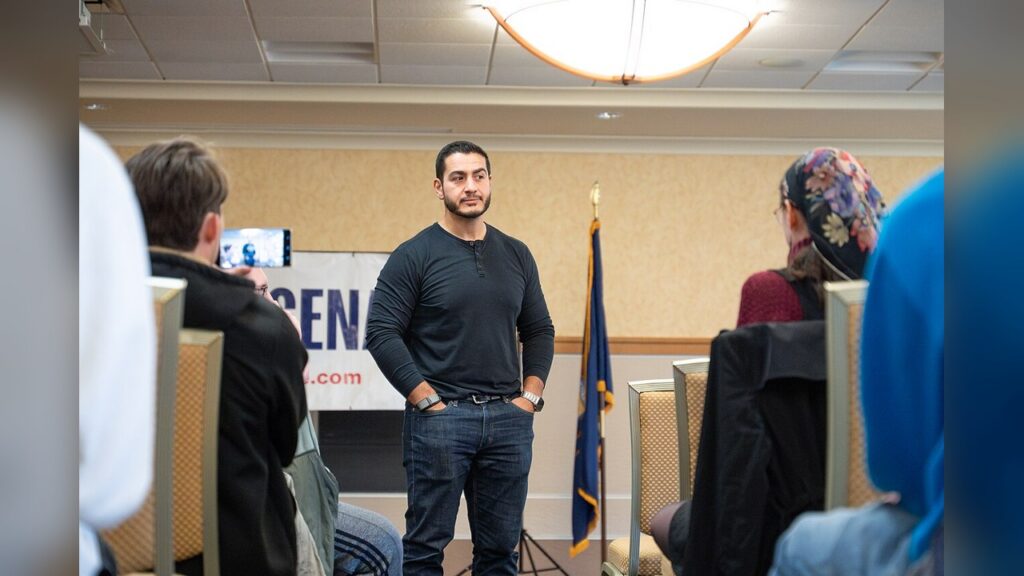
There is a habit, well-documented in the political psychology literature, whereby voters confronted with dissonant information about a preferred candidate engage in what Taber and Lodge called “motivated skepticism” — the systematic discounting of inconvenient evidence not through argument but through affective dismissal. We are watching it happen in real time with Abdul El-Sayed, and the evidence in question is not ambiguous. It is a direct quotation, given on the record, to the New York Times.
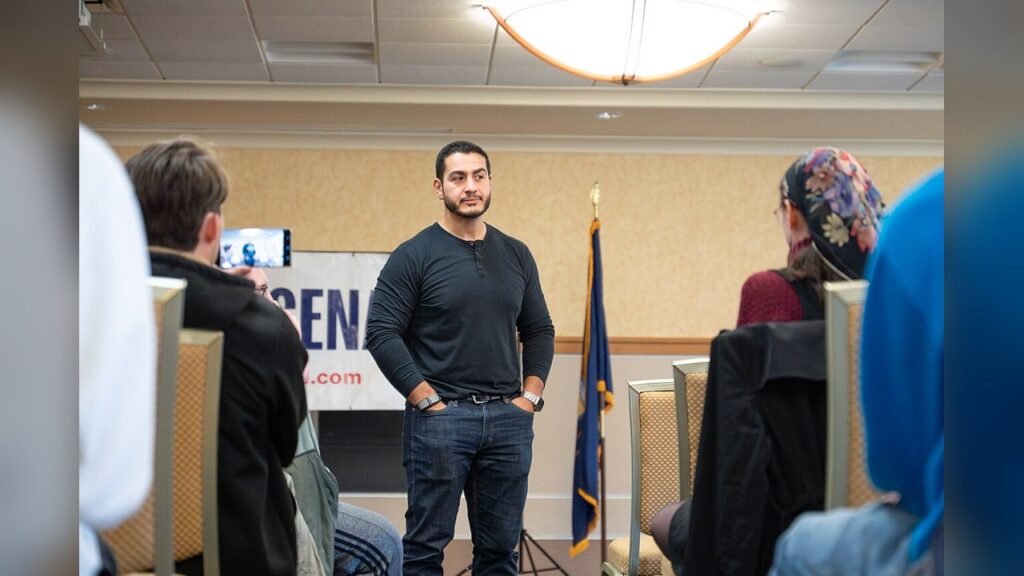
In 2009, El-Sayed was a 24-year-old Rhodes scholar and medical student purchasing a $123,000 condominium in Ann Arbor with a Sharia-compliant mortgage. He told the Times, plainly: “Ultimately, the question is, when I die and I stand before God and go through everything I did in my life, I don’t want to say I did it the easy way instead of the Shariah-compliant way. Not because of fear but because of obligation.” Not a preference. Not a cultural nod. An obligation. In “everything I did in my life.” Until the day he dies.
 Conlan Houston (CC BY-SA 4.0) via Wikimedia Commons
Now, one might say — and I anticipate the objection because I have heard it rehearsed in faculty lounges across the Rust Belt — that this is a private religious statement, no different from a Catholic candidate referencing canon law or an Orthodox Jew describing halakhic obligations. The analogy fails on structural grounds, and I would direct the interested reader to Ayaan Hirsi Ali’s “Nomad” or, for the more empirically inclined, the Pew Research Center’s 2013 survey of global Muslim attitudes, which found majority support for making Sharia the official law of the land in numerous Muslim-majority countries, with corresponding support for stoning as a punishment for adultery and death for apostasy. The comparison to canon law is a category error made by people who have read neither legal tradition.
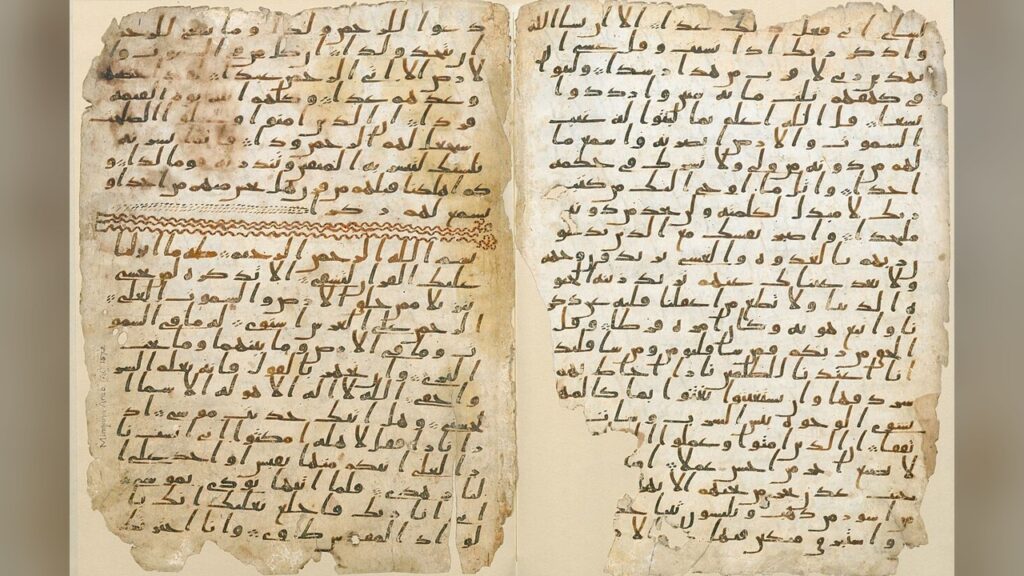
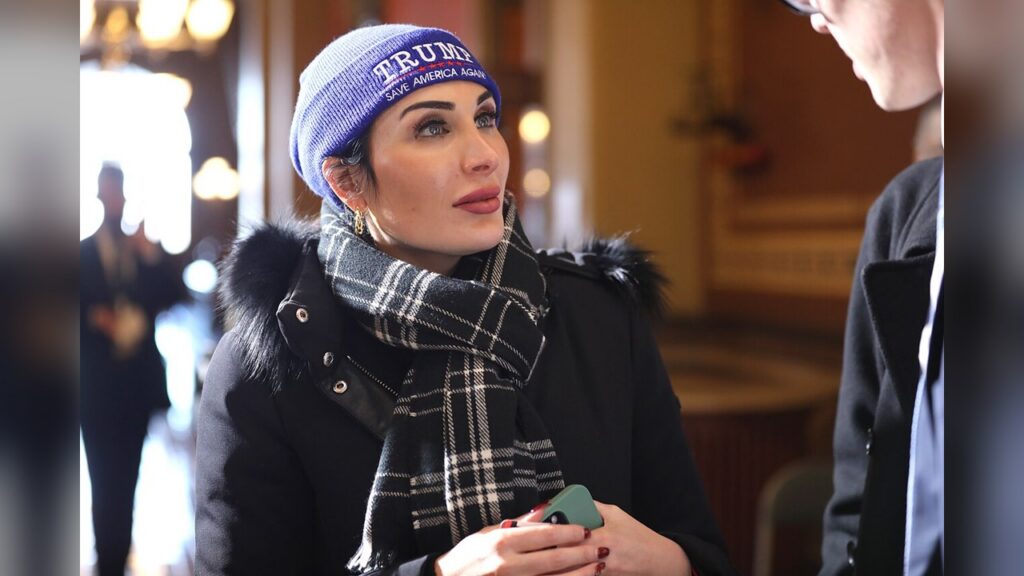
What makes the El-Sayed case structurally interesting is not the 2009 quote alone. It is the pattern of evasion that followed. During his 2018 gubernatorial campaign, when the conservative journalist Laura Loomer pressed him on whether he was “Sharia-compliant,” El-Sayed denied having said so — which is to say, he denied a statement he had made on the record to the paper of record — and then cut the interview short and scolded his staff for allowing it. A documentary about that race, “How To Fix A Primary,” captures him directing filmmakers away from his bookshelf, which contained the Quran alongside works by Sheikh Mohammed al-Ghazali, a Muslim Brotherhood member who testified in a 1993 Egyptian trial that a professor advocating church-state separation was “without doubt” an infidel and that most Islamic scholars would agree such apostates should be killed. “You’re going to want to not get these things in the shot,” El-Sayed told the crew. “We’re trying to keep the shot secular.”
One appreciates the production design. One also notes the instinct.
 AnonymousUnknown author (Public domain) via Wikimedia Commons
His campaign spokeswoman, Roxie Richner, has offered the standard formulation: Abdul believes in the separation of church and state, personally lives by his faith, and opposes any effort to write religious law into civil law. This is the sentence every campaign lawyer drafts when the candidate’s past statements have created a liability. It is structurally identical to the language used by politicians who attend prayer breakfasts and then vote to restrict reproductive autonomy. The difference — and I am genuinely sorry to have to keep explaining this to people who should know better — is that no major American Christian denomination is currently operating a theocratic state apparatus anywhere on the planet. The Taliban governs Afghanistan under Sharia. Iran’s morality police beat Mahsa Amini to death in the street for insufficient hair coverage. Saudi Arabia beheads people with swords in public squares. These are not abstractions. They are the implemented policy of states whose legal foundation is the same body of law El-Sayed described as his lifelong obligation.
El-Sayed has also, it should be noted, equated a 2010 Oklahoma ballot measure to ban Sharia law with the Trail of Tears, the Tulsa race massacre, and the Oklahoma City bombing. He said this in a 2022 speech to CAIR’s Oklahoma chapter. The structural equivalence of a democratic ballot initiative with ethnic cleansing and domestic terrorism is not a nuanced position. It is a rhetorical strategy designed to place any criticism of Sharia beyond the pale of acceptable discourse, and it has worked precisely because liberal institutions have been sufficiently intimidated by the prospect of being called Islamophobic that they have abandoned their own foundational commitment to secular governance.
 Gage Skidmore from Surprise, AZ, United States of America (CC BY-SA 2.0) via Wikimedia Commons
He holds between $150,000 and $425,000 in Amana Mutual Funds, Sharia-compliant investment vehicles whose late co-founder, Yaqub Mirza, was identified in a 1988 FBI memo as a member of the Ikhwan — the Muslim Brotherhood. No charges were ever filed against Mirza. I note this because intellectual honesty requires noting it. I also note that the absence of charges is not the same as the absence of concern, and that the FBI’s interest in the Safa Group network is a matter of public record.
The question is not whether Abdul El-Sayed has the right to practice his faith. Of course he does. The question is whether the voters of Michigan have the right to know, in specific and not merely decorative terms, how a man who described Sharia as a lifelong obligation in “everything” he does intends to reconcile that obligation with an oath to a secular constitution. His campaign’s answer — that he believes in separation of church and state — is not an answer. It is a press release. And the people who accept it as sufficient are the same people who would, quite correctly, interrogate a Christian fundamentalist who spoke in identical terms about biblical law.
The literature on democratic erosion is clear: institutions do not collapse because their enemies attack them. They collapse because their defenders refuse to ask hard questions when the answers might be inconvenient. Abdul El-Sayed told us who he was in 2009. The only question that remains is whether anyone is willing to listen.