


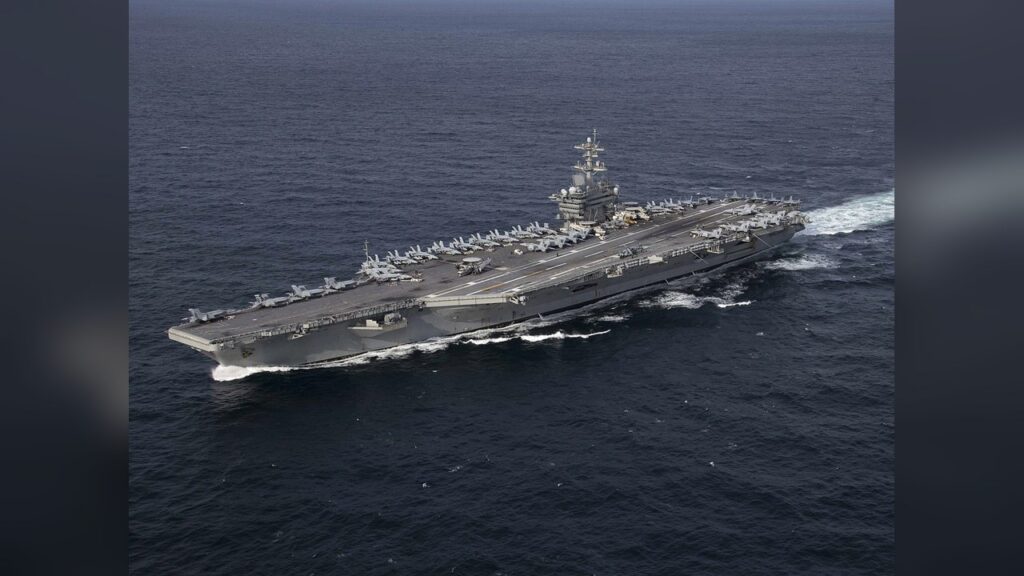
Joshua Aviles has spent the last nine months on the USS Abraham Lincoln, working 12-hour shifts for more than 250 consecutive days without a single break. The carrier set a U.S. military record for uninterrupted time at sea. Reports of food shortages and mental health crises among the crew have poured out for months. Defense Secretary Pete Hegseth called the conditions “completely misrepresented,” which is a convenient thing to say from an office in Arlington while 5,000 sailors eat whatever is left in the galley.
On Saturday morning, somewhere in the Middle East, Aviles got a call. His father, Luis Manuel Aviles Roa, had been arrested by Border Patrol in Key West, Florida. A 48-year-old handyman from Nicaragua who has lived in the United States for 19 years. He was on his way to the mechanic.
“I don’t know how I can mentally continue working 12+ hour days knowing that my dad is somewhere, possibly being treated like a criminal,” Aviles wrote on Facebook. His sister, Katherine Delgado, told CBS News that Joshua joined the military in part because he believed it would help his father obtain legal status, so that he would “no longer be living in fear of being arrested.” He enlisted to protect his family. His government used that service as a backdrop to detain the man who raised him.
The Department of Homeland Security confirmed the arrest and delivered its statement with the warmth of a billing department. “Having a family member in the military is not a free pass to violate our nation’s laws.” The administration “does not pick and choose which laws to enforce.” This is the language of a system that has decided a 19-year resident with a work permit and a pending immigration application is indistinguishable from a threat. DHS did not dispute that Aviles Roa has no criminal record. It did not need to. Under the Trump administration’s rescission of prior enforcement limits, criminality is beside the point. Existence is the offense.
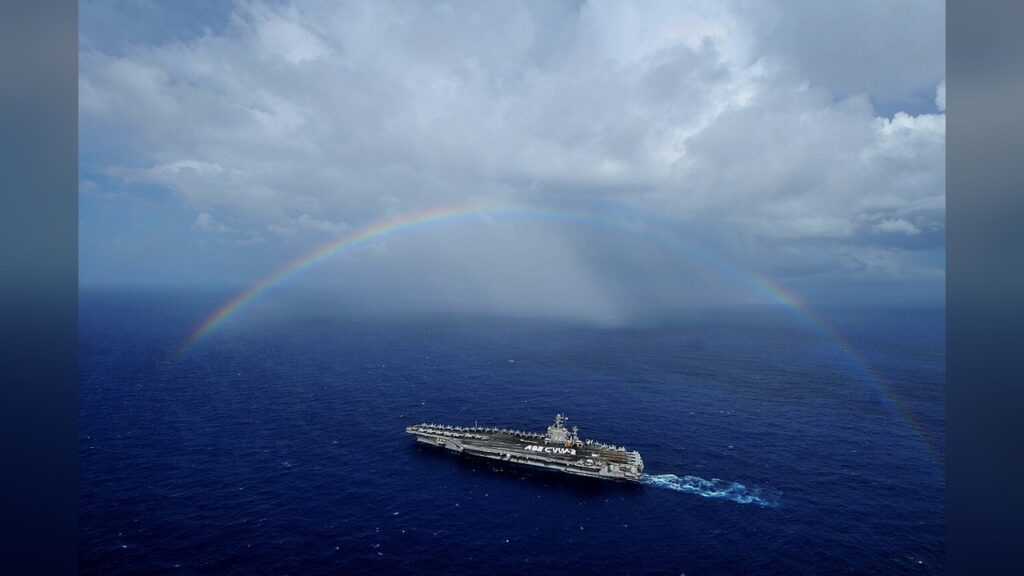 U.S. Navy photo by Mass Communication Specialist 2nd Class James R. Evans (Public domain) via Wikimedia Commons
Aviles Roa’s wife, Argelia, said her husband was excited for the deployment to end. He wanted to hug his son. He had not seen him in nine months. Now the ship is heading home, and Joshua Aviles will walk off that carrier without his father waiting for him. Delgado said it plainly: “He’s gonna come home without his father.”
This is not an isolated case. The Associated Press has documented at least dozens of parents and spouses of active-duty troops detained under this administration’s mass deportation campaign. At least six have been deported. One self-deported. The government does not track these numbers officially, which tells you everything about how much it values the families of the people it sends to war.
The military sells “parole in place” as a benefit for service members’ families. Recruiters imply it. Commanders count on it. But when the enforcement machinery kicks in, that promise evaporates. A sailor grinding through the longest carrier deployment in American history gets a phone call telling him the man who raised him is in a detention cell. The Pentagon referred questions to the Navy. The Navy did not respond. Hegseth says the reports are overblown. The machine grinds on.
Joshua Aviles is still at sea, still working 12-hour days, still fighting for a country that took his father on a Saturday morning for the crime of driving to the mechanic. If this is how we treat the families of our service members, the word “support our troops” has no meaning left. It is a slogan on a bumper sticker, and the people who chant it loudest are the ones presiding over this.
Release Luis Manuel Aviles Roa. Honor the commitments this country makes to the families of the people who serve. And stop pretending that tearing a father from his son is anything other than what it is: cruelty dressed up as law enforcement.