


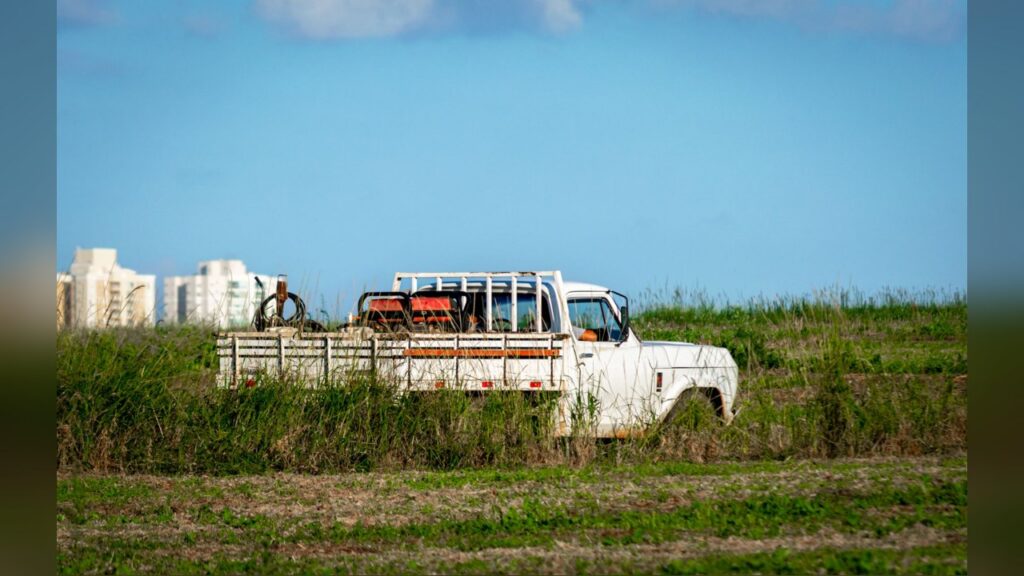
By Saturday evening the facts were, in the way of these events, both spare and unbearable. A pickup truck drove onto a youth soccer field at the Stryker Sports Complex in Wichita, Kansas. One child died at the scene. One adult died as well. Multiple others were injured and taken to hospitals, their conditions undisclosed. The driver is in custody, and, according to police spokesperson Aaron Moses, there were two juveniles inside the vehicle. A witness described a black truck plowing through the fields before stopping 100 to 200 yards beyond the point of impact, with dozens of emergency responders performing CPR on children.
Mayor Lily Wu posted that she was heartbroken, and I do not doubt her sincerity. But I would gently like to complicate the response, and then complicate the complication, because that is what I am apparently for.
The reflexive framing, already settling over the coverage, is that of the inexplicable aberration: a lone vehicle, a lone driver, an act so senseless it defies analysis. This framing is analytically lazy and, I would argue, quietly exculpatory. A country that has spent seven decades reengineering its public space around the primacy of the automobile, that treats a soccer complex as a facility one must be able to drive a three-ton vehicle directly into, has not experienced an anomaly. It has experienced a foreseeable output of a system. The literature on vehicle-as-weapon incidents and on pedestrian fatality design is not obscure; it is simply inconvenient, because it implicates bollard budgets rather than souls.
Note what the officials themselves concede. Moses said police do not know how fast the vehicle was traveling or how it got onto the field. That second question is the entire scandal, and almost nobody will treat it as one. How does a truck get onto a soccer field? Because we built the fields that way. Because the default posture of American land use is that anywhere a car might plausibly wish to go, a car may go, and the burden of proof rests on the children to be elsewhere.
 alevh_77 / Pixabay
Now the complication, as promised. None of this absolves the driver, who is in custody and will face the process we have. Systemic critique is not a substitute for individual accountability; it is the precondition for preventing the next one, which the accountability model has conspicuously failed to do anywhere it has been tried alone. Wichita has canceled all events at the complex and opened a portal for video evidence, both reasonable steps. Neither will install a barrier. Neither will narrow an access road. Both treat the event as having happened rather than as having been made possible.
There will be thoughts and prayers, and there will be, one predicts with weary confidence, a moment of silence at the next city council meeting, and then the access road will remain exactly as it is, because changing it would require someone to argue that a child’s life outweighs a driver’s convenience, out loud, in a public meeting, and that argument is apparently still controversial in this country.
A child died on a soccer field because a truck could reach a soccer field. That is the finding. The rest is commentary, and I say that as someone professionally devoted to commentary.