


Congress did its job. Then the president erased it with a signature.
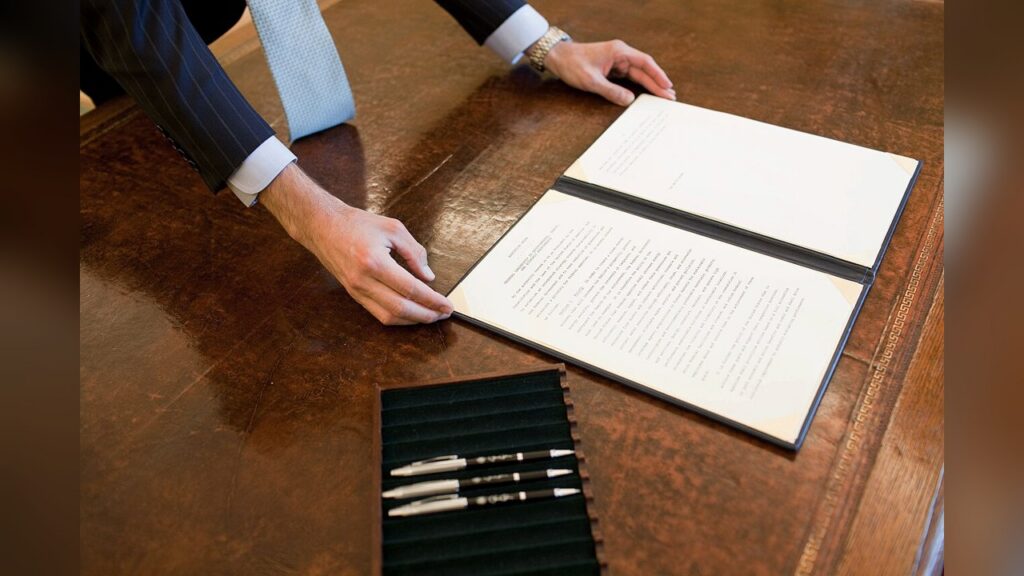
Last month, the House and Senate passed the Lindsey Graham Act with strong bipartisan majorities, a rare piece of legislation designed to actually bite: tariffs on the countries that keep Russia’s oil and gas money flowing, pressure aimed at the revenue streams funding the war on Ukraine. Trump signed it himself. On Friday, two days before the sanctions were set to take effect on Oct. 18, he signed something else, an executive order waiving the whole package on the grounds that doing so “is in the national interests of the United States.”
The national interests, in this case, include a deal Trump announced with Vladimir Putin to release hundreds of thousands of tons of Russian diesel onto the global market. That is the transaction on the table. Congress legislated a squeeze on Putin’s wallet, and the administration’s answer was to open the wallet back up and call it policy.
Let’s be clear about what happened here, because the structure matters more than the personalities. A legislature elected to represent people passed a law by wide margins. One man nullified it. The law anticipated this and required an unclassified report to Congress explaining any waiver; Trump says the report was sent, which converts a constitutional check into a paperwork exercise. The order doesn’t lift existing sanctions, but it frees the administration from being bound by the law’s requirements going forward, meaning every future decision about pressure on Russia now runs through one man’s discretion. That is not oversight. That is the removal of it.
Volodymyr Zelenskyy called it what it is: “wrong,” a “financial reward for Putin” that “only encourages him to continue his attacks.” He described an “American sanctions blackout” and said Putin “feels joy and happiness that there is such support.” When the invaded country tells you your policy is a gift to the invader, and your response is to note that diesel prices are high, you have chosen a side.
And the side was chosen for the cheapest possible reason. Trump has blamed Ukraine’s strikes on Russian oil infrastructure for fuel costs, downplaying the Iran war’s effect on the oil market, and landed on the one solution that happens to put revenue directly back into Moscow’s hands ahead of an election where cost of living is the top issue. Cheap fuel purchased with Ukrainian blood is not a bargain. It is a transfer of harm from our gas pumps to someone else’s city under drone attack.
The silence from the bill’s own camp is its own indictment. Sen. Darline Graham of South Carolina, who co-sponsored the act named for her late brother and has touted it on the campaign trail as a signature achievement, has not criticized the president for gutting it. Trump’s endorsement was critical to her primary win, and that debt apparently outweighs the law she brags about passing. Watch what her party does with power when a law they passed two months ago becomes inconvenient. They do not defend it. They do not even mention it.
This is why structural accountability cannot live or die on any one president’s good mood. Congress passed a law with teeth. The teeth were pulled by executive order in a single afternoon. If we want sanctions that survive contact with a president who finds them inconvenient, then Congress must write waivers out of the law entirely, require votes to suspend rather than reports to file, and treat the erosion of legislative power as the emergency it is. A law that one signature can switch off was never really a law. It was a suggestion.