


One hesitates to use the word “unprecedented” in any discussion of the Trump administration, which has made a brand of exhausting the adjective’s meaning. But the reporting from the Guardian this week warrants it, and not in the way the White House would prefer.
Stephen Miller, functioning as both architect and enforcer of the administration’s immigration agenda from his post as deputy chief of staff, is directing a coordinated, five-department campaign to accelerate the removal of undocumented children from the United States. Nearly 200,000 children have been ordered removed by immigration judges since January 2025. That figure doubles the prior rate. Seventy percent of those children are under thirteen years old. These are not statistics that require interpretive framing. They are, however, statistics that require institutional context, which is precisely what the administration is working to strip away.
 Mohammed Brzan / Pexels
The mechanics here matter more than the outrage, though there is plenty of both. Miller is not merely asking agencies to work faster. He is restructuring the relationships between them. Health and Human Services, which is legally charged with the care of unaccompanied migrant children, is now sharing confidential case files with Immigration and Customs Enforcement. The bureaucratic firewalls that were designed, quite deliberately, to separate the welfare function from the enforcement function are being dismantled from within. ICE officials are taking senior roles at HHS’s Office of Refugee Resettlement. The agencies that were supposed to protect children are being fused with the agencies that deport them.
This is not a scandal in the conventional sense. A scandal implies a deviation from established norms. What Miller is doing is something more systematic: he is rewriting the norms themselves, so that the deviation becomes the operating procedure. The children are being rushed through asylum proceedings without legal representation. The administration has defunded attorneys for more than 20,000 of them. They are appearing, often alone, before asylum officers and immigration judges who are, as the Guardian’s sources describe it, “either inclined or under pressure to take a hard line.” One does not need a doctorate in administrative law to recognize what happens when you remove counsel from an adversarial proceeding involving a ten-year-old.
 U.S. Government Accountability Office from Washington, DC, United States (Public domain) via Wikimedia Commons
The White House, for its part, has opted for the rhetorical strategy that political scientists sometimes call “protective reframing.” Spokeswoman Lauren Bis describes the effort as anti-trafficking: locating and rescuing children, reuniting them with families in their home countries. This is, to put it gently, a selective reading of the situation. Claire Trickler-McNulty, an immigration policy fellow at the nonprofit Hyphen and a former assistant director at ICE during the Biden administration, calls the trafficking framing “a convenient, feel-good cover that has nothing to do with trafficking and everything to do with reducing the program, getting rid of services, getting rid of things they don’t like, and then removing kids.” When a former senior ICE official tells you the anti-trafficking justification is a facade, that is not a partisan judgment. That is an institutional assessment from someone who has seen the machinery from the inside.
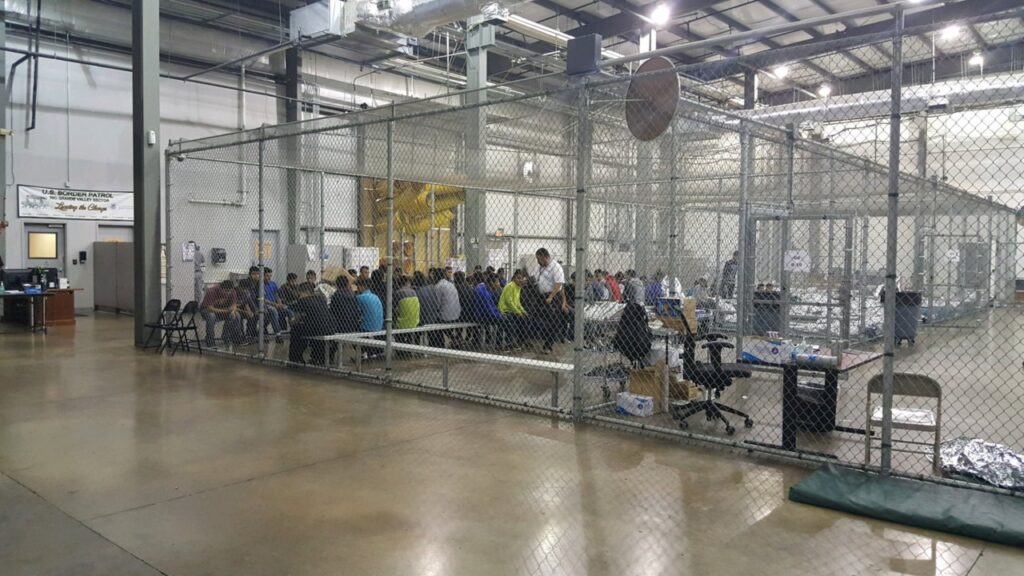
More than 1,800 children remain in federal custody, many of them having previously experienced abuse, neglect, or trafficking in their countries of origin or during their journey north. The administration has restricted sponsor approvals so severely that relatives who could take these children in are too frightened of ICE to come forward. The children are, in effect, being held until they can be deported to the conditions they fled.
What we are watching is not a policy failure. It is a policy operating exactly as designed, by a man who has spent his career perfecting the art of making cruelty look like procedure. The question is not whether the public will notice. The question is whether the institutions tasked with stopping this kind of thing still function well enough to do so. On the evidence so far, Miller is betting they do not. He is, unfortunately, making a strong case.