


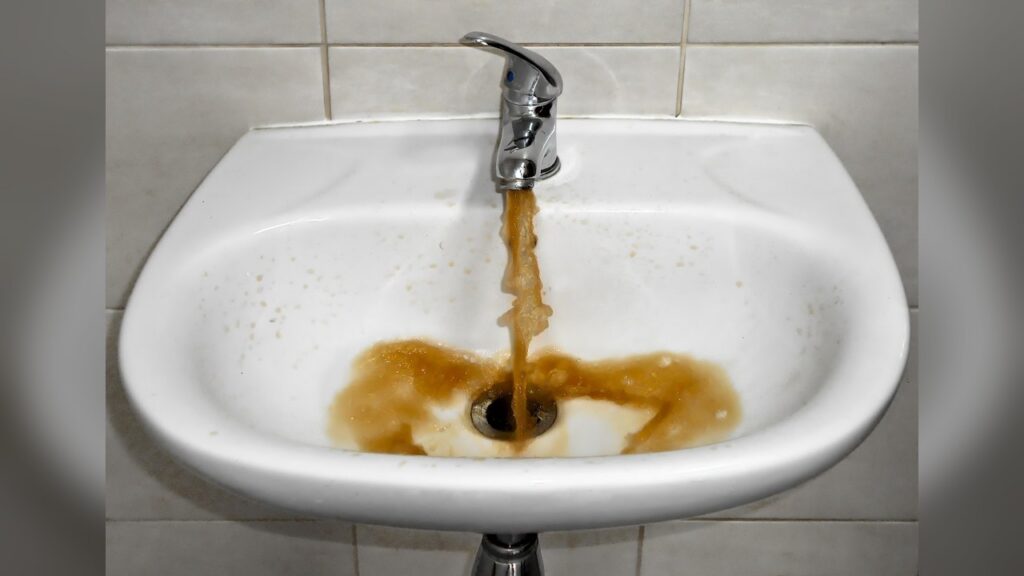
Priscilla Sterling’s children have lead poisoning. Her city knew the water was toxic and said nothing for six months. A federal agency documented “persistent and concerning violations” across the entire system. And on Friday, the Fifth Circuit Court of Appeals looked at all of that and told her: the Constitution has nothing to offer you.
Judge Kurt Engelhardt, a Donald Trump appointee, affirmed the dismissal of Sterling’s 2022 lawsuit against the city of Jackson with language so cold it should be framed and hung in a museum of institutional cruelty. “The Constitution does not provide redress for every governmental wrongdoing,” he wrote. The deprivations were “grievous,” he conceded. Just not grievous enough to matter.
Let us be precise about what the court rejected. Sterling’s lawsuit alleged that Jackson officials deliberately withheld information about water toxicity and then made the problem worse by issuing boil-water notices, a practice that kills bacteria but concentrates lead. Engelhardt’s response was that there is no constitutional right to truthful information from officials during a public health crisis. Read that sentence again. A government can poison your children, lie about it, and the highest law of the land is silent. That is not a narrow ruling. That is a permission slip.
Jackson is more than 80 percent Black. Its poverty rate is more than double the national average. A quarter of its residents are children, who are the most vulnerable to the permanent brain damage lead causes. The Mississippi State Department of Health found elevated lead levels in 2015 and sat on that information for half a year while families kept drinking. The EPA ran tests in 2020 and found leaks, corrosion, and high lead throughout the system. No agency at any level fixed it. Every single layer of government failed these residents, and now the judiciary has closed the door on accountability.
 Jeff Marquis (CC BY 2.0) via Wikimedia Commons
The framing matters here. This is not a story about one broken city. It is a story about who the Constitution protects and who it does not. Nine U.S. states recognize a right to clean water. More than a dozen countries, including Uruguay and South Africa, enshrine it in their constitutions. New York amended its constitution in 2021 to guarantee clean air and water. Massachusetts has protected that right since 1972. The Fifth Circuit looked at that landscape and decided the federal Constitution is too small to hold something as basic as water you can drink without being poisoned.
And the timing. On the very same Friday, Trump’s EPA released a supplemental rule to further dilute the Clean Water Act. Jim Murphy of the National Wildlife Federation called it what it is: an effort to “effectively scrap these protections wherever possible” while the cost flows downstream to households already living paycheck to paycheck. The courts close one door, the executive branch kicks open another, and the people of Jackson are left standing in the same hallway they have been standing in for a decade.
What happened in Jackson is not an accident. It is a chain of deliberate choices by people who held power and used it to shield themselves from consequence while children drank poison. The Fifth Circuit did not just dismiss a lawsuit. It ratified that chain. It told every underfunded, majority-Black city in its jurisdiction that the federal courts will not intervene when a local government poisons its own people and lies about it.
Sterling’s children already have lead in their blood. No ruling can undo that. But the right to safe water is not something courts grant. It is something communities demand, organize around, and force into law. Nine states have done it. Jackson deserves the same. The Constitution is only as narrow as the people willing to stretch it.