


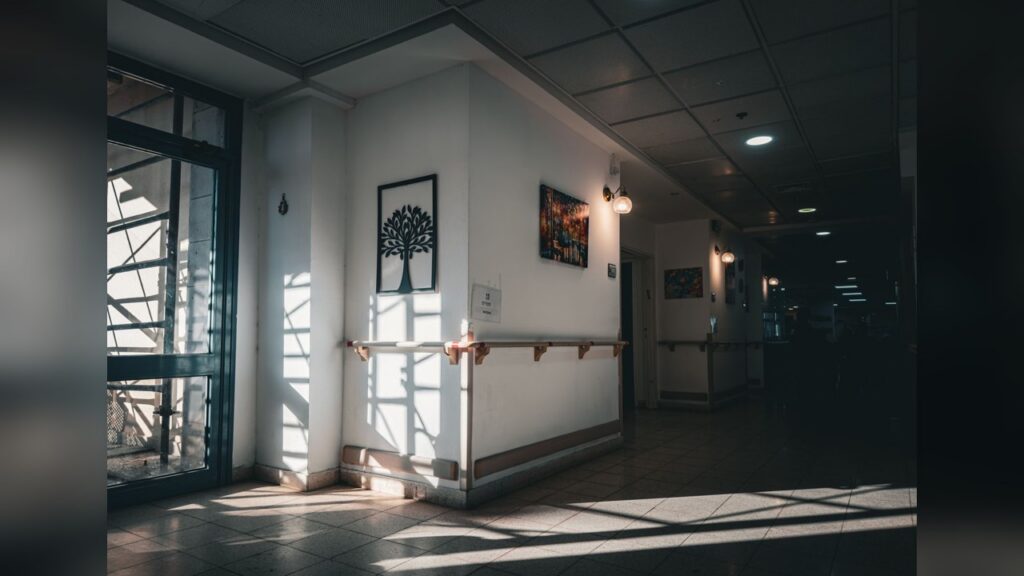
Shelba Catterton was 83 years old. She had Alzheimer’s. She was nonverbal. She lived at Harmony at West Ashley, a memory care facility in Charleston, South Carolina, that was supposed to keep her safe because her family could not do it alone.
On the night of July 23, a Harmony employee propped open a door to the facility’s secured courtyard. That door was the last barrier between a woman who could not call for help and the ground outside. Catterton walked through it. Nobody stopped her. Nobody noticed. By the time staff found her, she was lying in a fire ant bed, alone and helpless, covered in a thousand bites and stings.
The 911 call from a Harmony employee tells you everything about how little this facility was prepared to protect the people it charged families to protect. “A bunch of ants were on her,” the employee told the dispatcher. “She has bumps all over her back, all over her face, it’s pretty bad. They really did eat up on her.”
 Julia Filirovska / Pexels
They really did eat up on her. That is how a paid professional described an elderly woman dying on the grounds of the facility that was responsible for her life.
Catterton’s family has filed a lawsuit, and the complaint details what happened next: horrendous injuries, cascading medical complications, and death. One thousand bites and stings on an 83-year-old body that could not swat them away, could not stand up, could not say a single word.
Harmony at West Ashley issued the statement that negligent institutions always issue. A spokesperson told WCBD that their thoughts and deepest condolences are with the family, that they are “committed to providing each resident with the same care, compassion, and respect we would extend to our own family,” and that because the matter is in litigation, they cannot comment on details. The corporate grief playbook, page one: express sorrow, invoke family values, hide behind the lawyers.
Here is what no spokesperson can talk around. Memory care units exist for exactly one reason: because people with advanced Alzheimer’s cannot protect themselves. They wander. They do not know where they are. They do not understand danger. That is not a surprise or an edge case. It is the defining condition of the population these facilities contract to serve. A secured door is not a luxury. It is the baseline. Propping it open is not an accident. It is a failure so fundamental that it collapses the entire premise of the business.
 James Gordon from Los Angeles, California, USA (CC BY 2.0) via Wikimedia Commons
This is not one bad employee or one unlucky night. This is an industry that profits from the vulnerability of elderly people and their desperate families, then pleads surprise when the absence of basic safeguards produces exactly the catastrophe those safeguards were designed to prevent. The for-profit nursing home sector has spent decades fighting regulation, understaffing facilities, and treating oversight as an unreasonable burden. Shelba Catterton is what that burden looks like when it is transferred onto a human body.
Every memory care facility in this country should be audited for door security, staffing ratios, and wandering protocols today. Not after a study. Not after a review board convenes. Today. Regulators should treat a propped-open secured door the way they would treat a missing fire exit, because functionally, for someone like Shelba Catterton, it was worse. And every family considering one of these facilities should demand to see the wandering-prevention plan in writing before signing a single document.
Shelba Catterton deserved more than condolences. She deserved a closed door.