



Federal Court Vacates Trump’s 75-Country Visa Ban, Calling It What It Was: Illegal Discrimination
“In many ways, this is not a challenging case.” That is Judge Jeannette A. Vargas, writing from the Southern District of New York, and she is being generous. The Immigration and Nationality Act has prohibited nationality-based discrimination in visa issuance for over six decades. The Trump administration looked at that law, looked at 75 countries, and decided to ban their citizens anyway. The judge vacated the ban on Friday and set aside every visa denial rooted solely in the policy.
Here is what that ban did in practice. The State Department, under Secretary Marco Rubio, suspended immigrant visa processing for citizens of Afghanistan, Brazil, Yemen, and 72 other nations. The stated justification was “public charge,” the claim that people from those countries would drain public resources. But the policy went further than even that pretext allowed. It blocked visas even when consular officers had already evaluated individual applicants and found them self-sufficient. The administration wasn’t screening. It was blacklisting.
The State Department said the ban would “remain active until the U.S. can ensure that new immigrants will not extract wealth from the American people.” Extract wealth. That is the framing they chose for people following the legal immigration process, people with approved petitions, people whose spouses and parents and children were waiting on the other side of a consular window.
Susan Welber, supervising attorney at The Legal Aid Society, called the ban “premised on a fiction.” She is right, and the fiction is an old one. It is the same fiction that has been used to exclude Irish immigrants, Chinese immigrants, Jewish refugees, Mexican families, and every wave of newcomers deemed inconvenient by whoever held power at the time. The casting of entire nationalities as burdens is not a policy innovation. It is a pattern, and the law exists precisely to break it.
The lawsuit was filed on February 2 by the National Immigration Law Center, Democracy Forward, The Legal Aid Society, Western Center on Law and Poverty, the Center for Constitutional Rights, and Colombo and Hurd. The plaintiffs were the Catholic Legal Immigration Network, African Communities Together, six U.S. citizens petitioning for relatives, and five people pursuing employment-based visas. These are not abstract litigants. These are spouses separated by a stamp on a passport, parents kept from children, workers who did everything the system asked and were told their country of origin disqualified them anyway.
Anna Gallagher of CLINIC named the stakes plainly: “The suspension of lawful visa processing across 75 countries separated spouses, parents, and children who were simply following the legal immigration process.” Antionette Dozier of Western Center added that no administration gets to override the law because it deems a nationality unacceptable. That principle should not need a federal lawsuit to enforce. It is written into the statute. But here we are, litigating the obvious, because this administration treats the law as a suggestion and nationality as a verdict.
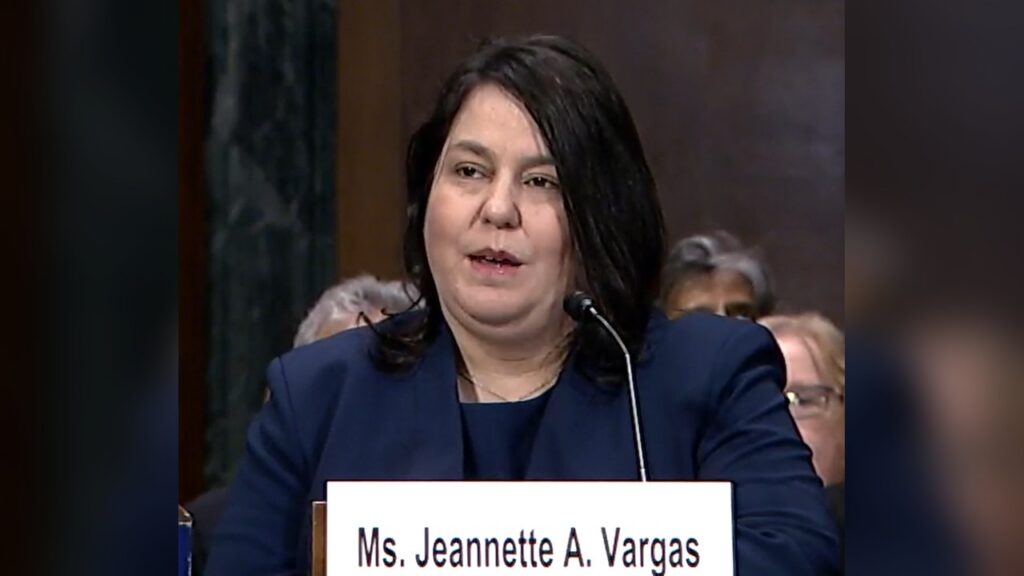 United States Senate Judiciary Committee (CC0) via Wikimedia Commons
The ruling restores case-by-case review. It does not undo the months of separation, the missed births, the expired medical exams, the savings drained by delay. It does not stop whatever the administration attempts next. The Supreme Court already rejected Trump’s birthright citizenship executive order in June, and the pattern is clear: executive overreach, court reversal, human cost in the interim. The harm is the strategy. The litigation is the delay. The families are the collateral.
What must happen now is accountability, not just relief. The State Department must immediately resume consular processing for every affected applicant. Congress must reaffirm, in legislation too specific to reinterpret, that nationality-based visa bans are unlawful. And the organizations that brought this case need resources, because the next ban is already being drafted somewhere in this administration, and the courts will hear it only if someone sues.