


There is a particular species of political behavior that only becomes legible when you stop examining the individual and start examining the structure that permits him. Mike Lindell, having lost the Minnesota Republican gubernatorial primary to House Speaker Lisa Demuth by roughly 11 percentage points, announced Wednesday that he will personally fund a statewide hand recount of every paper ballot. The estimated cost is $825,000. The margin is not close. It was never going to be close. And yet the mechanism he is using is not a loophole. It is a provision of Minnesota election law, available to any candidate willing to pay for it, that allows a discretionary recount outside the 0.25% threshold triggering an automatic, state-funded count.
One must credit the architecture here, even if one finds the tenant distasteful. Minnesota’s statute is, in its own way, a reasonable accommodation: it preserves the right of any candidate to verify a result without burdening taxpayers when the result is not in reasonable doubt. The system assumes, perhaps charitably, that candidates will exercise this right in good faith. The system assumes, in other words, that a person who loses by 11 points will look at those 11 points and accept the arithmetic.
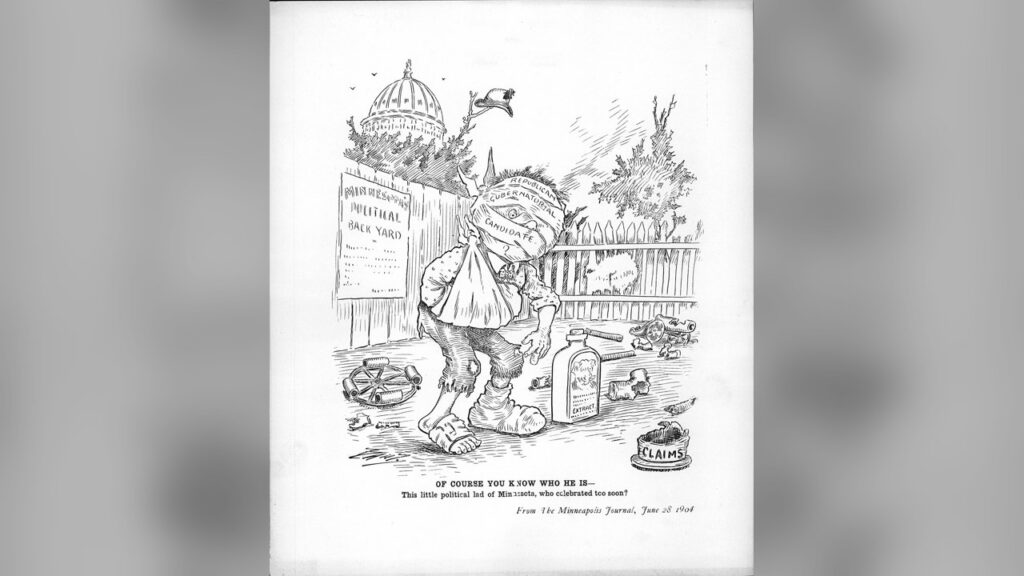 Bartholomew, Charles Lewis 'Bart', 1869-1949 (Public domain) via Wikimedia Commons
Lindell will not, because Lindell’s relationship with arithmetic has been adversarial for some time. This is the same man who built a national profile on the assertion that voting-machine companies manipulated the 2020 presidential election, claims that cost him dearly in court. He settled a defamation suit with Dominion Voting Systems last month. A judge separately found he had defamed Smartmatic. The damages in that case remain undetermined. One might think these outcomes would introduce a measure of epistemic humility. They have not.
On primary night, Lindell told reporters he would not concede until every vote was counted and that his team had identified “anomalies” requiring review. He offered no evidence then, and there have been no official findings of fraud or irregularity in the primary results since. The word “anomalies” is doing a great deal of work in that sentence. It is the kind of term that sounds forensic enough to imply expertise while remaining vague enough to require none. In the literature on election denialism, this is a well-documented rhetorical move: the assertion of irregularity without the specification of irregularity, which functions not as an argument but as an indefinitely renewable promissory note.
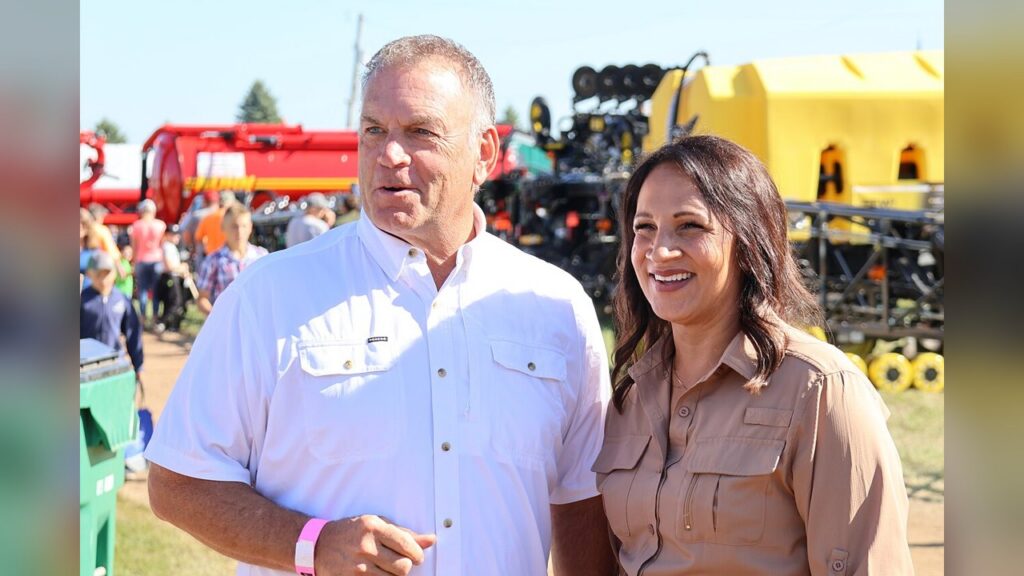 Lisa Demuth for Governor (CC0) via Wikimedia Commons
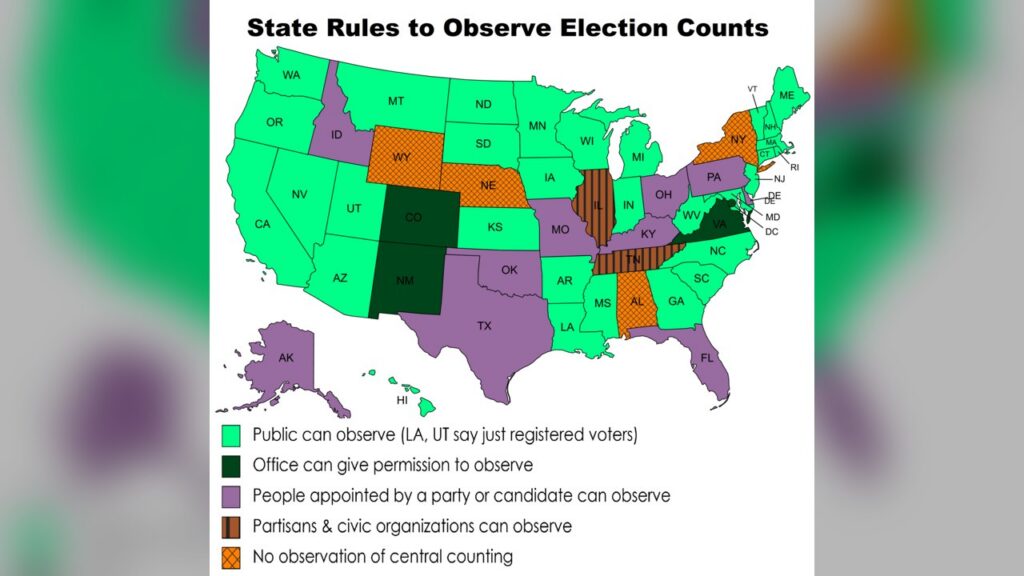
What we are watching is not, strictly speaking, a recount. A recount is a procedural instrument designed to verify a close result. What Lindell is purchasing, for $825,000, is the performance of verification. The Secretary of State’s office has dutifully prepared a contingency plan, appointing Director of Elections Paul Linnill as State Recount Official, with the entire process open to public and media observation. The bureaucracy will do what bureaucracies do: it will follow procedure, count ballots, and produce a number. The number will be approximately what it was before. And then the question becomes what Lindell does with that number, which is, if recent history is any guide, a question with a predetermined answer.
The deeper problem is not Mike Lindell. Mike Lindell is a symptom with a pillow company. The deeper problem is a system that treats the willingness to spend $825,000 as functionally equivalent to the existence of a reasonable doubt about an election result. Minnesota’s law is not unreasonable in the abstract. But in a political culture where losing candidates have learned that the performance of skepticism is itself a form of campaigning, the discretionary recount ceases to be an instrument of verification and becomes a stage for the theater of denial. The cost of admission is $825,000. The audience is the public. The script has already been written.
Lindell has until Monday, Aug. 24, to post the bond. The state will count the ballots again. The ballots will say what they said the first time. And the person who paid for the recount will tell you that this, too, proves nothing.