


There is a particular species of institutional self-sabotage that only becomes visible when you step back far enough to see the whole architecture. Defense Secretary Pete Hegseth has made at least two trips to Capitol Hill in recent weeks to pitch the Trump administration’s record $1.5 trillion defense budget, a figure representing a 40% increase over the previous year. He has, according to lawmakers from both parties, repeatedly excluded Democrats from the classified briefings. This is not, in the technical sense, illegal. It is, in every other sense, a masterwork of strategic incoherence.
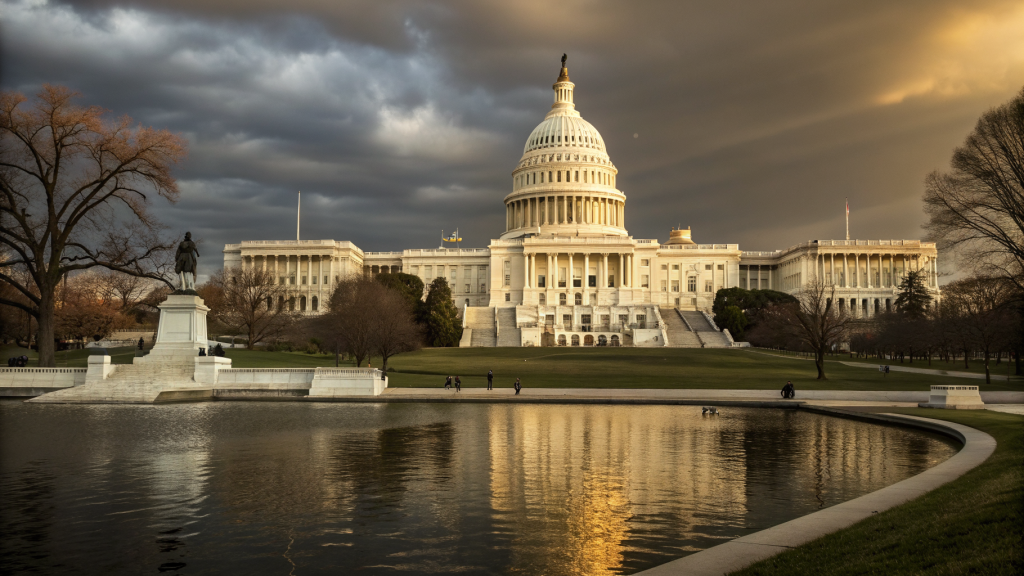
Consider the structural problem. Much of this budget will require Democratic votes to pass the Senate, even if Republicans push portions through the reconciliation process. Senate Democrats have already threatened to boycott the funding bills altogether. So the secretary of defense, charged with securing the largest military spending increase in American history, has decided that the optimal strategy is to withhold information from precisely the legislators whose support he cannot do without. One does not need a doctorate in legislative studies to detect the flaw, though I confess it would help.
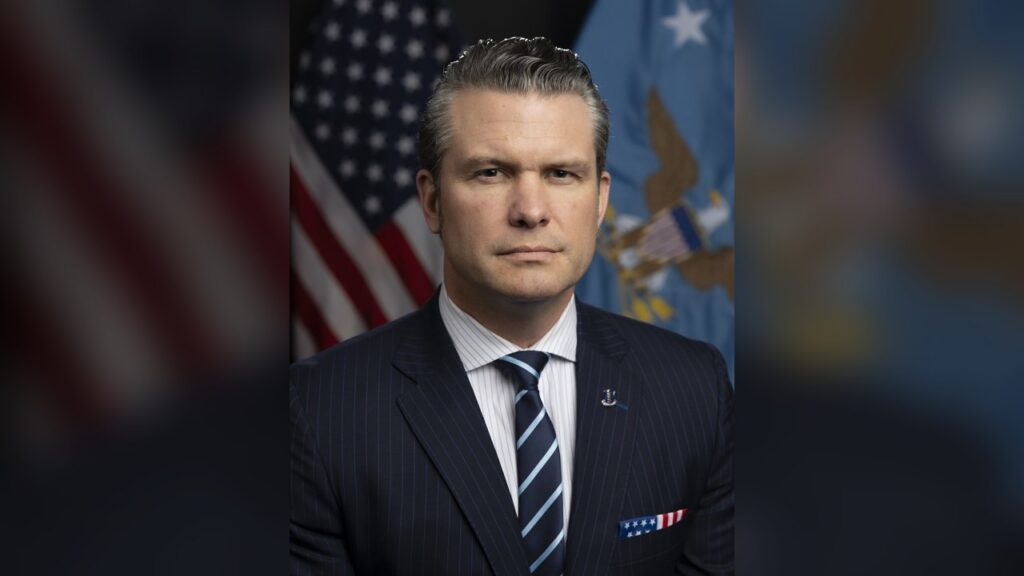 U.S. Department of Defense (Public domain) via Wikimedia Commons
Senator Thom Tillis, a North Carolina Republican not generally mistaken for a dove, put it with admirable economy: “He calls himself the secretary of war, but ironically, he doesn’t want to go to war and win the argument with nearly half the members of the Senate.” Senator Mike Rounds of South Dakota said he personally raised the matter with Pentagon officials, who told him they feared classified material would leak. Senator Lisa Murkowski called for bipartisan briefings. These are not dissenters from the administration’s defense posture. These are members of Hegseth’s own party telling him, in effect, that his method is undermining his objective.
The leak concern deserves examination, because it is doing a great deal of work in this argument and cannot bear the weight. The United States Congress has received classified briefings on matters of genuine existential urgency for decades. The system has leakage problems, certainly, but the solution to leakage is not the wholesale exclusion of a co-equal branch’s minority party from deliberations on a budget that will bind the entire government. The solution is counterintelligence. What Hegseth is practicing is not operational security. It is partisan curation of information, dressed in the language of prudence.
And there is a pattern here that matters. In April, Hegseth told the House Armed Services Committee that congressional Democrats were among the “biggest impediment” to stopping Iran from acquiring a nuclear weapon, calling them “reckless, feckless and defeatist.” At this week’s hearings, the first since the administration entered the Iran war without congressional authorization, he doubled down, labeling Democrats and dissenting Republicans the “biggest adversary” the country faces. Thirteen American troops are dead. More than 400 are injured. The Strait of Hormuz remains closed. The war has cost $25 billion so far, with expectations that the eventual funding request will approach $100 billion. And the secretary of defense identifies the adversary as the party asking questions about all of this.
 Momlumbee (CC0) via Wikimedia Commons
Rep. Chrissy Houlahan pressed Hegseth on his firing of Gen. Randy George, the Army’s top uniformed officer, who had held the post since August 2023. Houlahan noted George was deeply respected. Hegseth’s reply, “We needed new leadership,” delivered twice, once as an interruption, satisfied no one. Republican Sen. Joni Ernst of Iowa said she was “disappointed” and catalogued George’s achievements: pulling the Army out of its worst recruiting crisis since Vietnam, trimming nonessential positions, 38 years of honorable service. Even Hegseth’s own allies cannot locate the rationale.
The Pentagon’s chief spokesperson, Sean Parnell, offered the formulation that the “Department of War remains fully committed to working with Congress.” The department is now called the Department of War. That renaming, one suspects, is not incidental to the broader pattern. When you rebrand the institution, you signal something about how you intend to use it. And when you lock out the legislators who must vote on its budget, you signal something about how you understand the relationship between executive power and democratic oversight.
 ArtBrom from Seattle (BY-SA) via wikimedia
This is not a scandal in the tabloid sense. It is something more durable: a structural collision between an executive branch that treats Congress as an audience and a legislative body that retains, at least on paper, the power of the purse. The Republicans now complaining about Hegseth’s exclusions might reflect on how that power was allowed to atrophy in the first place. The complication, of course, is that they were among the architects of that atrophy. And the complication of the complication is that they may need Democratic votes to arrest it.