



Treasury Kills Beneficial Ownership Reporting, and the Dark Money Apologists Cheer
There is a particular genre of policy rollback that announces itself as relief and arrives as demolition. On Tuesday, the Treasury Department’s Financial Crimes Enforcement Network finalized a rule permanently exempting U.S. companies and U.S. persons from reporting beneficial ownership information under the Corporate Transparency Act. FinCEN will also delete the data already collected from Americans. Secretary Scott Bessent called it “a victory for common sense and American small businesses,” which is the sort of phrasing that functions as a tell for anyone who has studied regulatory capture beyond the introductory level.
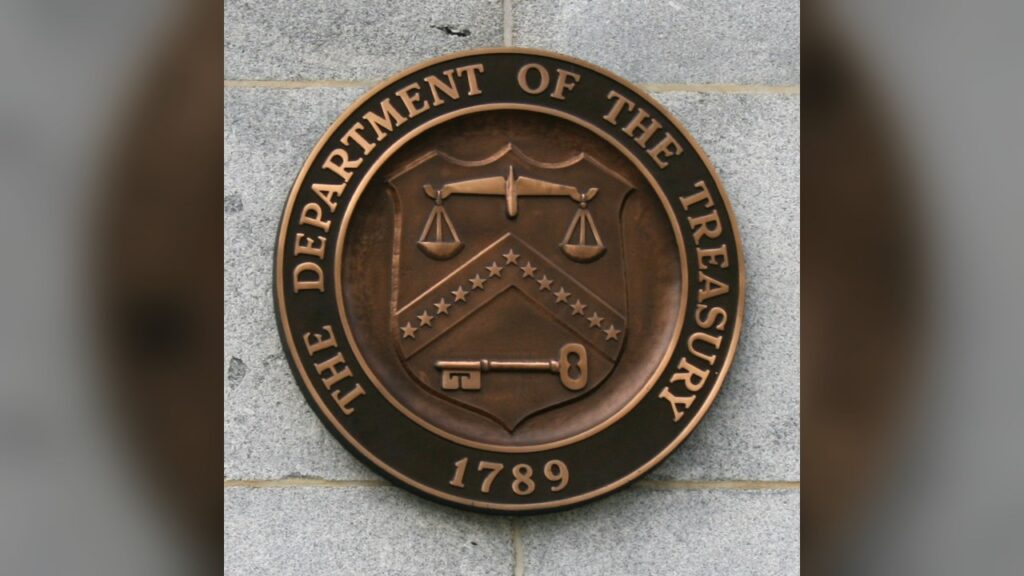
 United States Department of the Treasury (Public domain) via Wikimedia Commons
The Corporate Transparency Act passed in 2021 with bipartisan support, which is to say it cleared a bar so low it barely counts as endorsement. Its premise was modest to the point of banality: shell companies should not be able to operate as anonymous vehicles for money laundering, sanctions evasion, and tax fraud. The United States has long been an outlier among developed economies for the ease with which one can incorporate an entity without disclosing who actually owns it. The Financial Action Task Force has flagged this gap repeatedly. The literature on illicit finance is not ambiguous on the point: anonymous incorporation is the load-bearing infrastructure of transnational corruption. This is not a controversial claim among people who study it. It is, however, inconvenient for people who benefit from it.
The rollback preserves reporting requirements for foreign entities disclosing foreign beneficial owners, which is a concession so narrowly constructed it practically announces its own bad faith. The United States will continue to demand transparency from foreigners while dismantling it at home. One struggles to identify the principle at work, unless the principle is that American shell companies deserve a privacy interest that foreign shell companies do not. Bessent’s framing, that the rule eliminates “a burdensome reporting requirement for millions of law-abiding business owners without compromising our national security,” is a sentence that does not survive contact with its own assumptions. The entire purpose of beneficial ownership reporting is that you cannot distinguish law-abiding business owners from the other kind without collecting the information. That is the mechanism. Removing the mechanism and then asserting the outcome is preserved is not an argument. It is a press release.
 woodley wonderworks (CC BY 2.0) via Wikimedia Commons
What we are watching is not deregulation in any coherent sense. It is the systematic unwinding of an anti-money-laundering infrastructure that took a decade to build and will take considerably less time to dismantle. The interim final rule in March 2025 already signaled the trajectory. Tuesday’s action simply makes it permanent and, crucially, orders the destruction of existing records, which is the detail that elevates this from neglect to erasure. There is a difference between declining to collect new data and purging data you already hold. The latter has no regulatory rationale. It has an evidentiary one.
The Defense Credit Union Council’s chief advocacy officer praised the move as “common-sense regulatory relief,” which is a phrase that does a great deal of work while carrying very little meaning. Compliance costs are real. Small businesses face genuine administrative burdens. These facts do not constitute an argument for eliminating the single most important anti-corruption database the federal government has built in a generation. The framing that “more paperwork does not automatically produce greater financial security” is technically true and substantively empty: the question is whether this paperwork produces this security, and the answer, per every credible assessment of the CTA, is yes.
 Pixabay / Pexels
One does not need a conspiracy theory to explain what is happening. One needs only to observe that the political coalition advancing this rollback overlaps substantially with the interests that benefit from anonymous corporate structures, and that the institutional capacity to resist such rollbacks has been steadily degraded. The systems are doing what systems do. The exhaustion of having to explain this is, I concede, my problem and not yours.