


When a state government passes a law that lets it decide which jokes are legal, the question is not whether the government has used that power yet. The question is why it has the power at all.
New Mexico’s legislature passed HB 182 in 2024, requiring anyone who creates a political advertisement using “materially deceptive media” to attach a disclaimer stating the content “has been manipulated or generated by artificial intelligence.” The Babylon Bee, a satirical news site, filed suit Tuesday in federal court arguing the law violates the First Amendment. The Bee’s complaint frames the stakes plainly: the lawsuit exists to “resurrect a fundamental right of every New Mexican: the right to freely poke fun at those running for office.”
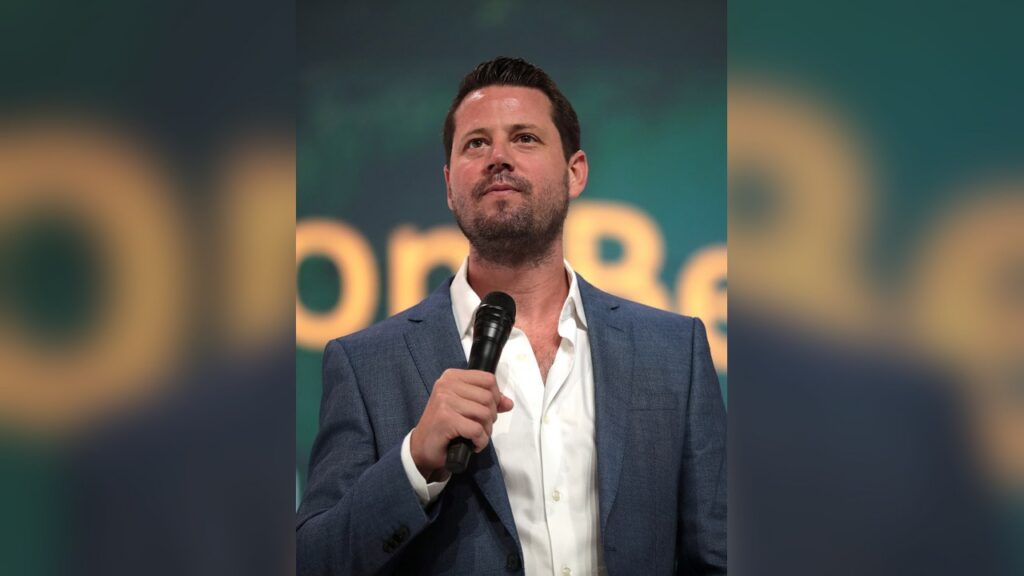 Gage Skidmore from Surprise, AZ, United States of America (CC BY-SA 2.0) via Wikimedia Commons
The New Mexico State Ethics Commission’s response is a masterclass in missing the point. A commission spokesperson told Bloomberg Law the “pre-enforcement lawsuit is baseless” because the Commission “has never taken action to enforce the AI-disclaimer requirements in Section 1-19-26.4 of the Campaign Reporting Act, much less for political parody and satire.” They added, helpfully, that while the Bee has a First Amendment right to mock New Mexico, “it does not have a right to extract attorneys’ fees from the State.”
Read that twice. The state’s defense is not that the law is constitutional. It is that they have not gotten around to enforcing it yet. That is not a defense. That is a loaded gun on the table with a promise that nobody plans to pull the trigger. The chilling effect does not require a single prosecution. It requires only the knowledge that one is possible. Every satirist, every meme-maker, every community organizer who has ever used humor to puncture a politician’s self-image now has to wonder whether their joke crosses a line that a state commission gets to draw after the fact.
This is not happening in a vacuum. The Bee filed a parallel suit against California, where Governor Gavin Newsom signed laws in 2024 mandating labeling or removal of unmarked AI-generated content. Those laws followed a July 2024 tweet in which Newsom declared a parody video of Vice President Kamala Harris “should be illegal.” A governor saw a joke he did not like and turned his personal irritation into legislation. If that does not alarm anyone who has ever held a protest sign or made a flyer, nothing will.
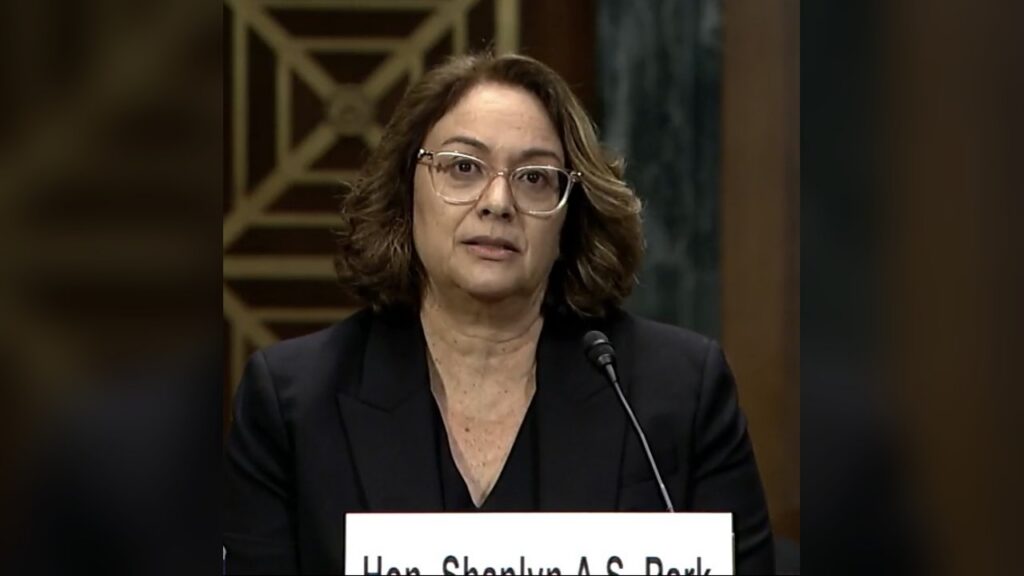 U.S. Senate Judiciary Committee (Public domain) via Wikimedia Commons
And then there is Hawaii, where this playbook already failed. The Bee successfully challenged Hawaii’s Act 191, a 2024 law regulating AI deepfakes during elections. In January, Judge Shanlyn A.S. Park of the US District Court for the District of Hawaii struck it down as “presumptively invalid” because it “discriminates based on content and speaker, and, in doing so, restricts constitutionally protected political speech.” A permanent injunction followed. The Hawaii Attorney General’s Office declined to comment beyond saying it was reviewing the decision.
The Hawaii ruling is the roadmap. Content-based restrictions on political speech receive the highest level of constitutional scrutiny, and these laws cannot survive it. They claim to target “deceptive” media, but the line between deception and satire is the line a comedian crosses every time they exaggerate a politician’s position for effect. Forcing a disclaimer on a joke does not protect voters. It kills the joke. As Babylon Bee CEO Seth Dillon has argued, mandatory labels ruin the humor of satire and threaten penalties for those who refuse to comply.
The pattern is clear. Hawaii tried. It lost. California is trying. New Mexico is trying. Each law is dressed up as consumer protection against “deepfakes,” but each one hands a state agency the authority to police political expression. That authority will not stay narrowly aimed at fabricated audio of candidates saying things they never said. It will expand, because government power always expands, and the first thing it expands toward is the speech that makes powerful people uncomfortable.
 Daniel Schwen (CC BY-SA 4.0) via Wikimedia Commons
The Bee’s politics are not everyone’s politics. It does not matter. The right to mock those in power is not a partisan possession. It is the infrastructure of accountability. When the state claims the power to label, regulate, and punish satire, it is not protecting democracy. It is protecting itself from the people who hold it accountable with laughter.
New Mexico’s law should meet the same fate as Hawaii’s. Every state considering similar legislation should read Judge Park’s order and stop. The First Amendment does not come with a disclaimer requirement, and the people who need it most are the ones who can least afford the legal fees to defend it.