



There is a particular kind of fatigue that sets in when you have spent two decades studying how knowledge communities form, police their boundaries, and eventually eat their own. Hank Green, a science educator who has built an audience of millions on the proposition that curiosity is a virtue, has just been subjected to that process by the very people who claim to love what he does. And the episode tells us considerably more about the structural pathology of online science fandom than it does about whether one YouTuber used ChatGPT to outline a video.
Here is what happened, insofar as the facts are recoverable beneath the outrage fog. Green used the phrase “I appreciate the pushback” in a monologue. To anyone who has received a corporate email in the last eighteen months, that phrasing carries the unmistakable scent of large language model output. His fans noticed. They accused him of writing his scripts with AI. Green denied it but admitted he had been using ChatGPT for research, editing, and sourcing. The detection tool Pangram subsequently flagged the scripted portion of his video as 86 percent AI-generated, though Pangram, like all such tools, produces false positives at rates that should give any reasonable person pause before treating its output as forensic evidence.
What followed was not a debate. It was a heresy trial. Green was called a “fraud,” a “sellout,” a man whose “credibility is in the trash.” He posted a contrite apology on Reddit, paused several projects, reduced his output, and announced a formal personal AI policy: no LLM-written scripts, no AI-generated images or music, human-originated theses only. He apologized to the employees of Complexly, the nonprofit production company he runs with his brother John, for the reputational damage his honesty had caused them. He effectively soft-canceled himself to appease a mob that had decided his sin was unforgivable.
 Johnlearningwiki (BY-SA) via wikimedia
Now. One must be precise about what is structurally interesting here, because the surface-level question, did he or didn’t he, is almost beneath discussion. The deeper phenomenon is that a community organized around enthusiasm for science has decided that a particular category of computational tool is not science but its antithesis, and that anyone who touches it has committed a kind of apostasy. This is not how scientific communities behave. This is how religious communities behave.
The Argument magazine, which has been the sharpest observer of this episode, draws the historical parallel to the Cult of Reason and Comte’s Religion of Humanity, and the comparison is not merely rhetorical. When a group of people who define themselves by their commitment to rational inquiry respond to a new technology not with curiosity but with doctrinal revulsion, they have ceased to function as a knowledge community and have begun to function as a faith community with a creed and a list of prohibited substances. The substance in this case is the language model.
What makes this especially rich is that generative AI is, whatever one thinks of its aesthetic merits or its labor implications, one of the most significant technical advances of the last decade. It is contributing to peer-reviewed breakthroughs in protein folding, materials science, and mathematical proof. The people who are most vocally enthusiastic about science when it produces discoveries they find emotionally satisfying have decided that this particular science does not count, because it makes them uncomfortable, because it threatens a model of creative authenticity that they have invested with moral weight it cannot bear.
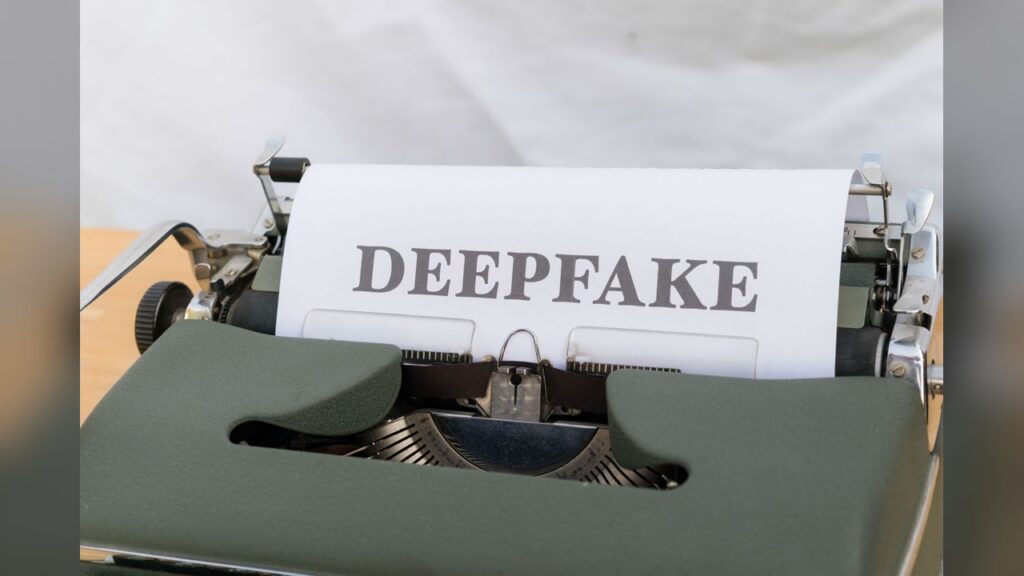 Markus Winkler / Pexels
Green’s capitulation is, from a purely strategic standpoint, understandable. He has a business, employees, and a reputation to protect. But from an intellectual standpoint, it is a capitulation to exactly the kind of anti-empirical dogmatism that science communication, as a field, is supposed to exist to resist. He has affirmed, by his actions, that the appropriate response to a mob demanding ideological purity is to publish a personal creed and promise to do better. The inquisitors have won. They always do, when the accused is more interested in preserving goodwill than in defending the principle that tools are tools and curiosity is not a sin.
The rest of us are left to watch a community that claims to believe in science demonstrate, with remarkable clarity, that what they actually believe in is belonging.