


The Democratic Party has arrived at a genuinely remarkable moment in its institutional evolution: it has begun to treat its own ballot line as a liability to be managed rather than a brand to be built. The evidence is empirical, not anecdotal. In South Dakota, Idaho, and Nebraska, Democratic Senate nominees have stepped aside this cycle to clear the field for independent candidates. The strategy is, in the clinical language of political science, a form of institutional self-erasure. In Montana, the experiment has finally met its limit.
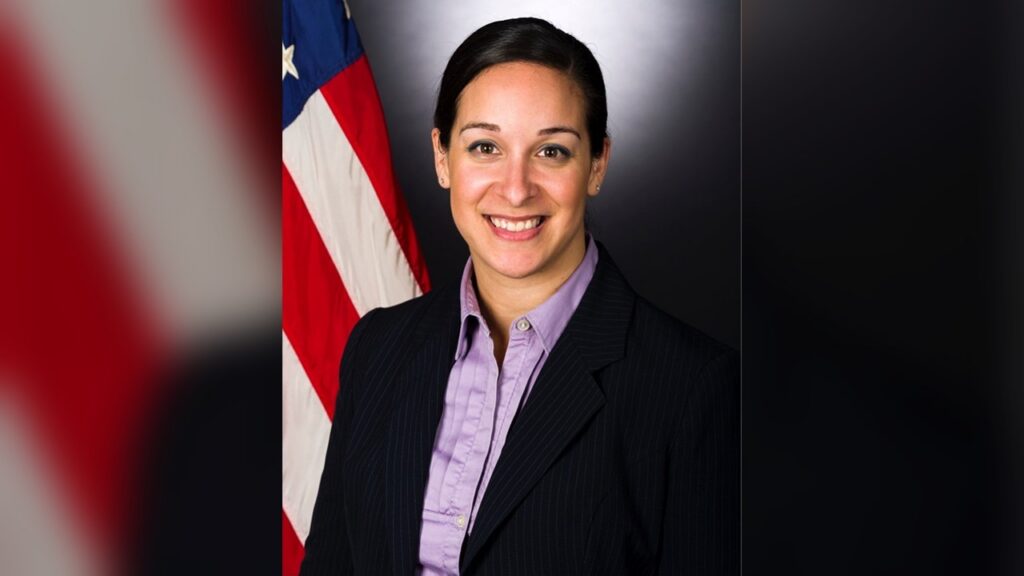
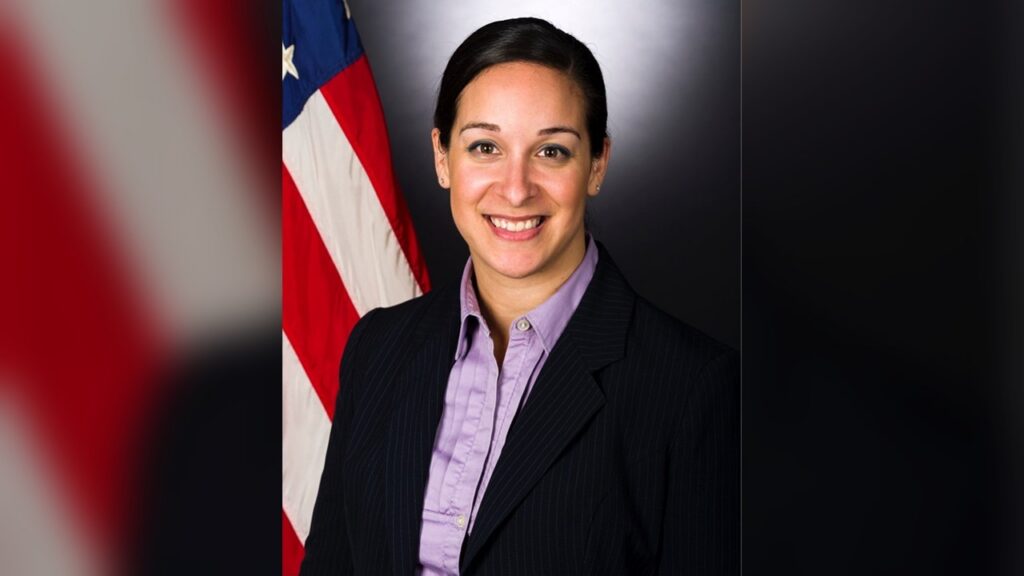
Alani Bankhead, a retired Air Force lieutenant colonel and the duly nominated Democratic candidate for Montana’s open Senate seat, announced Monday that she will not withdraw before the 7 p.m. ballot deadline. “I’ll never bow down,” she said, which is not the language of a person engaged in a cost-benefit analysis. She told The Atlantic that nothing would force her from the ticket “unless God himself tells me to drop out.” God, as of this writing, has not intervened.
 Unknown authorUnknown author (CC0) via Wikimedia Commons
What makes the Montana case structurally fascinating is not Bankhead’s defiance but the party’s response to it. The Democratic Senatorial Campaign Committee sent its general counsel, Jacquelyn Lopez, to a state party executive board meeting where she reportedly argued that the party could simply leave its ballot line empty, glossing over the word “shall” in both state law and party bylaws, and dare the courts to sort it out. The DNC, according to three people in the room, would foot the legal bills. The DNC denies this. Lopez denies this. The denials are, to put it in the most generous academic terms, doing a great deal of work.
Let us be precise about what this strategy concedes. When former Senator Jon Tester texted fellow Democrats that “the Democratic Party was poison” in his last two reelection races, he was not engaging in self-criticism. He was diagnosing a brand so degraded in rural and exurban America that the party’s optimal electoral move is to pretend it does not exist. This is not a tactic. It is an institutional admission of structural failure so thorough that the party has chosen to subcontract its electoral ambitions to candidates who will not carry its name.
The results are not encouraging. Polling shows that with both Bankhead and the independent Seth Bodnar on the ballot, Republican Kurt Alme leads by more than 20 points. Bodnar, a former Green Beret and university president running on a “both parties are to blame” message, has raised $3.2 million to Bankhead’s $58,000. The financial asymmetry is itself a structural tell: the party’s infrastructure has redirected its resources toward the candidate who is not technically a Democrat.
 Steve Shook from Moscow, Idaho, USA (CC BY 2.0) via Wikimedia Commons
And then there is the irony that only a political scientist could fully savor. Bankhead won her June primary with $2.8 million in independent expenditures from the Progressive Vet PAC, including $200,000 from Jason Carroll, a documented Bodnar donor. The Bodnar-aligned ecosystem spent millions elevating a candidate it now demands withdraw. One might call this a coordination failure. One might also call it exactly what it looks like.
The Democratic Party’s problem in Montana is not Alani Bankhead. It is that the party has spent a generation losing the institutional ground, county parties, legislative seats, down-ballot infrastructure, that makes a Senate race winnable in the first place. Disappearing your own nominee is not a solution to that problem. It is the problem, wearing a clever disguise.