


Strip away the pageantry and here is what your government decided matters this summer: 23.75-karat gold leaf on four bronze horses, and soldiers on city streets through 2029.
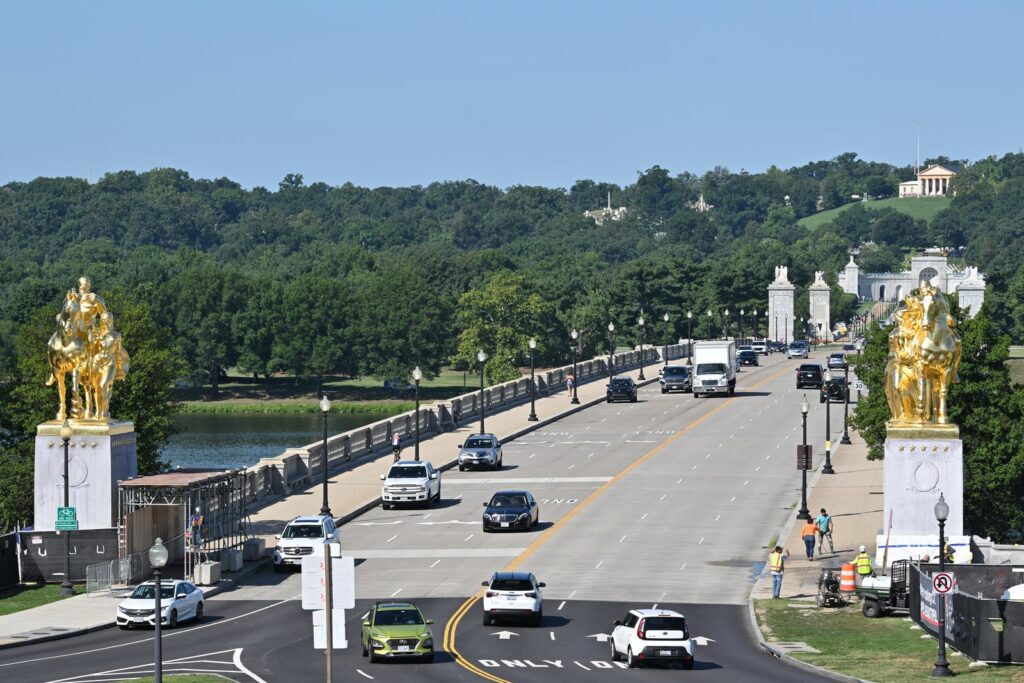 G. Edward Johnson (CC BY 4.0) via Wikimedia Commons
The Department of the Interior spent $5.1 million regilding the “Arts of War” and “Arts of Peace” equestrian statues near the Lincoln Memorial. President Trump posted photos of the scaffolding coming down on Truth Social, presumably between thoughts about who to pardon next. The project wasn’t even finished in time for the July 4th celebration it was meant to decorate. The government said it didn’t have time to solicit competing bids. When this administration wants something done fast, the procurement rules evaporate. When the question is whether a child eats lunch, the paperwork multiplies.
Meanwhile, roughly 2,500 National Guard troops will patrol Washington through January 2029 at an estimated cost of $1.4 billion. That figure came from the Defense Department in response to questions from Senator Elizabeth Warren, who called it what it is: taxpayer dollars treated as a piggy bank for political stunts. The deployment surged to about 5,000 troops during the 250th anniversary of the Declaration of Independence. Armed soldiers on American streets, and the administration’s defense is that they also help with snow removal. You militarize a city and then point to the shoveling.
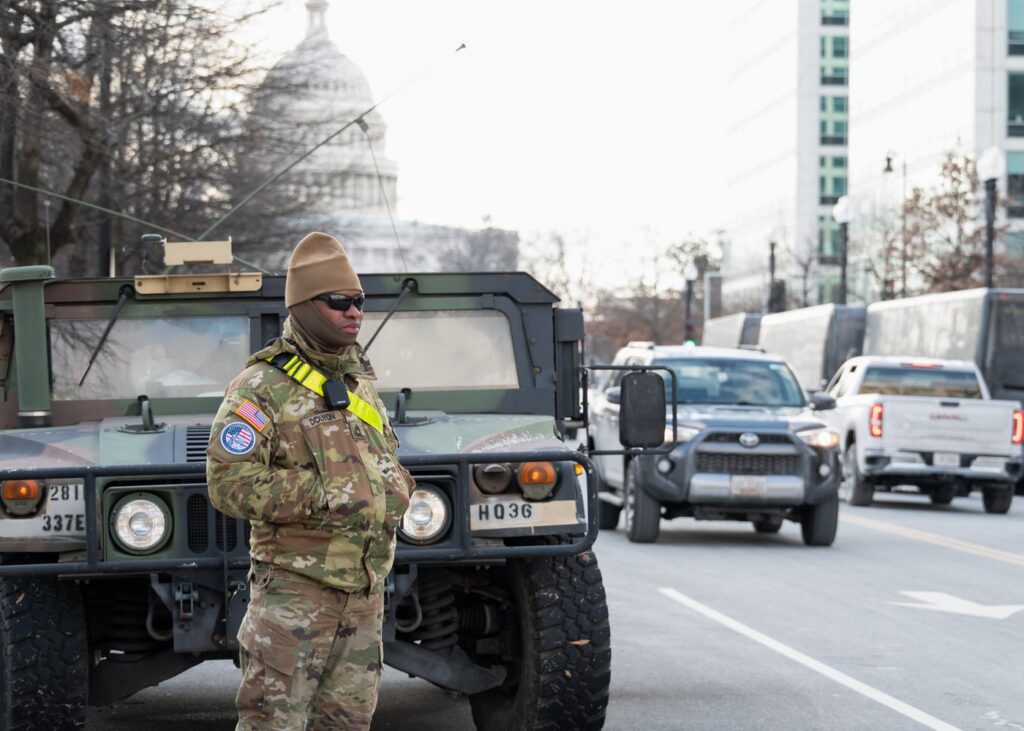 The National Guard (CC BY 2.0) via Wikimedia Commons
Now hold those two numbers in your head. $5.1 million for gold paint on statues. $1.4 billion for troops in the capital. And then look at what is being cut to pay for the aesthetic.
In Indiana alone, SNAP participation dropped 15 percent between January 2025 and April 2026. Ninety-two thousand people lost food assistance. One hundred seventy-four thousand children lost Medicaid coverage. The Center for American Progress identified nearly 644,000 Hoosier students whose automatic enrollment in free school meal programs could vanish if their schools lose Community Eligibility Provision status. The typical family with two kids would pay an extra $1,080 a year for meals that used to be covered.
 G. Edward Johnson (CC BY 4.0) via Wikimedia Commons
Alexandra McMasters, a single mother of two in Clinton, Indiana, works part-time for the Postal Service after being laid off from healthcare. Her monthly SNAP allotment was cut to $300. “We have a bare refrigerator” by the end of the month, she said. She relies on free school meals to bridge the gap. “Without that, it would be 50 percent harder: scrounging change so your kid can eat that day, so your kid can eat a mediocre meal served on a styrofoam tray.”
That is the lived experience behind the line item. That is who pays for the gold leaf.
And the harm compounds. The CDC scaled back its FoodNet surveillance program from tracking eight foodborne pathogens to two, salmonella and E. coli, citing funding constraints. Foodborne illness already causes 48 million illnesses and 3,000 deaths in the U.S. each year. The FDA’s food inspection workforce is 20 percent understaffed. Inspections of imported food facilities are at their lowest level since 2011. Sarah Sorscher of the Center for Science in the Public Interest called food safety “collateral damage in this war on government.” Daniel Jernigan, who spent 30 years at the CDC before resigning, described a system where incoherent cuts “are all working against each other.”
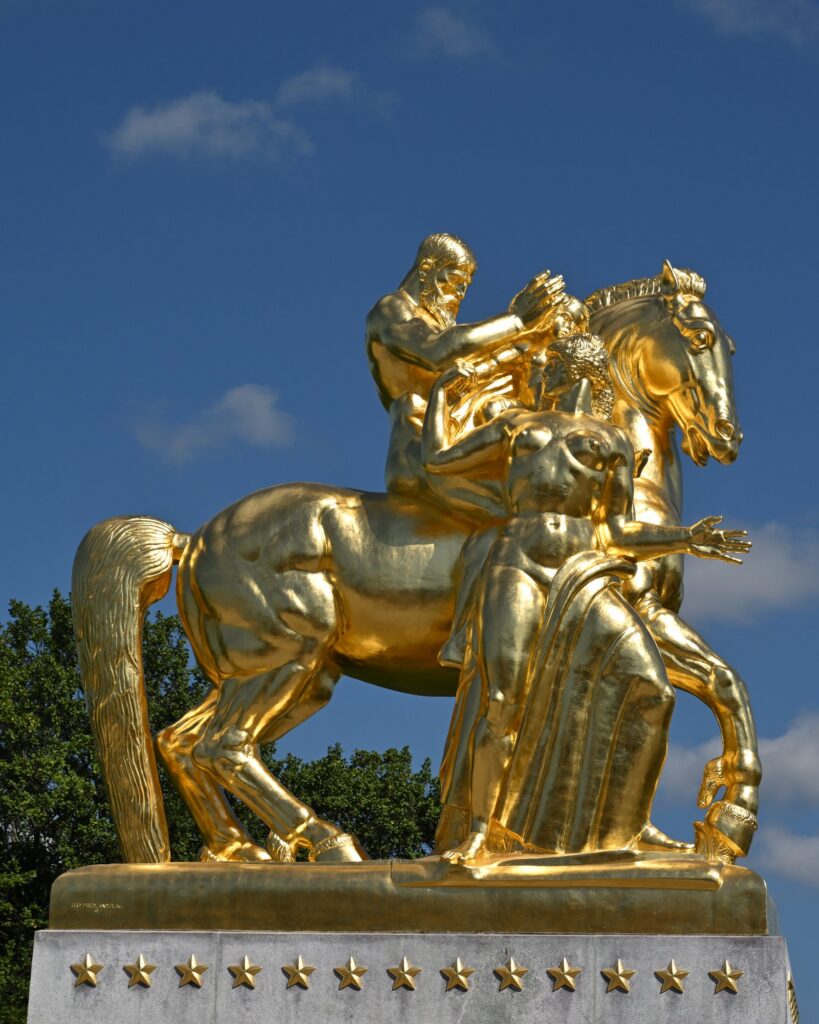 G. Edward Johnson (CC BY 4.0) via Wikimedia Commons
This is not a budgeting problem. A budget is a moral document. It shows what a society values and who it is willing to discard. This one values gleaming horses and occupied streets. It discards children whose refrigerators are empty by the third week of the month.
The organizing principle is not complicated. Restore SNAP eligibility. Fully fund FoodNet. Bring the Guard home. And stop gilding statues while the people who live around them cannot afford to eat. Every one of these is a demand that can be made, a vote that can be organized, a phone call that can be placed. The question was never whether the money exists. The question is who has the power to decide where it goes. That power is contestable. It always has been.