


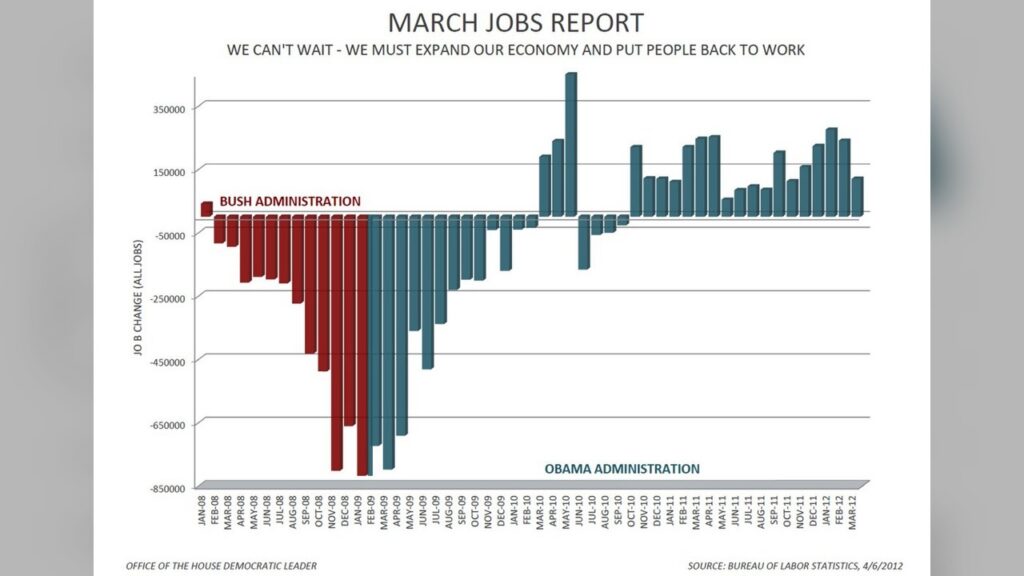
The headline number is 23,000. That is how many jobs the American economy shed in July, according to the Labor Department on Friday. Economists expected a gain of 80,000. What they got was the first net job loss in years, delivered in the same breath as a falling unemployment rate that the administration will spend the weekend waving around like a victory banner.
Let us be precise about what that rate actually means. Unemployment dropped from 4.2 percent to 4.1 percent. Not because more people found work. Because more than 260,000 people stopped looking. The labor force participation rate slid to 61.4 percent. When you stop counting the people who have been pushed out of the economy entirely, the math gets easier. That is not recovery. That is attrition dressed up as progress.
Angela Hanks, chief of policy programs at the Century Foundation, said it plainly to CBS News: “The rate dropped to 4.1 percent in large part because labor force growth has stalled, not because opportunity is expanding.” Heather Long, chief economist at the Navy Federal Credit Union, was blunter on social media: “This went down for the WRONG reasons.”
They are both right, and the data backs them up sector by sector. Leisure and hospitality lost 40,000 roles. Local government shed 57,000 positions. Retailers cut jobs. May’s payroll growth, originally reported as a robust 129,000, was revised down to 63,000. Nearly half of that jobs number was a mirage. Average hourly earnings rose just 3.2 percent year over year, almost certainly not enough to keep pace with what things actually cost at the grocery store, the pharmacy, the gas pump.
And what does the White House offer? Kevin Hassett, director of the National Economic Council, pointed to a construction boom as evidence of strength. But economists have noted that the real engine behind nonresidential construction growth is data centers, the physical infrastructure of the AI industry, not housing, not schools, not the kind of building that puts working communities on solid ground. A server farm is not a jobs program. It is capital spending by corporations that will automate away the very positions they are temporarily creating.
 RonaldCandonga / Pixabay
The Mother Jones report attributes employer wariness to two factors this administration owns completely: tariffs and the costs of the war in Iran. Trade policy designed to project toughness is making businesses hesitant to hire. A military conflict draining public resources is making businesses hesitant to hire. And the people paying the price are the 260,000 who left the labor force in July, the 25.5 percent of unemployed workers who have been out of a job for 27 weeks or longer, and every worker whose 3.2 percent raise does not cover the cost of living.
This is not a mysterious business cycle. This is a policy choice. Tariffs, war spending, and an economic agenda tilted toward corporate investment over worker power produce exactly this: a labor market where demand is “being redirected,” as ManpowerGroup’s Ger Doyle put it, toward specific skills and industries, leaving entire sectors of working people behind.
What must happen is not complicated. End the tariff chaos that is freezing hiring. Redirect war spending into domestic job creation, infrastructure that serves communities, not just cloud companies. Raise the minimum wage. Protect the right to organize. Invest in the public sector instead of hollowing it out. The 57,000 local government jobs lost in July were teachers, sanitation workers, librarians, people who hold communities together. Their disappearance is a political decision, not an economic inevitability.
The unemployment rate is 4.1 percent. The labor force is shrinking. The jobs are gone. The people who lost them are being erased from the count. That is the story. Everything else is a press release.