



Your Government Is Shipping People to Countries They’ve Never Seen, and Nobody Can Explain Why
Let me tell you something. I’ve got four kids, a minivan with a cracked windshield, and a group chat that has been on fire for two days straight. And every mama in that chat is asking the same question: Who exactly is safe?
Because here’s what I found when I did my own research. Jermaine Thomas was born in 1986 on a United States Army base in Germany. His father served nearly two decades in the U.S. military. His father put his life on the line for this country. Jermaine grew up in Texas. He went to school here. He worked here. He was homeless here, which, last I checked, is an American experience nobody in Washington wants to talk about.
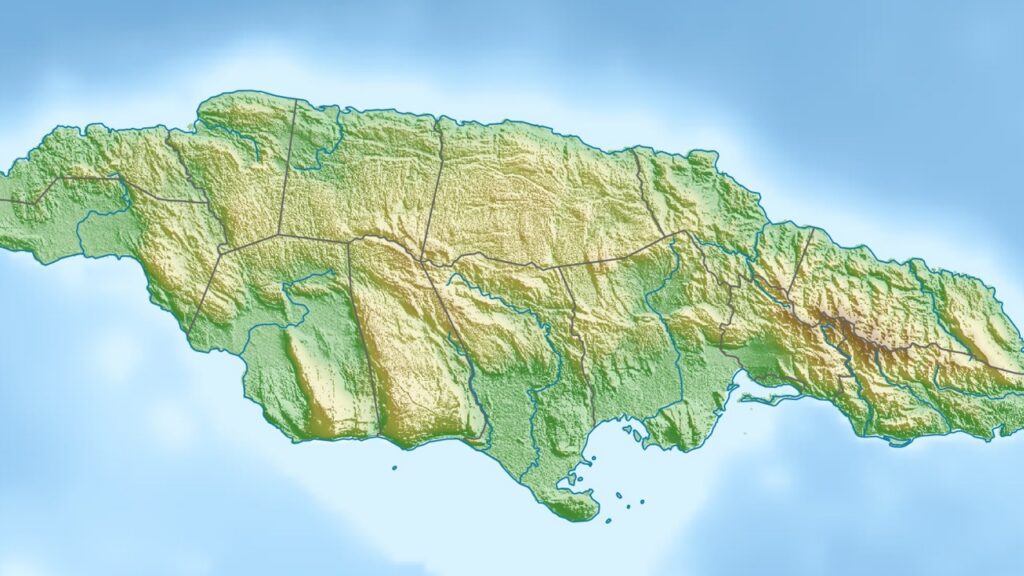
And last month, they put him in shackles, wrists and ankles, walked him onto a plane, and flew him to Jamaica.
 All-Pro Reels (CC BY-SA 2.0) via Wikimedia Commons
Jamaica. A country he has never set foot in. A country where he knows nobody. A country where he doesn’t even speak the language people use on the street. He told the Austin Chronicle, from a hotel room in Kingston, that he sat on that plane hoping it would crash.
Now, I want you to sit with that for a second. A man whose father served this country for eighteen years, who was born on a U.S. military installation, who has no citizenship anywhere on earth, and the best our government can do is chain him up and dump him on an island he’s never seen. DHS put out a statement calling him “a violent, criminal illegal alien from Jamaica.” The Chronicle asked a perfectly reasonable follow-up: In what sense is Jamaica his “home country”? DHS never responded. Of course they didn’t. Because there is no answer that doesn’t make them look like the gang that can’t shoot straight.
And it’s not just Jermaine. The New York Times just published a magazine piece about a man shipped to Eswatini. Eswatini! I had to look it up. It’s a tiny country in southern Africa. This man came to the United States at twelve years old, got in trouble in his twenties, served his time, turned his life around, became a plumber, became a Christian, got married, raised four daughters. Four. Same as me. He’s fifty-nine years old. He has spent most of his life in this country. And now he’s sitting in a prison in a nation he had never even heard of, with no way out.
 Carport (BY-SA) via wikimedia
Then there’s Phoeun You. His family fled the Cambodian genocide when he was an infant. He grew up in Utah and California. He made terrible mistakes, committed a terrible crime, served twenty-five years in prison, got paroled from San Quentin. He rehabilitated himself. He started programs for other inmates. And instead of walking out a free man, ICE was waiting for him. They transferred him to a detention center and told him he could fight his deportation from a cell for years, or sign the papers and go. So he signed. They flew him to Phnom Penh with three agents escorting him. He didn’t speak the language. He had no proof he was a citizen of any country. His birth records were destroyed during the genocide.
Here is what I want to know, and I want somebody to answer me like I’m a grown woman: At what point does the paperwork get so tangled that the government just shrugs and ships a human being to wherever they feel like? Because an ICE officer got on that plane to Jamaica and said, out loud, “I don’t have records for more than half of these people. There’s something wrong.” That’s a federal employee admitting, on the record, that they’re loading people onto international flights without knowing who they are.
I don’t care what side of the aisle you sit on. I don’t care if you think immigration is too loose or too strict. If a government can take a man born on a U.S. Army base, whose father bled for this country, and deport him to a country he’s never seen, then not one of us is safe. Not your neighbor. Not your coworker. Not your kid who got into trouble at nineteen and turned it around. Not you.
They think we’re too busy carpooling and paying bills to notice. They think if they call somebody “criminal” enough times, we’ll stop asking questions. Well, I noticed. And I’ve got questions for the manager.