


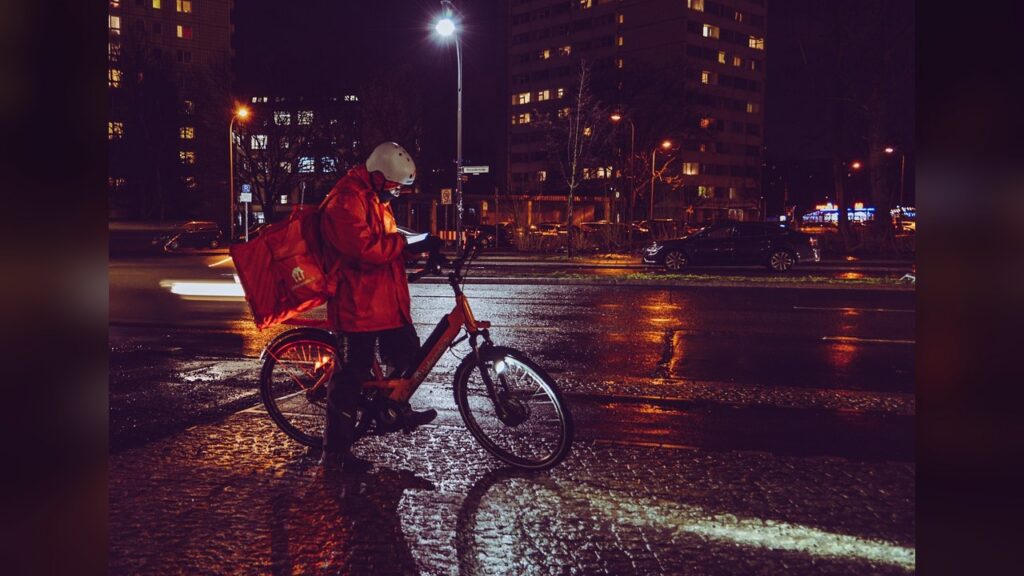
A pharmaceutical delivery driver walks into the home of a wheelchair-bound woman in East Bridgewater, Massachusetts, and sexually assaults her. Qaisar Ali, 39, of Brockton, now faces charges including assault with intent to commit rape, breaking and entering, and multiple counts of indecent assault and battery on an elderly or disabled person. He was held on $10,000 bail. ICE has filed a detainer. And Breitbart, naturally, has found its villain, its villain’s nationality, and its villain’s governor, all in one tidy package.
The conservative framing writes itself: a Pakistani migrant, sanctuary laws, a disabled elderly woman, Maura Healey’s “Protect Act.” One suspects the op-ed practically typed itself. The implication is that if Massachusetts simply honored ICE detainers, this would not have happened. It is a clean, satisfying argument. It is also the kind of argument that a first-year sociology student could dismantle before lunch.
 Tripan123 (CC BY-SA 4.0) via Wikimedia Commons
Here is what the Breitbart account does not mention, because mentioning it would require engaging with the actual architecture of American criminal justice rather than performing outrage at its most photogenic failure. Ali was released on $10,000 bail. Ten thousand dollars. For assault with intent to commit rape on a wheelchair-bound woman. That bail amount was set not by Maura Healey, not by the “Protect Act,” not by sanctuary policy, but by a judge operating within the standard parameters of a pretrial system that has nothing whatsoever to do with immigration status. An American citizen charged with identical crimes would have faced the same bail threshold and, in all likelihood, the same release. The immigration detainer is a separate mechanism entirely, and conflating it with the bail process is either ignorance or deliberate obfuscation. Given the source, one hesitates to commit to a diagnosis.
The deeper structural question, the one no one on either side of the sanctuary debate seems interested in asking, is why a pharmaceutical delivery service dispatched a worker into the home of a woman with severe mobility issues without the kind of vetting, supervision, or oversight that the situation self-evidently demands. The gig economy has spent the last decade eroding every layer of accountability between a worker and a vulnerable client, and the result is a labor model in which a person with no particular credentialing is handed a route, a bag of medication, and access to the homes of people who cannot physically resist intrusion. That is the system. That is the story. But it does not feature the word “Pakistani” in the headline, so it will not generate clicks.
 Doug Kerr (CC BY-SA 2.0) via Wikimedia Commons
ICE, for its part, has helpfully supplied Breitbart with a roster of prior cases in which Massachusetts released individuals the agency wanted detained. Kenneth Mutero, Batbold Enkhbold, Fabiano Silvino Dos Santos. The agency’s implication is clear: sanctuary policy creates a revolving door for dangerous noncitizens. The empirical literature on this question is, characteristically, more complicated than the press release. Multiple studies, including work from the Cato Institute (not exactly a left-wing advocacy shop), have found no statistically significant increase in crime rates in jurisdictions with sanctuary policies. The data do not cooperate with the narrative. They rarely do.
None of this minimizes what happened to that woman in East Bridgewater. She was assaulted in her own home by someone who was supposed to be bringing her medicine. The horror is specific and it is real. But the cynical deployment of her suffering as a prop in an immigration debate that has nothing to do with the structural conditions that enabled it is its own kind of predation. The right does not want to fix the bail system. It does not want to regulate pharmaceutical delivery services. It does not want to examine how this society cares for its disabled and elderly. It wants a foreigner to blame and a governor to demonize, and it has found both.
 Nirinsanity (CC BY-SA 4.0) via Wikimedia Commons
The woman in the wheelchair deserves more than that. She is not getting it.