



The Permit Was Never the Point: How Local Governance Collapsed Under the Weight of the AI Buildout
There is a temptation, when one surveys the several dozen lawsuits now winding through state and federal courts from Festus, Missouri to Doña Ana County, New Mexico, to read them as a story about NIMBYism. That would be a mistake. What we are observing is something rather more structurally interesting: the failure of mid-century procedural frameworks to accommodate a buildout occurring at a speed and scale those frameworks were never designed to regulate.
 Jason Wolff (CC BY 2.0) via Wikimedia Commons
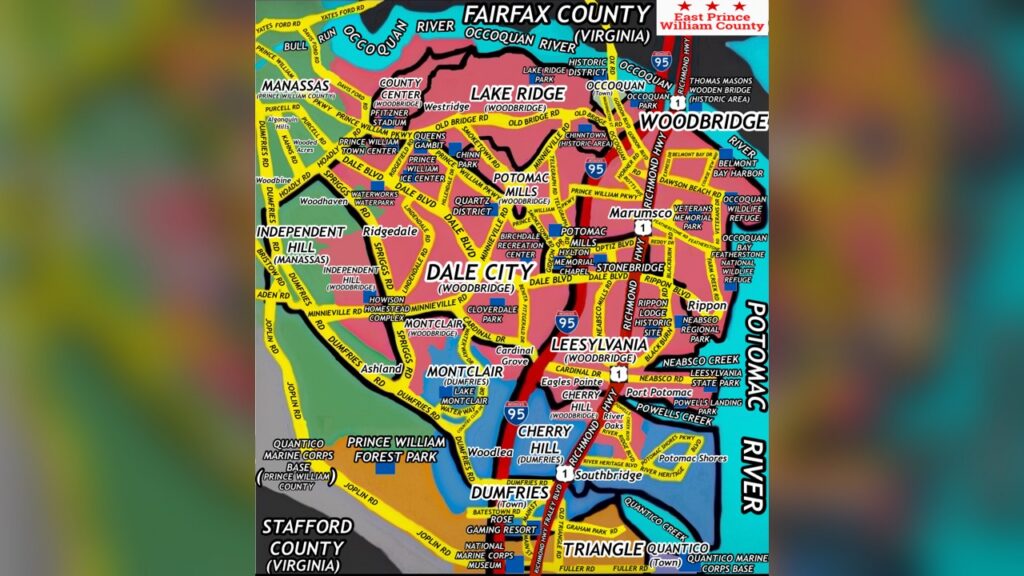
Consider the pattern. In Prince William County, Virginia, a state court found that officials failed to properly notify the public before approving the conversion of more than 1,500 acres of agricultural land for data centers. In Wilmington, Ohio, a federal judge ruled last month that local officials violated state public meetings requirements by holding closed-door sessions with Amazon representatives before passing ordinances enabling a $4 billion project. In Lowell, Massachusetts, the Yale Environmental Justice Law and Advocacy Clinic alleges that the state Department of Environmental Protection quietly signed a consent order with the Markley Group, six months into an ongoing community appeal, to sidestep air pollution permitting requirements in neighborhoods already ranking in the 97th percentile nationally for nitrogen oxide emissions. In Festus, voters did not merely sue. They ousted the city councilmembers who approved the project.
The legal strategy here is not accidental. As Amanda Garcia of the Southern Environmental Law Center observed, the rules in place “don’t really fit what is happening on the ground.” The law generally favors the discretion of government officials in land-use decisions, which makes substantive challenges difficult. Procedural challenges, by contrast, target the one thing courts are reliably willing to enforce: whether the public was notified, whether meetings were open, whether the statutory steps were followed. This is not a loophole. It is the architecture of administrative law functioning precisely as designed, albeit belatedly and against actors who treated process as an inconvenience.
 David Dilts (Public domain) via Wikimedia Commons
The xAI case in Southaven, Mississippi illustrates the stakes with unusual clarity. The NAACP alleges that xAI installed 33 gas turbines without permits by mid-April, a number that reportedly reached 46 by May, in historically Black neighborhoods. xAI’s defense, apparently, is that 200,000-pound turbines wired to transformers and piped to water and gas supplies are “temporary mobile sources” because they sit on truck flatbeds. One trusts the court will find this characterization as creative as it is audacious. Meanwhile, the Trump administration, which issued an executive order in July 2025 titled “Accelerating Federal Permitting of Data Center Infrastructure,” has filed notice of potential intervention in the case, citing its “substantial interest” in promoting AI infrastructure. An executive order cannot override the Clean Air Act. But the federal government’s willingness to argue that a company may operate unpermitted turbines in Black communities, because AI competitiveness demands it, tells you something about whose procedural rights this administration considers worth defending.
The developers, for their part, have not been passive. When Hill County, Texas, passed a moratorium on data center projects, a developer sued and the commissioners rescinded it within a week. Governor Greg Abbott then ordered a statewide audit of data center projects seeking grid access, which functions as a pause by another name. The tension between local democratic control and state-level economic development priorities is not new. What is new is the velocity. At least 75 projects were delayed or blocked in the first three months of this year alone. New York imposed the first statewide ban on hyperscale data centers. Ohio and Illinois paused tax incentives. The consulting firm Data Center Watch is now tracking this as a sector.
 LogicalLeaf129 (CC0) via Wikimedia Commons
What the litigation reveals, collectively, is that local governance did not fail because the rules were wrong. It failed because the rules were ignored, circumvented, or quietly rewritten in back rooms by officials who understood that the public process was the last remaining obstacle to a multibillion-dollar project they had already decided to approve. The procedural challenge is not a technicality. It is the only mechanism through which the public can demonstrate that the process itself was the fiction.
One would have thought, after decades of scholarship on participatory governance and environmental justice, that this lesson would not require repeated litigation to establish. One would have been wrong.