


One hesitates to burden a sports transaction with the language of political economy, but the facts here rather insist upon it. Josh Kushner and Bob Iger are purchasing the Los Angeles Lakers for $12.5 billion, a figure that exceeds the previous record for an American sports franchise by roughly the gross domestic product of a small island nation. Mark Walter, who bought controlling interest in the team for $10 billion approximately ten months ago, walks away with a $2 billion profit. He is, concurrently, the subject of federal tax-fraud investigations involving both the Securities and Exchange Commission and federal prosecutors. One trusts the reader can locate the structural irony without further annotation.
The Kushner name, of course, does certain work in this story that the transaction itself does not require. Josh Kushner is the younger brother of Jared Kushner, who is the son-in-law of the current president and was his senior advisor. Their father, Charles Kushner, is a real estate developer who received a presidential pardon in 2020 from that same president, which is to say from his son’s father-in-law. Josh Kushner married the model Karlie Kloss, founded Thrive Capital, backed Instagram and Spotify early enough to compound his advantages into something resembling dynastic wealth, and has now pivoted from a minority stake in the Miami Heat to controlling interest in the most valuable franchise in the NBA. The literature on elite capital reproduction is, at this point, rather extensive, and one need not be a conspiracy theorist to observe that the same surnames circulate through the same asset classes with a regularity that would embarrass a statistician.
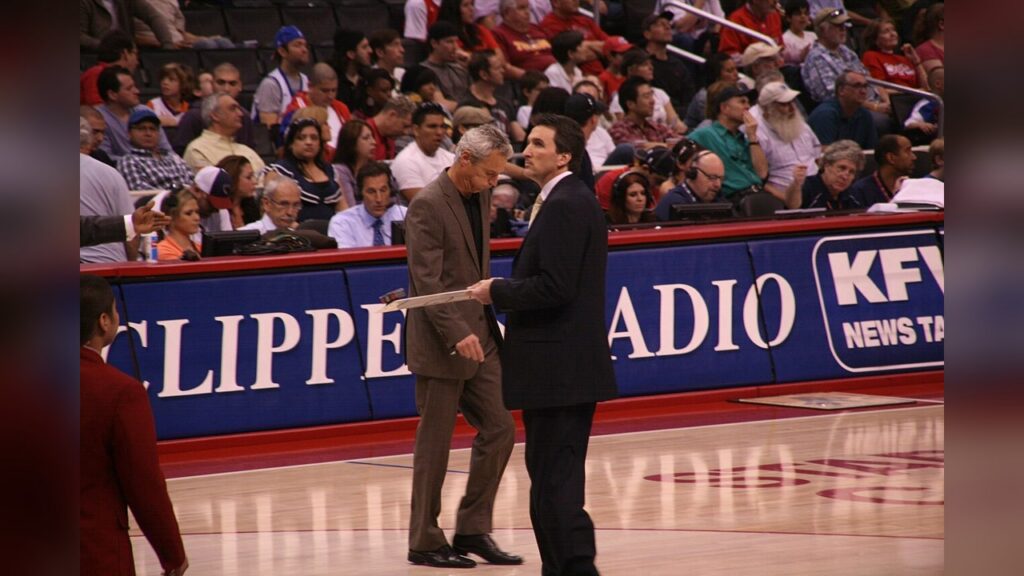
 Angela George (CC BY-SA 3.0) via Wikimedia Commons
What is more instructive, perhaps, is the mechanism. Kushner and Iger had been pursuing an NBA expansion team for Las Vegas, a process that would not have borne fruit until the 2028-29 season at the earliest. Rather than wait, they simply purchased an existing franchise at a price that redefines the market. Walter, for his part, held the Lakers for less than a year. He bought low, relatively speaking, and sold high, absolutely speaking. The $2 billion gain in ten months is not investment skill. It is what happens when the supply of iconic sports franchises is fixed at one and the pool of buyers with nine-figure liquidity is somewhat larger than that. The Celtics sold for $6 billion last year. The Hornets went for $3 billion three years ago. The slope of that curve is not subtle.
Iger, 75, the former Disney chief who stepped aside last March, brings the sheen of institutional respectability. He and his wife, the journalist Willow Bay, already control Angel City FC in the NWSL. His presence in the ownership group allows the narrative to center on a beloved Hollywood executive rather than a 41-year-old venture capitalist whose holding company, Thrive Eternal, was until July 31 set to serve as the anchor investor in Gianni Infantino’s abortive scheme to securitize future World Cup profits. That plan collapsed. The Lakers, presumably, will not.
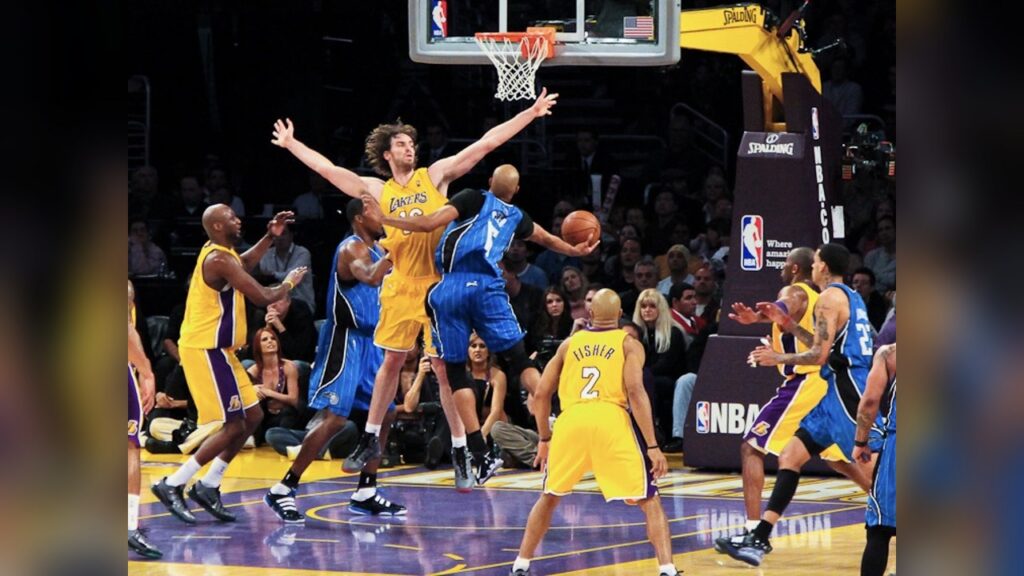 Tim Wang (CC BY-SA 2.0) via Wikimedia Commons
The sale requires approval from the NBA’s board of governors, which meets in September. One expects it will be approved, because the board of governors is composed of people who benefit from the same upward pressure on franchise valuations that this transaction exemplifies. LeBron James, the league’s all-time leading scorer, has already departed for Philadelphia. The roster now orbits Luka Doncic, signed through 2028-29. The new owners described themselves as lifelong NBA fans, which is the sort of biographical detail that surfaces reliably in press releases and almost nowhere else.
None of this is illegal. None of it is even particularly unusual within the institutional logic that governs professional sports ownership in the United States, where franchises function as trophy assets, tax shelters, and status instruments simultaneously. The Kushner family’s entanglement with presidential power, Walter’s federal exposure, the FIFA adjacency, the record-shattering price: each is, in isolation, a footnote. Together they compose a rather tidy case study in how capital, political access, and cultural cachet converge around the same handful of institutions. The system is not broken. It is, as ever, working exactly as designed. One simply wishes the design were less transparently oligarchic.