



Treasury Secretary Scott Bessent went on CNBC last week and declared, with the confidence of a man who has never once clipped a coupon, that the K-shaped economy “is over.” He’s “sick of hearing about it,” he said. And isn’t that just the most Washington sentence you’ve ever heard in your life? A Cabinet secretary is tired of hearing about the thing that is actively happening to your family, so he waved his hand and told you it’s done. Problem solved, everybody. Go home.
Bessent says we’re now in a “C-shaped economy,” where the bottom 25% of wage earners are “finally calling it back.” He pointed to Bureau of Labor Statistics data showing 5.5% weekly earnings growth for the 25th percentile and a 2% real wage gain for the bottom quarter of workers. That 2% figure, by the way, likely traces back to Treasury data showing blue-collar wages grew 1.7% in the first five months of Trump’s presidency. One point seven percent. I’ve spent more than that on the surcharge they slapped on eggs this year.
Here’s what I know. I know what it costs to feed four kids. I know what my cart looked like in 2019 and what it looks like now. I know that the number on the register climbs higher every single time I walk into that store, and the bags coming out are lighter. Scott Bessent does not know that, because Scott Bessent is not standing in aisle four doing math in his head about whether he can afford the name-brand cereal this week.
 Senator Tim Scott (Public domain) via Wikimedia Commons
Breyon Williams, chief economist at the Groundwork Collaborative, put it plainly: “That’s just not ringing true in most of the data.” The top is pulling away. Everyone else is treading water. Williams described the K-shaped economy as “one economy with two different experiences,” and that tracks with what I see at the school pickup line. Some families booked flights this summer. Some families are choosing between gas and groceries. Both things are real. Both things are happening in the same zip code.
Then there’s McDonald’s. Robert Reich called Bessent’s claim “hogwash” on August 8 and pointed to McDonald’s own numbers: a double-digit decline in visits from lower- and middle-income customers in the first quarter of 2025 because those families could not afford a fast-food meal. McDonald’s. The dollar menu place. People can’t afford McDonald’s and the Treasury Secretary is on television saying the economy has turned a corner. Who is this corner for?
The Fortune write-up had a line that stuck with me: “The data has yet to subscribe to Bessent’s feelings.” That’s the whole thing, isn’t it? A bureaucrat declares reality closed for renovation, and the rest of us are supposed to nod along because he used a letter of the alphabet. C-shaped. What does that even mean? C for “can’t afford it”? C for “cut it out, we’re struggling down here”?
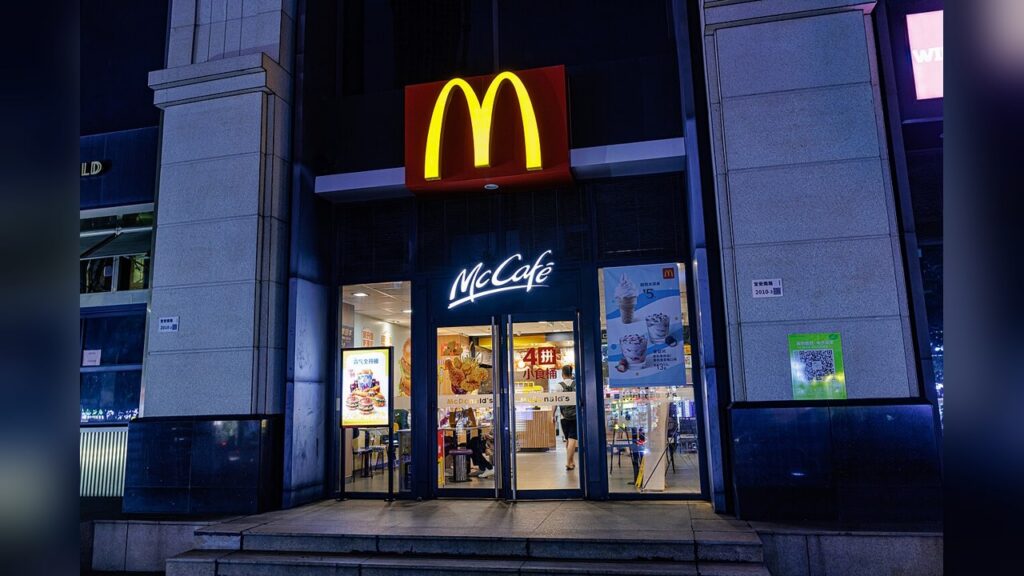 Dinkun Chen (CC BY-SA 4.0) via Wikimedia Commons
I don’t need a Treasury chart to tell me what my bank account already knows. I don’t need a CNBC segment to override what I watch happen at the checkout counter every Saturday morning. And I sure don’t need a man in a suit to tell me he’s “sick of hearing” about the economic divide while I’m doing the math on whether I can stretch last night’s leftovers into tonight’s dinner.
The K-shaped economy isn’t over. Scott Bessent is just sick of being asked about it.