


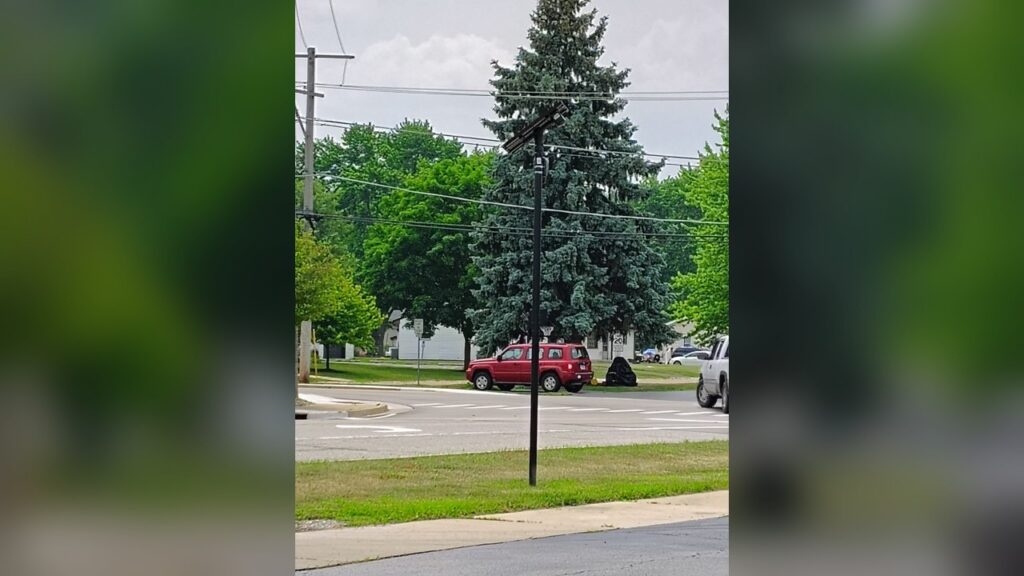
There is a particular species of institutional behavior that political scientists sometimes call mission creep, though that phrase feels almost too gentle for what is happening here. Mission creep implies a gradual, almost accidental drift. What the documents obtained by 404 Media and journalist Dan Boguslaw describe is something more deliberate: a federally coordinated surveillance apparatus turning its attention from terrorism toward people who post on Instagram about license plate cameras.
Dozens of state fusion centers, those post-9/11 information-sharing hubs built to detect the next mass casualty event, circulated intelligence bulletins this summer directing local police to monitor anti-Flock advocacy as part of a directive to, in the documents’ own language, protect national security. The Colorado Information Analysis Center flagged a specific Instagram account, Nomark.Project, for posting videos of camera removals. The Wisconsin Statewide Intelligence Center noted “extensive and ongoing chatter” on Facebook and TikTok about interfering with Flock cameras. A North Florida bulletin listed eleven Florida cities that had signed up for DeFlock’s National Week of Action, scheduled for August 16 through 22, as though a series of town halls and public meetings constituted an operational threat requiring situational awareness.
Let us be precise about what DeFlock actually is. It is an open-source map of automated license plate readers, created by a man named Will Freeman, that has helped activists cancel more than 100 Flock contracts through ordinary civic engagement: contacting representatives, hosting educational events, showing up to city council meetings. Freeman has stated, repeatedly and on the record, that DeFlock has never called for vandalism. More than 80 cities have disbanded or rejected Flock contracts through this kind of legitimate public process. That is what a functioning democracy looks like when citizens organize around a privacy concern.
The fusion centers’ response has been to fold this civic activity into the same intelligence framework used for domestic violent extremism. One bulletin did note that a neo-Nazi group called Private Aryan Resistance briefly recruited on a fascist forum to sabotage Flock cameras, before, in the document’s own words, losing traction. There is no indication any neo-Nazi actually damaged a camera. But the inclusion serves its purpose: it allows the bulletins to bracket political opposition to mass surveillance alongside property destruction alongside white supremacist organizing, creating an undifferentiated threat landscape in which attending a town hall and planting an American flag next to a smashed camera occupy the same analytical category.
This is not a novel pattern. The literature on fusion centers, including a 2012 Senate investigation that found many produced intelligence of “questionable value,” is extensive and largely critical. The structural problem is straightforward: institutions built to detect rare, catastrophic threats cannot tolerate idle capacity. They will fill it. And when the threat supply dwindles, the definition of threat expands to accommodate whatever is available, which in this case happens to be citizens who object to a private company photographing their cars billions of times per month across 6,000 communities without a warrant.
Flock Safety, valued at $8.4 billion, insists its cameras are not mass surveillance tools and cannot track individual people. Its CEO, Garrett Langley, has characterized privacy critics as wanting to “normalize lawlessness.” One might observe that a company whose business model depends on municipal contracts has every incentive to frame the erosion of those contracts as a public safety crisis rather than a democratic outcome. But that would require attributing strategic intent to a corporate actor, and we are told corporations do not have strategic intent, only shareholder obligations.
The Guardian has documented at least 33 instances of Flock camera vandalism across 23 states. Property destruction is a crime and should be treated as one. But conflating criminal vandalism with organized political advocacy is not counterterrorism. It is the deliberate blurring of a line that democratic societies depend on, performed by institutions that have never been particularly good at drawing it.
The question is not whether surveillance infrastructure will face backlash. The question is whether the state’s response to that backlash will be more surveillance.