


Four People Died Because the FAA Treats GPS Like a Luxury
The National Transportation Safety Board’s preliminary report on the May 14 crash of a Beech King Air air ambulance in the Capitan Mountains reads, with the quiet detachment characteristic of such documents, like a case study in cascading systemic failure. Four people dead. Both pilots. Two flight nurses. A medical evacuation flight that departed Roswell, New Mexico, shortly before midnight, lost GPS capability minutes after takeoff because the United States military was running a scheduled GPS-denial exercise near White Sands Missile Range, and then flew into the side of a mountain.
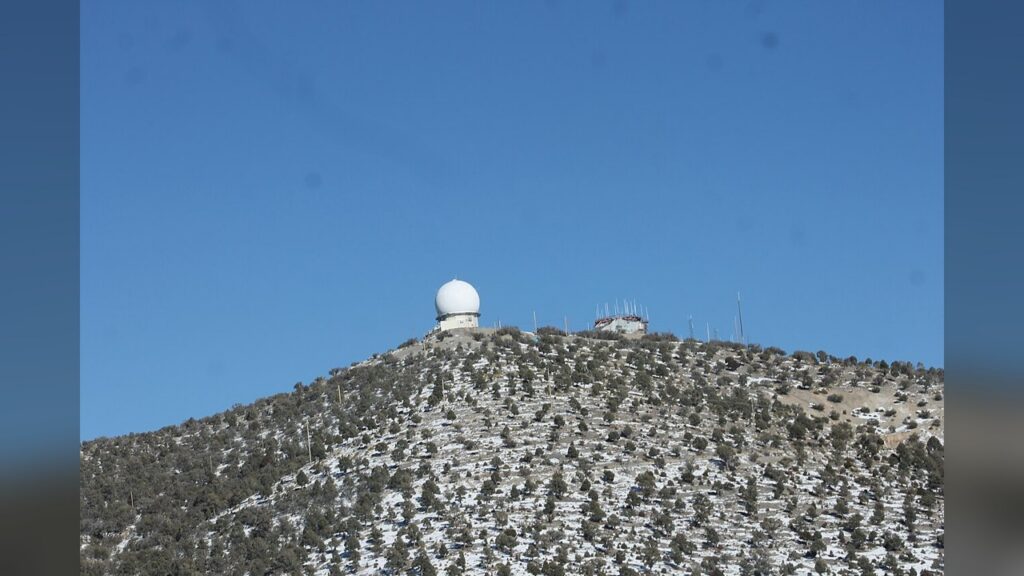
 Dean Constantinidis (CC BY 3.0) via Wikimedia Commons
The NTSB has not yet determined whether the jamming caused or contributed to the crash, and I will respect that epistemic caution. But the preliminary facts are not in dispute. Air traffic controllers twice asked the military to suspend the exercise. The military complied, twice. The crew reported the airport in sight and requested a visual approach on a dark, moonless night. The military resumed jamming. The aircraft descended and struck terrain.
What we are looking at is not a scandal. It is a symptom. And the underlying disease is an institutional architecture that has allowed the electromagnetic spectrum, the invisible infrastructure on which all modern navigation depends, to be treated as a military training ground while civilian aviation operates with receivers that would embarrass a consumer electronics store.
 Patrick Alexander from Las Cruces, NM (CC0) via Wikimedia Commons
Todd Humphreys, who directs the Radionavigation Laboratory at the University of Texas, put the matter with a precision that should haunt every official at the FAA who has signed off on a certification extension. The iPhone in the pilot’s pocket, he told Fox News Digital, “was almost certainly a better GPS receiver inside than the FAA-certified receiver providing navigation guidance to the aircraft.” Let us sit with that for a moment. The device that costs $1,200 and fits in a jacket pocket outperforms the device that is legally required to guide a twin-engine aircraft carrying critically ill patients through mountainous terrain at midnight. This is not a technology gap. It is a regulatory pathology.
The FAA’s certification process, designed in an era when GPS jamming was a theoretical concern confined to conflict zones, now functions as a brake on safety rather than a guarantor of it. Humphreys noted that certification “takes years and millions and millions of dollars to get through,” and that this glacial pace “is not at the service of safety anymore, because the environment has changed.” He is correct, and the literature supports him. The International Civil Aviation Organization warned in 2026 that GPS jamming and spoofing hazards have “rapidly spread” beyond conflict zones. Industry data shows reports of GPS loss increased 65 percent in the first half of 2024 alone. In March 2025, commercial airliners approaching Reagan National Airport received false collision alerts triggered by Secret Service and Navy counter-drone testing. The spectrum is now a contested domain, and civilian aviation is operating in it with Cold War-era equipment.
The military, for its part, issued the required NOTAMs. The FAA issued the required warnings. Air traffic control