


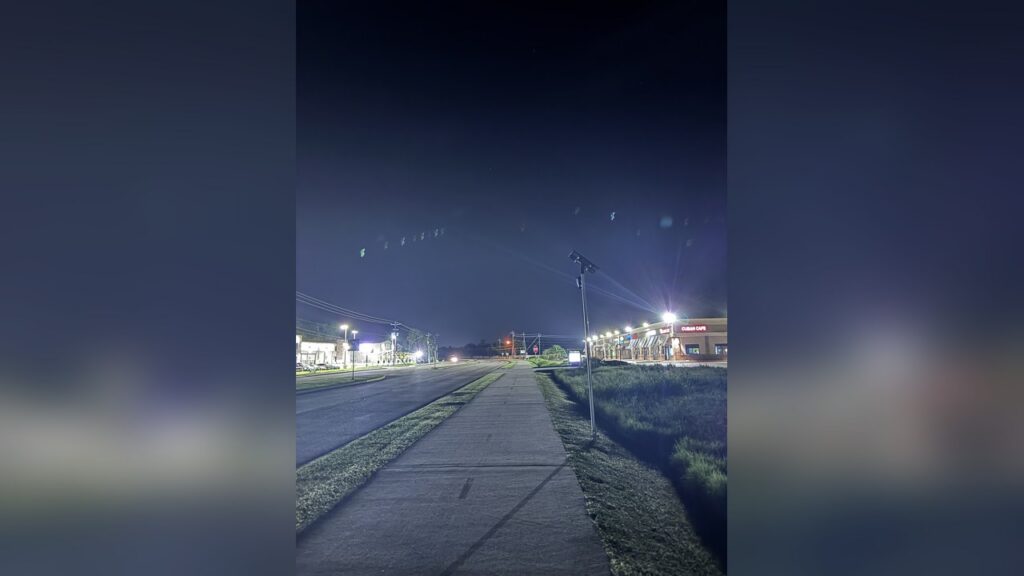
Well, isn’t this something. Flock, the company that’s been mounting cameras on poles across America to photograph every single car that drives by, has suddenly discovered that maybe, just maybe, people don’t love being tracked everywhere they go. Bless their hearts for noticing.
CEO Garrett Langley says he’s been talking to folks for two years and kept hearing the same thing: “I don’t trust the police.” And he goes, “Why?” Like it’s some big mystery. Garrett, honey, your own customers’ officers were using your cameras to stalk their ex-girlfriends. A Milwaukee police officer searched his romantic partner’s location 124 times. One hundred and twenty-four. That’s not a typo. That’s a man who turned a crime-fighting tool into his personal tracking device, and nobody at Flock noticed until court documents surfaced.
But sure, let’s hear about the new “safety controls.”
Here’s what Flock is offering up like a peace offering. They’ll require an “Audit Assistance” tool that flags weird search behavior and locks officers out of the system pending an administrator review. They’ll make officers type in a case number for each search. They’re cutting data retention from 30 days to 7 days, though agencies can override that based on local policy, which is a little like locking the front door and leaving the key under the mat. And they’ll let local jurisdictions decide whether outside agencies can search their data, say for theft but not for immigration enforcement.
Now, I have a question for the manager. If a third of your agency customers voluntarily turned on the audit tool before you made it mandatory, what were the other two-thirds doing? Just not auditing? Running a camera network that tracks every vehicle in town and thinking, “Eh, we’ll trust everybody”? That’s not a safety feature. That’s a confession.
And let’s talk about what these cameras actually do. They sit on public roads, photograph your license plate, your car’s color, its characteristics, and feed all of it into a database. Every trip to the grocery store, to church, to the doctor, to your mama’s house, logged and searchable. Flock bills it as a tool to solve crimes, and I’m sure it has. But a tool that can solve crimes can also commit them, and the people who had the keys were caught doing exactly that.
Langley says “our customer is the community.” That’s a lovely press release sentence. But police departments pay the bills, police departments make the decisions, and police departments were the ones caught abusing the system. The community didn’t ask for these cameras. The community didn’t get a vote on whether every drive to work should be recorded. The community found out about it the way you find out about most things the government does to you: after it was already done.
Some cities have cancelled their Flock contracts. Some folks have vandalized the cameras. I’m not going to tell you to go knock a camera off a pole, but I understand the impulse. When the people who are supposed to protect you build a surveillance network and then use it to stalk women, and the company that built it says “our bad, here’s an audit tool,” you’re allowed to be a little skeptical.
Langley wants state regulators to mandate more accountability. He wants audits and harsher penalties. That’s rich coming from the man who sold the cameras without mandatory audits in the first place. You built the surveillance network, Garrett. You made it optional to police yourselves. And now that cities are cancelling contracts and jumping to your competitor Axon, suddenly you’ve found religion.
You can put all the audit tools and case-number prompts you want on a system that photographs every car in America. The problem was never the software. The problem is that nobody asked us if we wanted to be watched in the first place.