


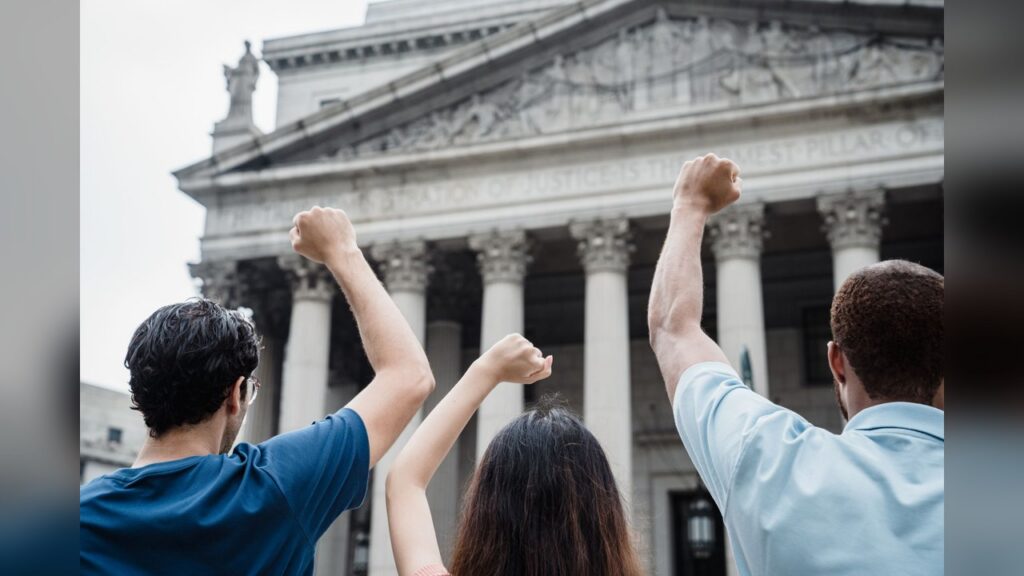
California, the state that bans plastic bags and lectures the rest of the country about human rights, has no minimum age for marriage. Let that settle. One of three states in the union where a child can be walked down the aisle by her own parents and handed to a grown man, and the system calls it a wedding instead of what it is.
Assembly Bill 1267 would fix that. Raise the floor to 18, no exceptions. It is sitting on the Senate Floor right now, and the usual suspects are wringing their hands about whether banning child marriage is maybe, you know, a little too hasty.
Courtney Stodden married Doug Hutchison when she was 16 and he was 51. Her mother signed the consent forms. Her father walked her down the aisle. Stodden now calls him what he is: a predator. “He took my innocence. He took my childhood. He took everything, really.” She thought she was in love. As an adult, she understood she had been groomed, and the adults around her called it maturity. “Old soul, mature for your age,” she said. “Those things are words strung together to excuse the abuse of the adults.”
 Thepaparazzigamer (CC BY 3.0) via Wikimedia Commons
Then there is Christina Sutton, who told a Senate committee that a Napa judge asked her if getting married was her choice. She said yes, because that is what abused children do. “I repeated exactly what my parents had coached me to say,” she testified. She was 17. Her husband was 22. She had told her mother he would not let her break up with her. She got a shrug.
Once a minor is married in California, she cannot file for divorce. She cannot retain a lawyer. She cannot stay at a domestic violence shelter for more than a few days without a parent’s approval. The same parent who may have arranged the marriage. Funny how that works.
Unchained at Last, a survivor-led group, pulled Census data estimating 35,000 underage marriages in California between 2000 and 2021. The vast majority were girls married to adult men. The U.S. State Department calls child marriage a human rights abuse when it happens overseas. In Sacramento, they call it a policy disagreement.
 Sickahick (CC BY-SA 4.0) via Wikimedia Commons
Here is where the dot-connecting gets good. The ACLU California Action is opposing the bill. Their argument: banning child marriage might strip reproductive rights from pregnant minors. Planned Parenthood Affiliates of California opposed the same legislation last year. They wrote a letter alongside the National Center for Youth Law warning that a total ban might drive young people “further underground, out of the reach of social services.” This year, Planned Parenthood quietly dropped its opposition. No explanation. The ACLU is still holding the line.
The ACLU also says lawmakers should wait until the state finishes collecting data on child marriage. So News 8 contacted all 58 California counties. Los Angeles County had records showing 12 child marriages between 2019 and 2024, with spouses ranging from 16 to 42 years old. The county reported four to the state. Only one matched. The data is garbage. The ACLU wants to wait for garbage data before protecting children. Ask yourself who benefits from delay.
Assemblymember Cottie Petrie-Norris, who carried a similar bill last year, put it plainly: “We like to think that here in California we are ahead of the curve. But when it comes to child marriage, we aren’t leading, we aren’t even following. We are failing.”
 Michael D Beckwith / Pexels
Nine years. Unchained at Last has been lobbying California for nine years. Every prior attempt was watered down or killed. The civil rights establishment fought it. The reproductive rights establishment fought it. The data was never good enough. The exceptions were always more important than the children.
The bill, if it passes the Senate and the Assembly and reaches Newsom’s desk, would not take effect until January 1, 2027. Because even when the swamp finally moves, it moves at its own pace. And every month between now and then, another kid somewhere in California can be married off with a judge’s blessing and a parent’s signature.
The experts had their chance. The data they demanded turned out to be fiction. The civil rights groups that blocked this for years are now standing alone, defending the indefensible. The only people who got it right were the women who lived through it.