


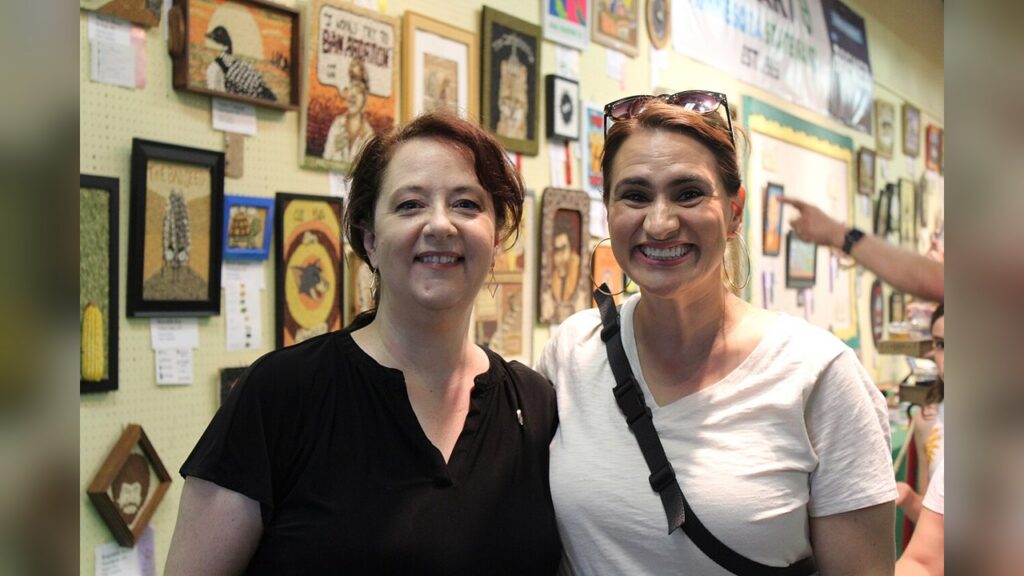
Let me tell you something I’ve noticed after fourteen years of carpooling, packing lunches, and actually paying attention to what’s happening in this country. When somebody the establishment likes wins, it’s front-page news. When somebody they don’t like wins by TWENTY POINTS, it’s crickets.
Peggy Flanagan just won the Democratic Senate primary in Minnesota. She beat Rep. Angie Craig, the hand-picked centrist, by nearly twenty percentage points. Twenty! That’s not a nail-biter. That’s not a squeaker. That’s a blowout. And the polls had it close, so it’s not like nobody was watching. Progressive organizers were nervous about this one right up until the votes started rolling in.
 Office of Governor Tim Walz & Lt. Governor Peggy Flanagan (Public domain) via Wikimedia Commons
So where’s the coverage?
I’ll tell you where. Buried. A headline here, a paragraph there, filed under “oh by the way.” The same newsrooms that spent weeks telling us this race was too close to call suddenly got real quiet when the wrong person won. And I’m sorry, but I’ve been around long enough to know what that smells like.
Here’s what the research actually says, because yes, I looked it up. Scholars at the University of Oregon School of Journalism confirmed that the single biggest factor driving elections is name recognition. Regina Lawrence, who runs their Agora Journalism Center, put it plainly: candidates can be “literally left invisible because they can’t win enough interest from the media.” That’s not a conspiracy theory. That’s a dean at a journalism school saying the quiet part out loud.
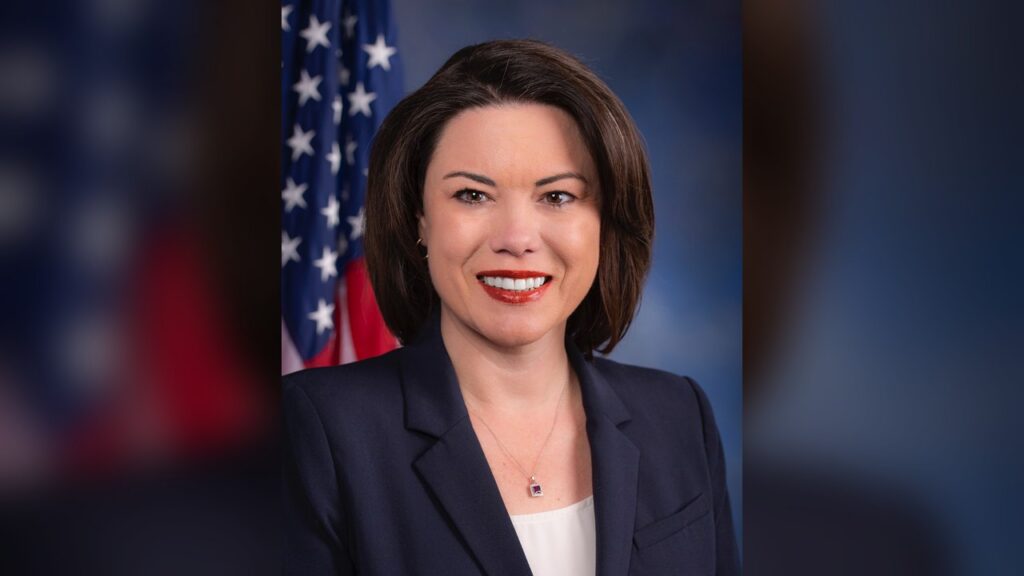 US House of Representatives (Public domain) via Wikimedia Commons
The same researchers found that newsrooms pick “scripts” for candidates and stick with them. In 2000, Al Gore got tagged as a pompous bore. George W. Bush got “not very smart.” This year, the script for any progressive who actually fights for working people is “unelectable” or “too radical.” And when that person wins by twenty points? New script needed. Or better yet, just don’t cover it. Problem solved.
Nicole Dahmen, another professor there, pointed out that the photos news organizations choose, their size, their placement, all of it “can influence voter perceptions and reveal possible bias.” She used Hillary Clinton’s nomination as the example. Some papers led with Hillary looking presidential. Some led with a photo of Bill. Some led with Donald Trump. On a story about the first woman nominated by a major party. That’s not journalism. That’s editorializing through photo selection and hoping nobody notices.
And here’s the part that really gets me. The researchers say this isn’t even about ideology for the media bosses. It’s about money. News consumers can get basic facts from a phone search now, so publications have shifted to “context and analysis,” which is code for “opinion dressed up as news, targeted at whatever audience pays the bills.” They feed you what keeps you clicking. They don’t challenge you. They confirm you. And if a progressive candidate winning a Senate primary by twenty points doesn’t fit the narrative that keeps their audience comfortable? It doesn’t run.
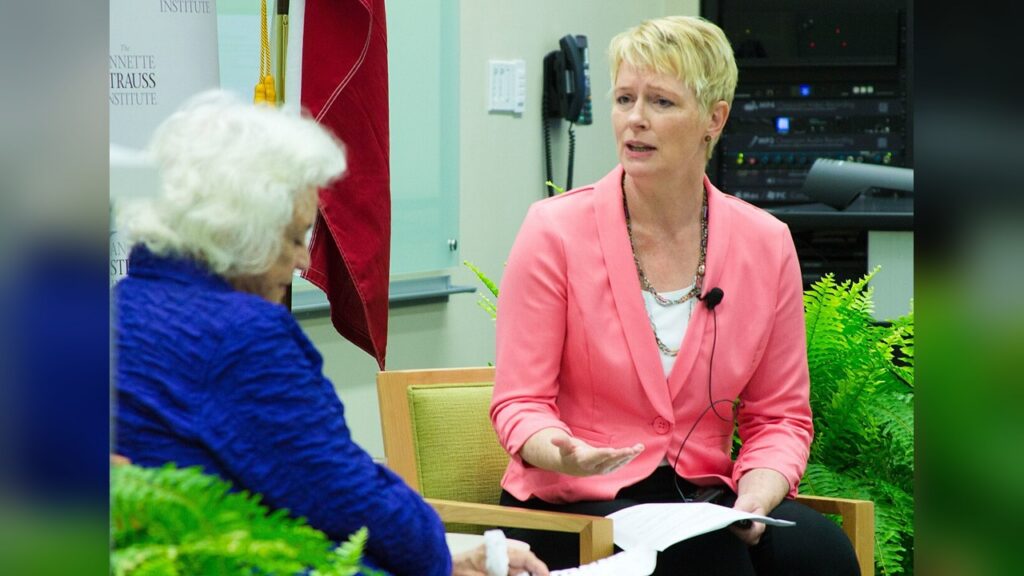 Moody College of Communication (CC BY-SA 2.0) via Wikimedia Commons
I’m a mom of four. I don’t have a journalism degree. But I know what I see with my own eyes, and I see a system where the people deciding what counts as news are the same people who have a financial interest in making sure you never hear about a working-class progressive who actually won. They think we’re too busy or too dumb to notice the silence.
We noticed.