



Let me tell you something about being a mom of four. You develop a radar for when a story doesn’t add up. One kid says the cookie jar broke on its own. The other kid says he didn’t even touch it. And somehow the cookie jar is already cleaned up before you even walk into the kitchen. You don’t need a law degree to know what happened. You need eyes.
So here’s what happened in a federal courthouse in Wichita Falls, Texas, on June 22, and I want you to follow the timeline because it’s a doozy.
Ken Paxton, the Texas Attorney General who has his own history of legal trouble, filed a 43-page lawsuit that morning challenging a Biden-era immigration rule. The rule lets immigration judges use something called “administrative closure” to take deportation cases off their dockets when someone might qualify to stay in the country legally. It’s been used since the 1980s. It’s not new. It’s not radical. It’s docket management.
 Gage Skidmore (CC BY-SA 4.0) via Wikimedia Commons
But Paxton called it “indefinite amnesty.” And the Trump Justice Department, which is supposed to defend federal regulations when they’re challenged, immediately surrendered. No fight. No arguments. No summonses. No service. Just a joint motion for a consent judgment filed hours later asking the court to strike the rule down and permanently ban anything like it.
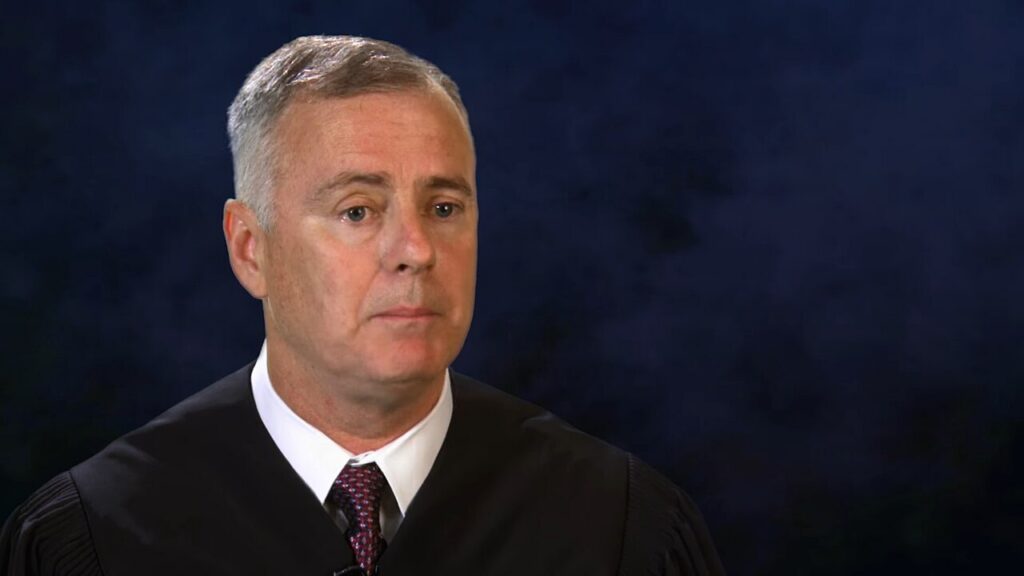
Judge Reed O’Connor, a George W. Bush appointee who the Texas Tribune notes has been called conservative leaders’ “favorite judge,” signed off. Same day. Done before dinner.
Now, I’ve been to small claims court over a fender bender that took longer than that.
Several cities, Baltimore, Columbus, New Haven, and a legal aid group in California, filed a 34-page emergency motion to intervene. Their chapter heading doesn’t mince words: “The Parties Reached a Collusive Settlement.” They argue there was no real case or controversy because both sides wanted the exact same outcome. The DOJ didn’t even bother making the arguments it “routinely raises when confronted with similar challenges to federal regulations.” They just rolled over.
 Administrative Office of the United States Courts (Public domain) via Wikimedia Commons
Here’s the part that really gets me. In April 2025, Trump’s own head of the EOIR put out a memo saying the agency wouldn’t defend the rule if someone sued. They basically hung a piñata on the porch and handed Paxton the bat. When he predictably swung, they called it a lawsuit. The motion calls it “rulemaking-by-collusive-acquiescence.” I call it a setup.
The Administrative Procedure Act exists for a reason. If you want to change a federal rule, you go through notice and comment. You let people weigh in. You show your work. That’s not bureaucracy for the sake of bureaucracy. That’s the difference between a government that answers to you and one that does whatever it wants behind a closed door.
And this isn’t even the first time they’ve pulled this. The Texas Tribune reports that last year, the DOJ and Paxton did the same dance over a Texas law on tuition for undocumented students. DOJ sued, Texas asked O’Connor to strike it down, and he did. Same judge. Same playbook. Legal experts called it unusual and raised questions about collusion then too.
Aaron Reichlin-Melnick from the American Immigration Council called it “deliberate collusion with a federal judge to rapidly erase regulations without any input from affected parties.” He said it’s “clearly an unlawful act by all.”
 Nicolas Henderson from Coppell, Texas (CC BY 2.0) via Wikimedia Commons
I don’t trust institutions on principle. But I trust my eyes. And what I see is a couple of politicians who found a judge they like, wrote up a lawsuit and a surrender at the same time, and called it justice. They didn’t even bother to make it look hard.
You want to change immigration policy? Make your case to the country. Put it through the process. Let people see it and say their piece. That’s how it’s supposed to work in a place that calls itself free.
What happened in that courtroom wasn’t a lawsuit. It was a playdate. And the rest of us weren’t invited.